
Explore high-performance spool guns at WeldingMart. Perfect for aluminum welding, our collection includes lightweight and heavy-duty options like the Lincoln Magnum SG and PRO 100SG. Achieve precise, reliable wire feeding for all your MIG welding needs.
-

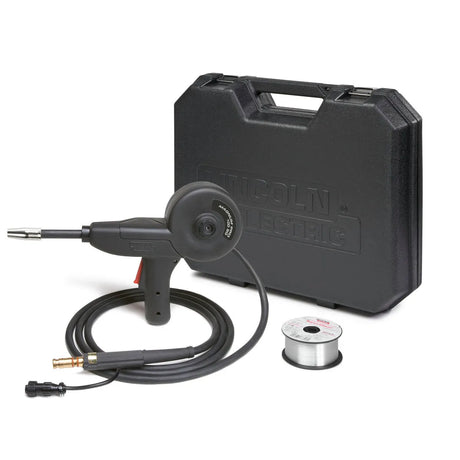
Lincoln Magnum PRO 100SG Spool Gun 4 Pin, 10 ft (3m) K3269-1
$502.88$649.62Unit price /Unavailable

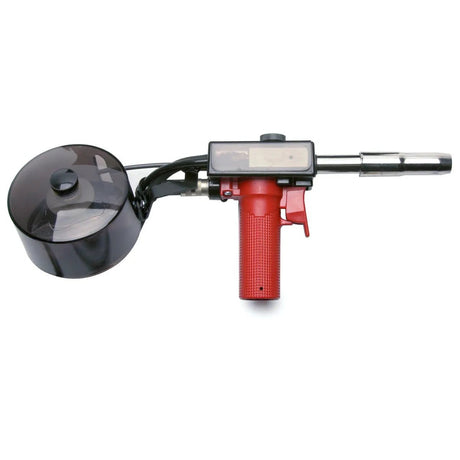

MK Products Prince XL Air-Cooled Spool Gun 25FT 225A 7-Pin - 319-725
$2,847.00Unit price /Unavailable
Lincoln Magnum PRO 100SG Spool Gun 8 Pin, 10 ft (3m) K4360-1
$542.88$704.90Unit price /Unavailable

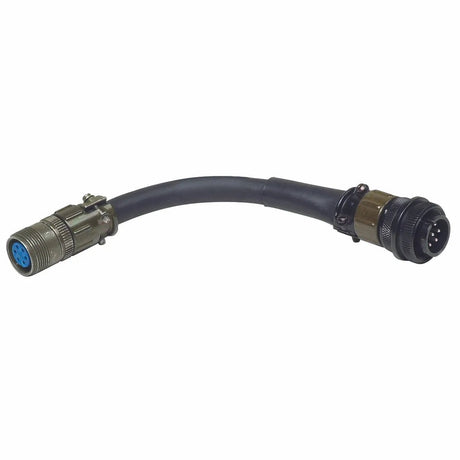
Mk Products Prince Xl Spool Gun 25 Feet Air Cooled - Miller Compatible - 339-725
$2,847.00Unit price /Unavailable
Mk Products Prince Xl Spool Gun 50 Feet Air Cooled - Miller Compatible - 339-750
$3,149.00Unit price /Unavailable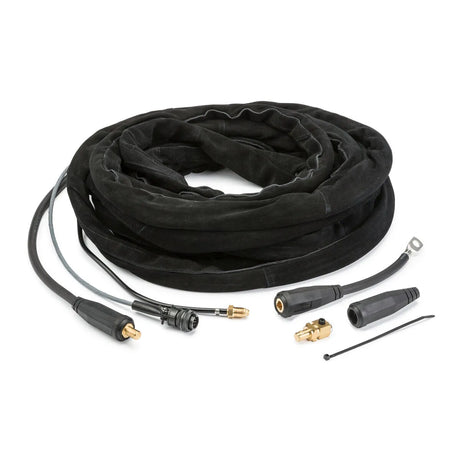
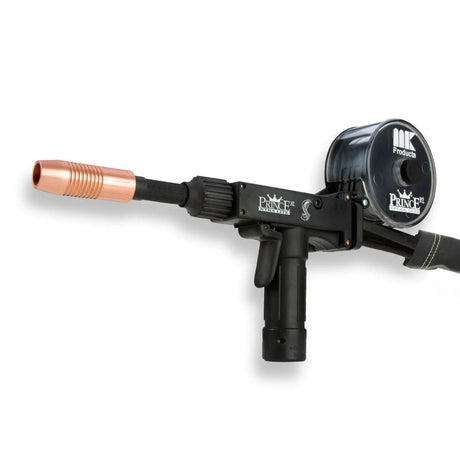
Mk Products Prince Xl Air-Cooled Spool Gun 50 Feet 225 Ampere 7-Pin - 319-750
$3,149.00Unit price /Unavailable
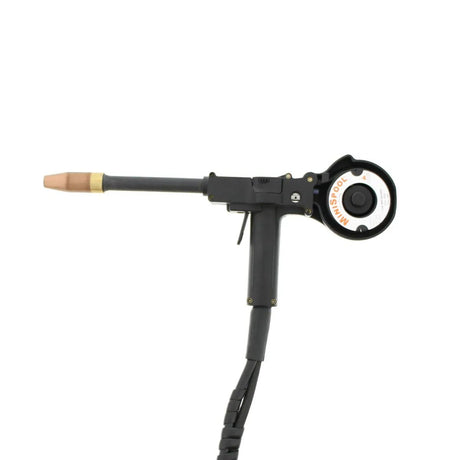


Spool Guns for Welding Aluminum — Your Complete Buying Guide
A spool gun is the go-to solution for aluminum mig welding with a standard MIG unit. Soft aluminum wire collapses and bird-nests inside a conventional push-only torch — because of the long drive path — a spool gun mounts the wire spool directly at the body — leaving just a few inches of liner path between the spool and the contact tip. That short path makes smooth, consistent aluminum wire feeding possible in shop, marine, and field environments alike. Whether you are welding aluminum boat hulls, auto body panels, structural frames, or HVAC ductwork, a quality spool gun gives you the reliability that aluminum mig welding demands.
WeldingMart (Appleton, WI) stocks spool guns from Lincoln Electric, Miller, Hobart, and other trusted brands. Orders placed before 3 PM CT ship same day. Free freight on purchases over $99. Browse our full collection below to find the model that fits your power source. Use the product comparison section to evaluate options side by side, and get the right model today.
How a Spool Gun Works
Standard push-only MIG torches push filler wire through up to 15 feet of liner. For steel, the wire is rigid enough to traverse that distance without issue. Aluminum wire is far softer — pushing it through a long drive path produces friction, kinking, and eventually a birdnested liner that stops the weld. A spool gun eliminates this by housing the wire spool at the body itself. The drive path shrinks to a few inches, allowing smooth, uninterrupted aluminum wire feeding every time you pull the trigger.
The gun cable connects the body to the power source, carrying power, argon, and the trigger signal. A wire feed adjustment dial built into the body lets operators tune the feed from the arc position — a feature that operators working at distance consistently rate as one of the most useful they have. Most designs use air cooled construction and are lightweight enough for all-day use with gloved hands.
Two drive system architectures compete in this market: the self-contained spool gun and the push pull system. This dual-motor approach uses synchronized motors in both the feeder and the body to maintain precise wire tension across cable runs of 30 feet or more — the preferred approach for high-volume production environments. For most welders doing aluminum mig welding in the shop or field, a self-contained unit delivers everything they need without the complexity and cost of a push pull setup. The dual-motor approach is the right call when cable length is a hard constraint; otherwise, self-contained is the practical way to go.
Welding Aluminum: Why This Process Works
Welding aluminum differs from welding steel in important ways. Aluminum melts at a lower temperature, conducts heat rapidly across the base metal, and forms a tenacious oxide layer on its surface that must be broken before fusion can occur. The oxide layer melts at roughly three times the temperature of the base metal itself — which is why the correct argon gas flow and settings matter so much when welding aluminum.
A spool gun paired with pure argon and the right aluminum wire alloy addresses these challenges directly. The arc cleaning action of DCEP polarity breaks through the oxide layer on each pass, and the short wire drive path inside the spool gun ensures that the soft filler arrives at the contact tip without deformation. The result is strong welds with good fusion and minimal porosity — outcomes that are difficult to achieve consistently with a push-only torch on aluminum mig welding applications.
Good penetration on aluminum requires balancing output, feed rate, and travel pace. Welding aluminum on material thicker than 3/8 inch typically calls for preheat — check the manufacturer recommendations for the specific alloy and thickness you are welding. For thin sheet, use a lower voltage and a faster travel speed to prevent burn-through. Understanding how these settings interact is the key to consistent results on aluminum mig applications.
Product Comparison: Top Spool Gun Models at WeldingMart
This product comparison covers the most popular models in our inventory. Use it as a starting point for your evaluation. Larger images and full spec sheets are available on each individual listing — click through to view product comparison data, customer comments, and video content for each model. All images shown reflect actual products in stock and available for same-day shipment.
Lincoln Electric Magnum SG Spool Gun
The Magnum SG is the best-selling Lincoln spool gun in our catalog. Purpose-built for Lincoln Electric MIG welders, it delivers precise trigger response, correct polarity connections, and a wire feed dial that lets you adjust output without leaving the arc. Customers who use Lincoln units consistently comment that the Magnum SG is the most direct upgrade they can make for aluminum mig welding. The contact tip comes installed from the factory, so it is weld-ready straight out of the box. Available with a 20-foot cable for extended reach. A product comparison with third-party options almost always ends with the Magnum SG — it is designed for the power source you already own. Video of this model in use is available on the product listing.
Miller Spoolmate 100 Series
The Spoolmate line is designed for Miller MIG welders. The Spoolmate 100 is a strong match for hobbyist and light-production users working on aluminum projects up to 1 4 inch thick. It works with Miller units directly — no separate control box needed. Customer comments on this model highlight the ergonomic body design, the quick wire loading process, and consistent performance on light aluminum. Product photos of completed beads using the Spoolmate 100 show clean profiles on both 4043 and 5356 aluminum wire. A product comparison between the Spoolmate 100 and 150 usually comes down to material thickness requirements. Video of this model is available on the product page.
Miller Spoolmate 150 and 200 Series
The Spoolmate 150 steps up to a 150A rating, making it a good choice for welding aluminum plate in the 1/8 to 3/16 inch range. The Spoolmate 200 handles heavier structural aluminum applications. Both work with Miller units and support the same output adjustments as other Miller products. Customer comments on these models note the improved duty cycle and the durable lead assembly as key reasons to step up from the base Spoolmate 100. Online tutorials provide a walkthrough of initial setup and feed settings for each model in this product comparison series.
Hobart Spool Gun
Hobart offers a spool gun for Handler series units — a good entry-level option for buyers who need aluminum welding capability without a large investment. Customer comments on the Hobart model frequently mention the good price point and the quick loading process. It handles 0.030 and 0.035 inch aluminum wire on material up to 1/8 inch. A product comparison between the Hobart and Miller models at similar price points shows the Hobart as the better value for light-duty applications. Product photos show a compact, lightweight design that is simple to maneuver on sheet metal and workshop fabrication projects.
How to Choose the Right Spool Gun: Buyer's Guide
Compatibility with Your Power Source
Every spool gun is engineered to connect to a specific MIG welders family. Lincoln units need Lincoln models; Miller units need Miller models. A mismatch between the control plug and the power source causes a connection error and a non-functional result. Always verify compatibility before making any purchase. Our product pages list every compatible power source for each option — use this as the first filter in your product comparison. Check the images on each listing and confirm the connector type matches your unit before ordering.
For those running engine-driven units in the field, look for models rated for CV output from generator-powered sources. A unit rated only for transformer-based shop sources will not connect correctly with engine-driven units. Confirm the connection type and output range in the product comparison data before you finalize the purchase.
Amperage and Duty Cycle
Match the amperage rating to the thickest aluminum you plan to weld. A general rule: roughly 1 amp per 0.001 inch of base metal thickness. Sheet under 1/8 inch works well with a 100A unit. Heavy structural aluminum plate requires 200A to 250A. The duty cycle rating tells you how long the unit can run at full amperage in each 10-minute period. For production environments, verify this figure at your actual operating current, since the rating drops at higher amperage. Industrial operators running long shifts should always choose the highest duty cycle available. This is one of the most important things to confirm in any product comparison for professional use.
Wire Diameter, Drive Roll Settings,
The most common aluminum wire alloys are 4043 and 5356, in 0.030 or 0.035 inch. Use 0.030 on light sheet material; use 0.035 on heavier plate that is at least half an inch thick or more. The contact tip must match the filler exactly — a mismatch causes erratic feed and shortened tip life. Drive roll pressure needs to be set at the minimum that delivers smooth, consistent feed. Too much tension crushes soft aluminum wire. Too little causes slippage. Adjust drive roll pressure carefully and recheck whenever you change wire type or alloy. Careful adjustment of drive roll pressure is a key skill that directly affects feed consistency and bead quality.
Push Pull vs. Self-Contained Spool Gun
A push pull system uses two motors — one in the feeder cabinet and one in the body — to maintain precise filler feed across long cable runs. Dual-motor systems excel in large structural fabrication shops and allow smooth aluminum wire feeding over 30 feet or more. The tradeoff: this approach is more expensive, heavier to maneuver, and requires motor coordination. For most fabricators doing aluminum mig welding in the shop or on job sites, a self-contained option is the simpler way to get strong, consistent results. The product comparison between push pull and self-contained almost always favors the self-contained unit unless cable length is the determining factor. Whips and extensions are available for some models to add reach without the full dual-motor cost.
Cable Length
Standard cable lengths run from 12 to 20 feet. A shorter cable is lighter and easier to maneuver in confined areas. A longer cable provides extended reach on large workpieces or when the power source is positioned at significant distance from the arc. A 15-foot cable is a solid default for most shop applications and welding projects. Field welding crews who use engine-driven units often prefer the 20-foot option for better coverage across large weld areas. In many cases, the right cable length is the thing welders least expect to matter — and most often wish they had considered more carefully from the beginning.
MIG Welding Aluminum: Step-by-Step Process
Proper preparation is critical to good results on aluminum mig welding applications. Follow these steps to ensure each session starts right and delivers consistent, solid results.
- Step 1 — Inspect and clean the base metal. Aluminum forms an oxide layer rapidly on its surface. Wipe with acetone and scrub with a dedicated stainless steel brush before welding. Contaminated base metal causes porosity regardless of how well-tuned your other parameters are. This step is needed before every production pass for clean fusion and strong welds.
- Step 2 — Load the wire spool with gloved hands. Skin oils contaminate aluminum filler wire and introduce porosity. Keep gloved hands on the filler at all times during loading. Seat the spool on the hub, thread the wire end through the drive mechanism, and feed it through until it exits at the nozzle. Trim to 3/8-inch stickout at the contact tip.
- Action 3 — Set drive roll pressure correctly. Hold the wire at the drive rolls and apply light pressure, then increase until the wire feeds without slipping. The correct setting is the minimum pressure that gives smooth, consistent delivery. Overtightening crushes soft aluminum wire and creates debris that clogs the drive path.
- Action 4 — Connect argon and verify gas flow. Use 100% argon — no CO₂ or blended mixtures. Connect the gas line securely at both the regulator and the body inlet. Set flow to 20–25 CFH. Leave the gas valve open and test flow with the trigger before welding to confirm argon is coming out at the nozzle. A gas connection leak causes porosity that looks identical to base metal contamination — verify the argon flow first if you encounter porosity issues.
- Action 5 — Set voltage and feed rate on scrap. Begin at mid-range settings for your material thickness. A smooth, crackling arc is the sound that indicates correct balance. If the wire stubs into the puddle, reduce the feed. If it burns back to the contact tip, increase it. Once you are getting good arc behavior, make small output adjustments to fine-tune the bead profile. Test on scrap until the settings achieve the desired results before moving to the actual production piece.
- Action 6 — Check wire level before each long bead. Glance at the spool before starting a long bead. Loading a fresh spool takes one minute. A mid-pass interruption can cost significantly more in rework time and material.
- Action 7 — Maintain short stickout. Keep stickout at 3/8 to 1/2 inch from the contact tip. Longer stickout increases electrical resistance and destabilizes the arc. Consistently short stickout is one of the easiest ways to improve your overall results on aluminum.
Key Specifications Explained
Feed Control and Wire Speed Adjustment
The feed dial on the body — which controls wire speed from the arc — is one of the most useful features for aluminum mig welding. When the power source is stationed at a distance from the arc, you can adjust the feed from the weld area without returning to the unit. Some premium models also allow you to adjust voltage directly at the body — giving you full control over both output parameters at the arc. This dual-control capability is especially good for those running bead on large structural pieces or doing field work where the power source is not within easy reach.
Air Cooled Construction
Nearly all spool guns for aluminum mig welding use air cooled designs. Air cooled designs are lightweight and low-maintenance. For most aluminum applications — marine fabrication, auto body, structural aluminum, HVAC ductwork — air cooled performance is more than adequate. Water-cooled options are needed only in extremely high-amperage applications or continuous heavy production environments where air cooled dissipation cannot hold up. For the tasks that most fabricators handle, air cooled is the right call.
Argon Gas Requirements
Pure argon is the only recommended gas for aluminum mig welding. CO₂ and blended argon mixtures contaminate the molten pool and produce porous, weak beads. Always verify that you are using pure argon before beginning a new production pass. Inspect the argon regulator, supply lines, and the body connection at the start of each session. A small argon leak can ruin a production piece — verification takes less than a minute and is always time well spent.
Contact Components and Drive Path
Contact tips — the small copper components at the nozzle — transfer current to the filler. Aluminum is harder on these components than steel is — inspect them each shift and replace at the first sign of oval bore wear or internal spatter. The short wire drive path inside the spool gun — just a few inches from spool to contact tip — is the core design advantage over a push-only torch. Keep it clean: use compressed air to blow out oxide debris that accumulates and increases drag on the filler. Clean drive components produce consistent results session after session. Those that are inspected regularly and removed at the first sign of wear last the entire shift they are installed.
Applications for Spool Guns
Marine Fabrication
Hulls, decks, railings, and fuel tank fabrication are the core applications for welding aluminum in marine shops. Air cooled spool guns are the standard gear for this application. Consistent aluminum wire feeding in a saltwater workshop environment requires a quality spool gun and proper maintenance. Marine fabricators comment that a quality spool gun is not optional — it is the essential tool that a professional welder builds their aluminum operation around. Customer comments from marine shops confirm that the Lincoln Magnum SG and Miller Spoolmate models are the choices coming up most often in professional marine shop discussions.
Automotive and Body Shop Applications
Modern vehicles use aluminum extensively in body panels, structural components, and heat management parts. Auto body welding aluminum requires precise feed control, correct output settings, and a clean base metal surface. Spool guns give collision and restoration shops the feed stability needed to produce cosmetically clean beads on visible panels. Customers doing collision repair comment that switching from a push-only torch to a spool gun for aluminum produced immediate improvements in bead quality and consistency. The product comparison between 100A and 150A models for auto body applications suggests that most shops are well served by the 100A option for body panel thickness.
Structural and Industrial Fabrication
Welding aluminum structural members, pressure vessels, and architectural elements at production scale requires higher amperage ratings and good duty cycle. The 200A–250A models in our catalog are built for continuous, high-output use on aluminum. Field welding aluminum in construction settings — where engine-driven units provide power — is another strong use case for spool guns rated for generator CV output. Customers doing structural fabrication in the field comment that the ability to carry a spool gun to the work area without a separate feeder is the key practical benefit of a self-contained unit.
HVAC and Ductwork
Thin-wall aluminum ductwork benefits from the low, controlled feed rate that a spool gun delivers reliably. The lightweight air cooled construction makes these units manageable overhead and in confined spaces — welding aluminum ductwork often requires working in awkward spots where a heavy system would quickly cause fatigue. Customers doing commercial HVAC work comment that spool guns are the recommended choice for aluminum duct joints, especially on thin-gauge material where burnthrough is a risk with higher voltage settings.
Farm and Agricultural Repair
Welding aluminum panels, covers, and components on farm machinery is a growing application area coming into more shops. Agricultural repair shops that handle aluminum increasingly use spool guns as their primary aluminum mig welding solution. The units are durable, the installation is straightforward, and the filler feed reliability is consistently good across the range of material thicknesses encountered in farm repair jobs. Customer comments from farm shops confirm that spool guns are coming up as the first-choice option for shops adding aluminum welding to their scope for the first time.
Spool Gun Maintenance
Consistent maintenance extends component life and holds results steady across welding sessions. These are the maintenance habits that produce the best results for welders who use spool guns regularly on aluminum.
- Replace contact tips on a regular schedule. Inspect each shift. Replace at the first sign of oval bore wear or spatter. Running worn components leads to erratic feed, poor fusion, and wasted aluminum wire. Components that are inspected regularly outlast those driven to failure. Keep a lot of spare contact tips on hand — running out mid-shift is an avoidable problem.
- Clear the wire drive path with compressed air. Aluminum oxide debris accumulates in the drive path after each session. Blow the path clear each shift and whenever you load a new spool. A clean path is needed to maintain consistent, smooth aluminum wire delivery.
- Inspect the cable assembly from end to end across its full length. Check the cable along its full length for kinks, cuts, or cracked insulation, especially near the connection points at the body and at the power source. Damaged sections cause arc instability. A compromised cable should be removed and replaced before it causes a safety concern or damages the power source port.
- Store partial spools properly. Aluminum wire oxidizes quickly when left exposed to air. Removed spools should be stored in a sealed bag between sessions. Oxidized filler causes porosity and erratic feed even in a well-maintained unit. Proper storage takes a few seconds and protects the remaining wire.
- Verify parameters before each production bead. Check the output level, feed, and argon gas flow before laying each bead. Test on scrap to confirm the parameters are producing good results. This habit takes two minutes and prevents the longer process of diagnosing and reworking a production piece that was welded with incorrect parameters.
- Confirm that the drive rolls are correctly installed. Drive rolls installed in the wrong orientation or wrong size for the wire diameter in use will cause immediate feed problems. Check that the rolls match the wire diameter you are running and that they are installed in the correct position before each session.
Why Welders Choose WeldingMart
WeldingMart is a specialty welding supply business based in Appleton, WI. Our focus is entirely on welding — not general merchandise. Here is what professional buyers and fabricators comment on most when they review their experience with us.
- Same-day shipping: Orders placed before 3 PM CT ship the same day. When your spool gun fails mid-job and you need a replacement fast, WeldingMart gets it out without delay. A professional welder cannot afford to wait a week for critical equipment — and with WeldingMart, they do not have to. Buyers consistently comment that our shipping speed is one of the biggest reasons they keep coming back.
- Free freight on $99+ orders: Most spool gun purchases qualify for free shipping. The price you see on our website is the price you pay at checkout — no hidden freight charges. Many buyers comment that WeldingMart is more competitive on total cost than they expected once freight is factored in.
- Top brands in stock: Lincoln Electric, Miller, Hobart, and other trusted brands. We hold sufficient stock to ship same day across our full product line. No backorder surprises, no long wait between the purchase date and the day it arrives. This is the kind of service that keeps welding machine owners coming back.
- Verified customer comments: Every product listing shows verified comments from buyers who purchased and used the product. Read the comment sections to evaluate real-world performance, reliability, and value from buyers who are coming from similar applications. We display all customer comments — including critical ones — because we want you to make a confident, well-informed decision. A product comparison based on real comment data beats marketing copy every time.
- Expert support: Not sure which spool gun is the right fit for your power source? Our team can help you find the correct model before you commit. Good information upfront means you have a chance to avoid a bad purchase and a return shipment.
- A website built for the welding trade: Use the product comparison tools to evaluate models side by side — features, cost, amperage, and compatibility all in one view. View images on each listing. Read customer comments. Add to your cart with confidence. We want everyone who shops with us to understand exactly what they are buying.
Customer Comments: What Welders Are Saying
Verified customer comments on our product listings cluster around three themes: reliable results, fast shipping, and strong value. Below is a summary of comment themes from our most popular models. Read the full comment section on each listing before you buy — customer comments are the most useful product comparison resource available.
Lincoln Electric Magnum SG: Comment after comment from Lincoln users highlights the smooth aluminum wire feed, the intuitive feed dial, and the rugged cable assembly. Multiple comments note that the contact tip comes installed from the factory — the unit is weld-ready straight out of the box. Several comment entries describe customers who were excited about how well it performed right out of packaging. Comments confirm good performance through long production runs and in demanding field use. Video of the Magnum SG in action is available on the product page — view product video content for this model before adding to your cart.
Miller Spoolmate Series: Customer comments on the Spoolmate 100 and 150 are consistently good on the ergonomic body, the easy loading process, and the solid feed on aluminum. Comments from buyers doing marine and automotive projects are especially positive — multiple comment entries describe results coming from a significantly less expensive than a dual-motor setup. Product comparison comments between the Spoolmate 100 and 150 suggest that most light-production users are well served by the 100 and should consider the 150 only when material thickness regularly exceeds 1/8 inch. Video of the Spoolmate in use is available on the listing — review the listing to ensure you are selecting the right model for your application.
Hobart Spool Gun: Customer comments on the Hobart model emphasize the price point and the good results for entry-level aluminum mig welding. Comment entries from hobbyist buyers and small fabrication workshops confirm good performance on light sheet aluminum at an accessible price. A product comparison between the Hobart and Miller models at similar price points is one of the most common comment themes on both listings — buyers who have used both comment that the Hobart is the right way to learn aluminum mig welding before investing in a more premium option. Product photos and listing content are available to help you understand the Hobart's features and form factor.
Shop the Full Spool Gun Collection
WeldingMart stocks spool guns across the complete range of amperage ratings, cable lengths, and power source compatibility profiles. From lightweight air cooled models for thin aluminum and auto body applications to heavy-duty 250A units built for continuous structural production — all items are in stock and shipped from Appleton, WI. Same-day fulfillment on orders placed before 3 PM CT. Free freight on purchases of $99 or more. Verified customer comments on every product listing.
Use the product comparison tools on our website to evaluate models side by side — features, cost, amperage, and compatibility all in one view. Browse video content and product photos on each listing. Read customer comments from welders in your application area. Then add the right model to your cart and begin welding aluminum with the confidence that comes from ordering from a specialist who understands the work. Whether you run a production shop, work as a fabricator handling aluminum as part of a broader scope, or are coming to aluminum mig welding for the first time — WeldingMart has the right spool gun — find the model that fits, add to your cart, and we will get it to you fast.
Questions about compatibility or specific model features for your power source and application? Reach out to our team before you order. Good information upfront gives you the best chance of getting the right option the first time — and that is exactly the kind of outcome we want for every customer who orders from us.


