
Shop Lincoln plasma cutters engineered for precision, speed, and durability. Ideal for metal fabrication, automotive, and construction, these machines deliver clean cuts across steel, aluminum, and more. Choose portable or CNC-compatible models for high-performance cutting in any environment.
-
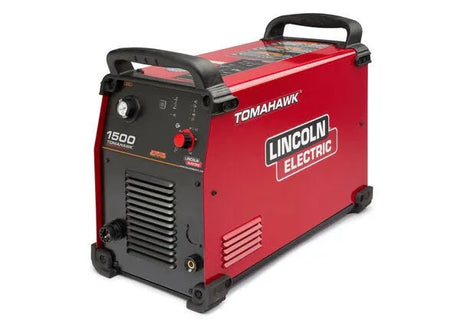
Used Lincoln Tomahawk 1500 Plasma Cutter — Factory Demo — U2809-1
$5,095.00$6,195.00Unit price /Unavailable
Used Lincoln Tomahawk 1000 Plasma Cutter w/ Hand Torch — U2808-1 — Factory Demo
$2,999.00$3,808.00Unit price /Unavailable


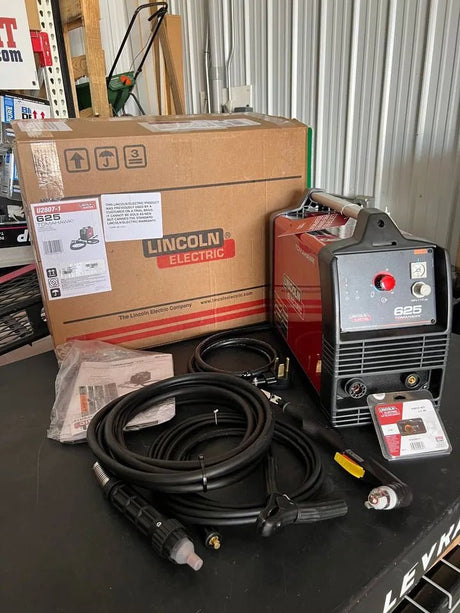 Sold out


 Sold out
Used Lincoln Tomahawk 375 AIR — Factory Demo Plasma Machine — U2806-1
$1,455.00$1,999.00Unit price /Unavailable
Plasma Cutters — Professional Cutting Equipment for Every Shop and Jobsite
A plasma cutter is the fastest, cleanest way to cut electrically conductive metal — mild steel, stainless steel, aluminum, copper, and brass — without a torch, a blade, or a grinder. WeldingMart carries Lincoln Electric plasma cutting systems ranging from compact 20-amp units suited to thin gauge sheet metal all the way to 125-amp industrial machines capable of severing 1-1/4-inch plate in a single pass. Every machine ships from our Appleton, WI warehouse with same-day dispatch on orders placed before 3 PM Central Time.
Whether you're cutting exhaust flanges in an auto body shop, trimming structural steel on a fabrication floor, or slicing salvage steel on a farm, the right plasma cutter transforms a job that used to take an angle grinder and a cut-off wheel into a ten-second task. Lincoln Electric's FlexCut and Tomahawk lines set the standard for arc quality, cut speed, and pilot arc reliability in both hand-held and mechanized applications.
This page covers everything you need to choose, set up, and use a plasma cutter correctly: how the process works, what specifications to compare, which Lincoln Electric models are built for which applications, compressor requirements, consumable life, and where plasma fits alongside other cutting processes.
What Is Plasma Cutting and How Does It Work?
Plasma cutting (PAC — Plasma Arc Cutting) uses a jet of superheated ionized gas — plasma — to melt and blow through electrically conductive metal. The plasma arc reaches temperatures between 20,000 and 40,000°F, hot enough to melt any metal you're likely to encounter. A high-velocity gas stream blows the molten material away from the cut, leaving a narrow kerf with a relatively clean edge.
The four components every plasma cutter needs to operate are a power source (the cutter itself), a plasma torch, a compressed air supply, and a work clamp connected to the material. Striking the arc initiates the plasma column between the electrode inside the torch tip and the workpiece. Once the arc transfers to the work, you drag or guide the torch along the cut line and the plasma arc does the rest.
Modern Lincoln Electric plasma cutters use a high-frequency or pilot-arc ignition system. A pilot arc establishes between the electrode and nozzle before the torch touches the work, which means you can start a cut mid-plate or on an edge without drag-starting. This feature — called a blowback or pilot-arc start — is critical for expanded metal, gratings, and any surface where dragging the tip across the workpiece is impractical.
Unlike oxy-fuel cutting, plasma cutting works on stainless steel, aluminum, and other non-ferrous metals as well as mild steel. Unlike grinding or sawing, plasma leaves no mechanical force on the part, no blade deflection, and minimal heat distortion when the correct amperage and travel speed are used. The result is a production-quality cut edge that often goes directly to layout or fit-up without secondary grinding.
How to Choose the Right Plasma Cutter
Five specifications determine whether a plasma cutter is right for your application. Work through these before selecting a machine.
1. Cutting Capacity — Rated vs. Severance
Every plasma cutter carries two thickness ratings: rated cut capacity and severance capacity. Rated capacity is the thickness at which the machine produces a clean, production-quality edge at the rated travel speed. Severance capacity is the absolute maximum thickness the machine can punch through, but the edge quality will be rough and the travel speed very slow. Always buy based on rated capacity for the thickest material you regularly cut — if your day-to-day work is 3/8-inch plate, you want a machine rated to cut 3/8 inch cleanly, not one that merely severs it.
2. Input Power — Single-Phase vs. Three-Phase
Most shop and field plasma cutters run on single-phase 120V or 240V power. Compact units like the Lincoln FlexCut 35 run on 120V/240V auto-link input, which means the same machine plugs into a standard 20-amp 120V outlet or a 240V circuit without a rewire. Larger machines like the FlexCut 80, FlexCut 105, and Tomahawk 1000 require 240V single-phase. Industrial machines — the FlexCut 125, Tomahawk 1500 — use three-phase 208/230/460V for high-duty-cycle production environments. Match the machine to the power available at your location before purchasing.
3. Duty Cycle
Duty cycle is the percentage of a 10-minute period the machine can cut at rated output before requiring a cool-down period. A 60% duty cycle at 45A means the machine cuts for 6 minutes, rests for 4. For occasional cuts, a 35–50% duty cycle is adequate. For production environments with continuous cutting, look for machines rated at 60% or higher at your target amperage. Lincoln FlexCut and Tomahawk machines are built for professional duty cycles that hold up to sustained production use.
4. Air Compressor Requirements
Every plasma cutter that ships with an external air input needs a compressor — none of the units on this page are self-contained (self-contained units use an internal compressor and are generally limited to light-gauge work). Compressor requirements are expressed as CFM (cubic feet per minute) at a required PSI. For example, the Lincoln FlexCut 35 requires 4 CFM at 90 PSI; the FlexCut 80 requires 6 CFM at 90 PSI; the Tomahawk 1000 requires 8 CFM at 90 PSI. A compressor that can't sustain the required CFM will cause arc instability and poor cut quality. For most shop use, a 60-gallon compressor with a 5-HP or larger motor satisfies even the FlexCut 80's needs. For large-machine and production use, a dedicated air supply with a refrigerated dryer is recommended — moisture in the air line ruins consumables and degrades cut quality.
5. Cut Type — Hand-Held vs. Mechanized
Hand-held plasma cutting is what most shops think of — operator guides the torch by hand along a straight edge, template, or freehand. Mechanized plasma uses the machine's power source with a machine-mounted or CNC torch (no hand grip) attached to a cutting table, track burner, or robotic arm. Lincoln Electric plasma cutters are available in PS (Power Source only) configurations suited to mechanized integration as well as standard hand-torch configurations. If your application involves a cutting table or track cutting guide, specify the PS-only model and pair it with the appropriate machine torch from our Plasma Torches collection.
Lincoln Electric Plasma Cutter Models — By Application
Light Gauge and Auto Body: FlexCut 35
The Lincoln Electric FlexCut 35 is the most portable plasma cutter in the Lincoln lineup. It outputs up to 35 amps on 120V or 240V auto-link input, cuts rated capacity to 3/8 inch and severs to 1/2 inch. Weight is under 20 pounds. The FlexCut 35 uses a high-frequency pilot arc for no-touch starting and comes with Lincoln's Wind Tunnel Technology for improved cooling and extended component life. It is suited to auto body panels, HVAC duct work, thin structural angles and channel, and any application where portability matters more than cut depth. Consumable life is extended by Lincoln's precision-machined nozzle and electrode geometry — this is not a machine to compromise on tip quality.
Mid-Range Fabrication: FlexCut 45, FlexCut 65, FlexCut 80
The FlexCut family scales from 45 to 80 amps of output. The FlexCut 45 cuts rated 1/2 inch and severs 3/4 inch. The FlexCut 65 cuts rated 3/4 inch and severs 1 inch. The FlexCut 80 cuts rated 3/4 inch and severs 1 inch at higher duty cycle with three-phase capability. All three use the same pilot-arc ignition system, the same Wind Tunnel Technology internal cooling, and the same consumable family — a shop that owns multiple FlexCut machines keeps one consumable kit for all of them. These machines are the workhorse choice for general fabrication, agricultural equipment repair, structural steel work, and mixed-material cutting shops.
Heavy Fabrication and Structural: Tomahawk 1000
The Lincoln Tomahawk 1000 is built for heavy structural cutting at sustained production rates. It outputs up to 100 amps, cuts rated 1-1/4 inch plate, and severs 1-1/2 inch. The Tomahawk 1000 runs on single-phase 230V or three-phase 200–460V input, making it suitable for both large shop installations and industrial three-phase facilities. Duty cycle at 100A is 60%, sustaining continuous production cuts without forced cool-down breaks that interrupt workflow. The Tomahawk 1000 integrates with Lincoln mechanized cutting systems and is available in both handheld and power-source-only configurations for cutting table use.
Industrial and CNC Mechanized Cutting: FlexCut 85, FlexCut 105, FlexCut 125
The upper FlexCut range is designed for mechanized and CNC plasma cutting table integration. The FlexCut 85 outputs 85 amps; the FlexCut 105 outputs 105 amps; the FlexCut 125 tops the line at 125 amps, cutting rated 1-1/4 inch plate. These machines feature arc voltage feedback, remote amperage control, and plasma/air timing interfaces for CNC table integration. They ship in PS-only configuration for table use or as complete system packages for retrofit into existing mechanized cutting lines. Contact WeldingMart for mechanized application support on these models.
Plasma Cutter Specifications Reference Guide
Model Output (A) Input Power Rated Cut Severance Duty Cycle Air CFM @ PSI FlexCut 35 12–35A 120/240V 1Ø 3/8" 1/2" 50% @ 35A 4 CFM @ 90 PSI FlexCut 45 15–45A 240V 1Ø 1/2" 3/4" 50% @ 45A 4 CFM @ 90 PSI FlexCut 65 20–65A 240V 1Ø / 3Ø 3/4" 1" 60% @ 65A 6 CFM @ 90 PSI FlexCut 80 20–80A 240V 1Ø / 3Ø 3/4" 1" 60% @ 80A 6 CFM @ 90 PSI FlexCut 85 25–85A 240V 1Ø / 3Ø 7/8" 1-1/8" 60% @ 85A 7 CFM @ 90 PSI FlexCut 105 25–105A 3Ø 208–460V 1" 1-1/4" 60% @ 105A 8 CFM @ 90 PSI FlexCut 125 25–125A 3Ø 208–460V 1-1/4" 1-1/2" 60% @ 125A 10 CFM @ 90 PSI Tomahawk 1000 20–100A 230V 1Ø / 3Ø 1-1/4" 1-1/2" 60% @ 100A 8 CFM @ 90 PSI Compressor Sizing for Plasma Cutting
No other factor has a bigger impact on cut quality and consumable life than air supply. Plasma arc quality depends on consistent, clean, dry air flow at the rated pressure and volume. An undersized or moisture-contaminated air supply is the leading cause of inconsistent arc starts, poor cut edge quality, nozzle damage, and shortened electrode life.
To size a compressor for plasma cutting, add 20–25% margin above the machine's rated CFM requirement to account for pressure drop through the air line and filter/dryer assembly. For a FlexCut 80 requiring 6 CFM at 90 PSI, size for at least 7.5 CFM delivered at the torch inlet. For a Tomahawk 1000 requiring 8 CFM, size for 10 CFM delivered. A 60-gallon upright compressor with a 5-HP or larger motor handles most FlexCut 35 through FlexCut 80 applications. For Tomahawk 1000 and FlexCut 85–125, a dedicated industrial compressor with a minimum 7.5-HP motor and a refrigerated inline dryer is strongly recommended.
Air moisture is the most overlooked consumable killer. Even a drop-leg moisture trap and a coalescing filter dramatically extend nozzle and electrode life. If you're changing consumables faster than expected, check the moisture content of your air supply before blaming the machine or the consumables.
Compatible Accessories and Equipment
Plasma cutters work as part of a system. The following WeldingMart collections carry accessories that work directly with the Lincoln Electric plasma cutters on this page:
- Plasma Torches — Hand torches and machine torches for mechanized cutting applications. If you're integrating a PS-only plasma cutter into a cutting table or track burner, start here.
- Plasma Consumables — Electrodes, nozzles, shields, swirl rings, and retaining caps for Lincoln Electric plasma torches. Use Lincoln-specified consumables to maintain arc quality and warranty coverage. Aftermarket consumables can void the torch warranty and shorten electrode life.
- Welding Gas Regulators & Pressure Control — Flowmeters and regulators for shops using nitrogen or argon-hydrogen as plasma gas for premium edge quality on stainless and aluminum. Most hand-cutting applications use shop air, but mechanized precision cutting of stainless often benefits from a nitrogen plasma gas supply.
Plasma Cutting vs. Other Metal Cutting Processes
Plasma cutting is one of four common processes for cutting metal in a fabrication shop. Here's how they compare:
- Plasma Cutting (PAC): Best for — fast cuts on 1/8" to 1-1/2" electrically conductive metal including mild steel, stainless, and aluminum. Low heat distortion at correct settings. No consumable gas cylinders for air plasma. Works on rusty and coated material. Kerf width wider than laser.
- Oxy-Fuel Cutting: Best for — very heavy plate (over 1" to several inches) on mild steel only. Low capital cost. Slow. Does not cut stainless, aluminum, or non-ferrous metal. Requires oxygen and fuel gas supply.
- Angle Grinder / Cut-Off Wheel: Best for — low-volume, thin-section cuts where a plasma cutter is not available. Slow, produces sparks and abrasive dust. No cut edge quality advantage.
- Laser Cutting: Best for — precision cuts with very tight tolerances and narrow kerf on thin to medium gauge material. Extremely high capital cost. Not portable. Plasma is the field and medium-production alternative to laser for most structural work.
Plasma Consumable Life — What to Expect and How to Extend It
Electrode and nozzle life vary by material, amperage, cut quality required, and air supply quality. Under normal conditions with clean, dry air, a Lincoln plasma electrode and nozzle set should last 500–1,000 arc starts or 1–3 hours of arc-on time before replacement. Signs that consumables need replacement include: arc start difficulty, increased spatter on the top edge of the cut, reduced cutting speed needed to achieve clean cuts, and visible erosion of the nozzle bore or the pit depth on the electrode face exceeding 1/16 inch.
The most common premature consumable failures come from: moisture in the air supply, running too many arc starts in rapid succession without adequate cool-down, incorrect amperage settings for the material being cut (running too low causes the arc to lag and double-arc through the nozzle), and using aftermarket consumables that don't match Lincoln's dimensional specifications. Stocking a set of spare consumables from our Plasma Consumables collection keeps production running when a set wears out mid-shift.
Setting Up Your Plasma Cutter — First-Use Checklist
- Air supply first: Verify compressor CFM output at 90 PSI matches or exceeds the cutter's rated requirement. Install an inline moisture trap and filter between the compressor and the cutter's air inlet.
- Work clamp placement: Attach the work clamp as close to the cut line as practical. A good work clamp connection is the difference between a stable arc and an erratic one. Clean the clamp contact area to bare metal.
- Consumable check: Inspect electrode, nozzle, swirl ring, and shield before first use. All should be factory-new and properly seated. A loose nozzle or misaligned shield causes asymmetric arc and poor cut quality.
- Amperage setting: Set amperage to match material thickness. Lincoln's cut guide (usually affixed to the inside of the machine door) gives amperage settings, travel speeds, and air pressure by material type and thickness.
- Test cut: Make a test cut on scrap of the same material and thickness as your workpiece. Check for consistent kerf width, clean dross (easily knocked off), and square cut angle. Adjust amperage and travel speed as needed before cutting production material.
- Personal protective equipment: Plasma cutting produces UV radiation, metal fume, and metal spatter. Use a welding helmet or plasma-rated face shield with shade 5–8 lens, leather gloves, hearing protection (plasma arc is loud), and a respirator when cutting coated, galvanized, or stainless steel.
Frequently Asked Questions — Plasma Cutters
- What amperage plasma cutter do I need for 1/2-inch steel?
- To cut 1/2-inch mild steel cleanly at rated travel speed, you need a minimum of 45 amps of output. The Lincoln FlexCut 45 is rated to cut 1/2 inch as its maximum clean-cut capacity. For regular 1/2-inch work with margin and higher duty cycle, the FlexCut 65 or FlexCut 80 at 45–65A is a better long-term investment. Running a machine at its maximum rated capacity on every cut shortens consumable life and increases wear on the power source.
- Do plasma cutters require special gas or just shop air?
- All Lincoln Electric plasma cutters on this page use compressed air as the plasma gas — no specialty cylinders required for standard mild steel, stainless, and aluminum cutting. Shop air must be clean and dry: filtered to remove moisture and oil contamination. Some precision mechanized cutting applications for stainless steel use nitrogen as the plasma gas for an oxide-free cut edge, but this requires a PS-only machine configuration and a separate nitrogen supply.
- Can I cut aluminum and stainless steel with a plasma cutter?
- Yes. Plasma cuts any electrically conductive metal including mild steel, stainless steel, aluminum, copper, brass, and cast iron. Oxy-fuel cutting (torch) only works on mild steel. Plasma is often the only practical field-cutting option for stainless and aluminum. Use clean, dry air and make sure the work clamp is on a clean metal surface — aluminum oxide and stainless mill scale are both poor electrical conductors and a poor clamp connection will degrade arc quality.
- What size air compressor do I need for a plasma cutter?
- The answer depends on the specific machine. For the FlexCut 35 (4 CFM at 90 PSI), a 20-gallon 2-HP compressor may suffice for light use — but for sustained production cuts, a 60-gallon 5-HP unit is more practical. For the FlexCut 80 (6 CFM at 90 PSI), a 60-gallon 5-HP compressor is the practical minimum. For the Tomahawk 1000 (8 CFM at 90 PSI), an 80-gallon or larger compressor with a 7.5-HP motor is recommended. Always add 20% margin above the machine's CFM requirement when sizing a compressor.
- How often do I need to replace plasma consumables?
- Under normal conditions with clean, dry air, a set of Lincoln plasma consumables (electrode + nozzle) should last 500–1,000 arc starts. Replace consumables when you notice difficulty starting the arc, spatter on the top edge of the cut, or visible erosion of the nozzle bore. Inspect after every shift in production environments. See our Plasma Consumables page for replacement sets compatible with Lincoln FlexCut and Tomahawk torches.
- What is the difference between FlexCut and Tomahawk models?
- The FlexCut family (35 through 125) is Lincoln's current production line with auto-link input voltage, Wind Tunnel Technology cooling, and a standardized consumable family across the range. The Tomahawk 1000 is a heavy-duty machine optimized for the 80–100A range with mechanized integration capability. For most new purchases, the FlexCut line is the recommended starting point. The Tomahawk series excels where the 100A output range is the primary operating point for extended production shifts.
- Can I use a plasma cutter for gouging as well as cutting?
- Standard plasma cutters are optimized for cutting — driving through the full thickness of the base metal. Some models support a gouging mode or gouge torch configuration for removing weld metal and excavating grooves, but plasma gouging produces significant fume and noise and is less common than carbon arc gouging in heavy fabrication. Refer to your machine's operator manual to confirm whether a gouging configuration is available for your specific Lincoln Electric model.
Mettle by WeldingMart
Put Me To The Test


