
Explore high-performance spool guns at WeldingMart. Perfect for aluminum welding, our collection includes lightweight and heavy-duty options like the Lincoln Magnum SG and PRO 100SG. Achieve precise, reliable wire feeding for all your MIG welding needs.
-

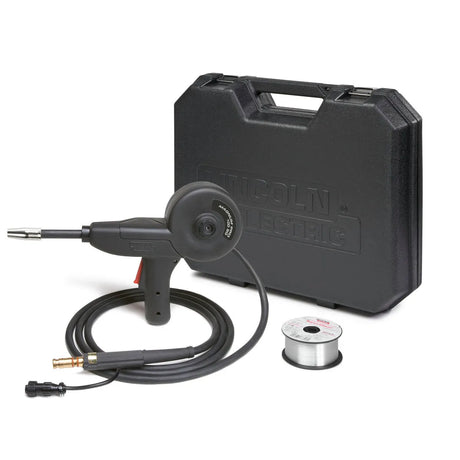
Lincoln Magnum PRO 100SG Spool Gun 4 Pin, 10 ft (3m) K3269-1
$502.88$649.62Unit price /Unavailable

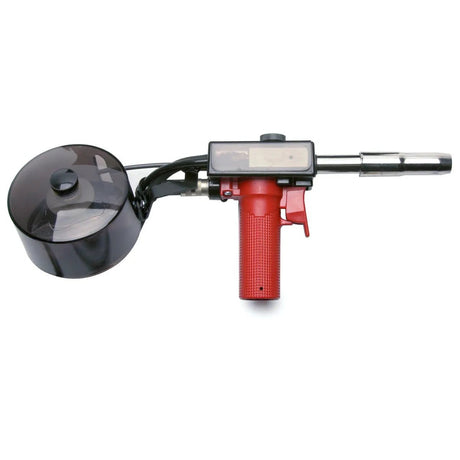

Lincoln Magnum PRO 100SG Spool Gun 8 Pin, 10 ft (3m) K4360-1
$542.88$704.90Unit price /Unavailable

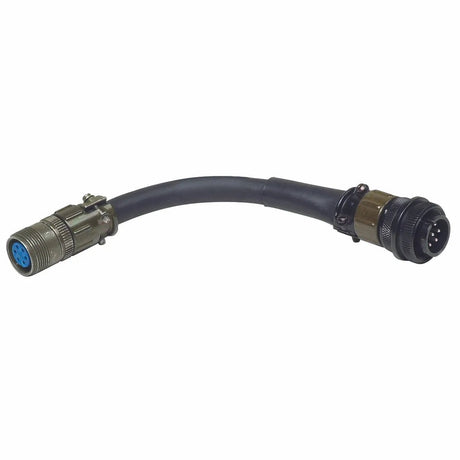
Mk Products Prince Xl Spool Gun 25 Feet Air Cooled - Miller Compatible - 339-725
$2,847.00Unit price /Unavailable
Mk Products Prince Xl Spool Gun 50 Feet Air Cooled - Miller Compatible - 339-750
$3,149.00Unit price /Unavailable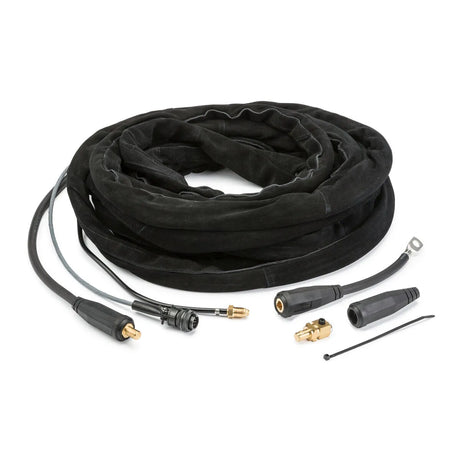



Spool Guns for Welding Aluminum — Your Complete Buying Guide
A spool gun is the go-to solution for aluminum mig welding with a standard MIG unit. Soft aluminum wire collapses and bird-nests inside a conventional push-only torch — because of the long drive path — a spool gun mounts the wire spool directly at the body — leaving just a few inches of liner path between the spool and the contact tip. That short path makes smooth, consistent aluminum wire feeding possible in shop, marine, and field environments alike. Whether you are welding aluminum boat hulls, auto body panels, structural frames, or HVAC ductwork, a quality spool gun gives you the reliability that aluminum mig welding demands.
WeldingMart (Appleton, WI) stocks spool guns from Lincoln Electric, Miller, Hobart, and other trusted brands. Orders placed before 3 PM CT ship same day. Free freight on purchases over $99. Browse our full collection below to find the model that fits your power source. Use the product comparison section to evaluate options side by side, and get the right model today.
How a Spool Gun Works
Standard push-only MIG torches push filler wire through up to 15 feet of liner. For steel, the wire is rigid enough to traverse that distance without issue. Aluminum wire is far softer — pushing it through a long drive path produces friction, kinking, and eventually a birdnested liner that stops the weld. A spool gun eliminates this by housing the wire spool at the body itself. The drive path shrinks to a few inches, allowing smooth, uninterrupted aluminum wire feeding every time you pull the trigger.
The gun cable connects the body to the power source, carrying power, argon, and the trigger signal. A wire feed adjustment dial built into the body lets operators tune the feed from the arc position — a feature that operators working at distance consistently rate as one of the most useful they have. Most designs use air cooled construction and are lightweight enough for all-day use with gloved hands.
Two drive system architectures compete in this market: the self-contained spool gun and the push pull system. This dual-motor approach uses synchronized motors in both the feeder and the body to maintain precise wire tension across cable runs of 30 feet or more — the preferred approach for high-volume production environments. For most welders doing aluminum mig welding in the shop or field, a self-contained unit delivers everything they need without the complexity and cost of a push pull setup. The dual-motor approach is the right call when cable length is a hard constraint; otherwise, self-contained is the practical way to go.
Welding Aluminum: Why This Process Works
Welding aluminum differs from welding steel in important ways. Aluminum melts at a lower temperature, conducts heat rapidly across the base metal, and forms a tenacious oxide layer on its surface that must be broken before fusion can occur. The oxide layer melts at roughly three times the temperature of the base metal itself — which is why the correct argon gas flow and settings matter so much when welding aluminum.
A spool gun paired with pure argon and the right aluminum wire alloy addresses these challenges directly. The arc cleaning action of DCEP polarity breaks through the oxide layer on each pass, and the short wire drive path inside the spool gun ensures that the soft filler arrives at the contact tip without deformation. The result is strong welds with good fusion and minimal porosity — outcomes that are difficult to achieve consistently with a push-only torch on aluminum mig welding applications.
Good penetration on aluminum requires balancing output, feed rate, and travel pace. Welding aluminum on material thicker than 3/8 inch typically calls for preheat — check the manufacturer recommendations for the specific alloy and thickness you are welding. For thin sheet, use a lower voltage and a faster travel speed to prevent burn-through. Understanding how these settings interact is the key to consistent results on aluminum mig applications.
Product Comparison: Top Spool Gun Models at WeldingMart
This product comparison covers the most popular models in our inventory. Use it as a starting point for your evaluation. Larger images and full spec sheets are available on each individual listing — click through to view product comparison data, customer comments, and video content for each model. All images shown reflect actual products in stock and available for same-day shipment.
Lincoln Electric Magnum SG Spool Gun
The Magnum SG is the best-selling Lincoln spool gun in our catalog. Purpose-built for Lincoln Electric MIG welders, it delivers precise trigger response, correct polarity connections, and a wire feed dial that lets you adjust output without leaving the arc. Customers who use Lincoln units consistently comment that the Magnum SG is the most direct upgrade they can make for aluminum mig welding. The contact tip comes installed from the factory, so it is weld-ready straight out of the box. Available with a 20-foot cable for extended reach. A product comparison with third-party options almost always ends with the Magnum SG — it is designed for the power source you already own. Video of this model in use is available on the product listing.
Miller Spoolmate 100 Series
The Spoolmate line is designed for Miller MIG welders. The Spoolmate 100 is a strong match for hobbyist and light-production users working on aluminum projects up to 1 4 inch thick. It works with Miller units directly — no separate control box needed. Customer comments on this model highlight the ergonomic body design, the quick wire loading process, and consistent performance on light aluminum. Product photos of completed beads using the Spoolmate 100 show clean profiles on both 4043 and 5356 aluminum wire. A product comparison between the Spoolmate 100 and 150 usually comes down to material thickness requirements. Video of this model is available on the product page.
Miller Spoolmate 150 and 200 Series
The Spoolmate 150 steps up to a 150A rating, making it a good choice for welding aluminum plate in the 1/8 to 3/16 inch range. The Spoolmate 200 handles heavier structural aluminum applications. Both work with Miller units and support the same output adjustments as other Miller products. Customer comments on these models note the improved duty cycle and the durable lead assembly as key reasons to step up from the base Spoolmate 100. Online tutorials provide a walkthrough of initial setup and feed settings for each model in this product comparison series.
Hobart Spool Gun
Hobart offers a spool gun for Handler series units — a good entry-level option for buyers who need aluminum welding capability without a large investment. Customer comments on the Hobart model frequently mention the good price point and the quick loading process. It handles 0.030 and 0.035 inch aluminum wire on material up to 1/8 inch. A product comparison between the Hobart and Miller models at similar price points shows the Hobart as the better value for light-duty applications. Product photos show a compact, lightweight design that is simple to maneuver on sheet metal and workshop fabrication projects.


