
E8018 stick electrodes are low-hydrogen, high-strength rods for welding HSLA steels, chrome-moly alloys, and quenched-and-tempered base metals that require a minimum 80,000 psi tensile weld deposit. Common classifications include 8018-C1 (nickel-bearing steel), 8018-C3 (structural HSLA), and 8018-B2 (chrome-moly pressure piping) — each with specific preheat, interpass temperature, and post-weld heat-treatment requirements. Lincoln Excalibur 8018 electrodes are available in moisture-resistant (MR) packaging for jobs where hydrogen control is critical to weld integrity.
-

Lincoln Excalibur 8018-C3 MR 3/32 x 14 in SMAW Welding Rod
From $197.28$241.50Unit price /Unavailable
Lincoln E8018-C1 (Excalibur 8018-C1 MR x 14 SMAW Welding Rod)
From $268.00$312.60Unit price /Unavailable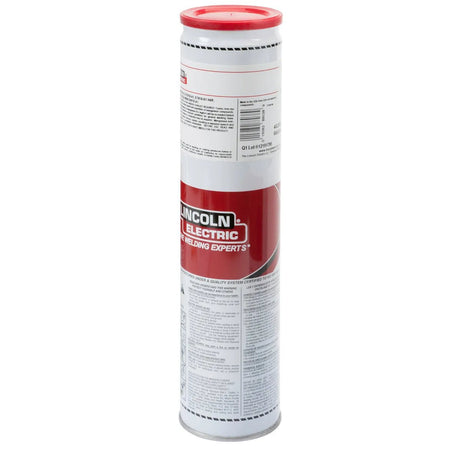
Lincoln Excalibur 8018-B2 MR E8018-C3 Stick Welding Rod
From $180.54$185.75Unit price /UnavailableE8018 electrodes are low-hydrogen, high-strength stick rods designed for welding high-strength low-alloy (HSLA) steels, chrome-moly alloys, and quenched-and-tempered base metals that require a minimum 80,000 psi tensile-strength weld deposit. If your procedure specifies an 8018-C1 for nickel-bearing steel, an 8018-C3 for structural HSLA, or an 8018-B2 for chrome-moly pressure piping, you're working with an electrode class that demands proper preheat, controlled interpass temperature, and post-weld heat treatment per the applicable code. This is not a direct-substitution upgrade from 7018 — the 8018 requires a qualified procedure written for the specific base metal and subclass being used.
Choosing an 8018 rod for your job
- Amperage range: 80–120 A for 1/8 in; 110–160 A for 5/32 in; 170–230 A for 7/32 in. Higher-strength electrodes benefit from slightly lower heat input to preserve HAZ toughness and avoid over-tempering in Q&T base metals.
- Polarity: DC+ (DCEP) only — the low-hydrogen flux system is not rated for AC. Proper baking and storage are mandatory for all 8018 grades, the same as for 7018.
- Joint position: All-position. The "1" in the classification digit indicates suitability for flat, horizontal, vertical-up, and overhead welds, matching the versatility of 7018 on a wider range of base metals.
- Base metal: A514, A517 (T-1 steel), HY-80, HY-100, chrome-moly (1Cr-0.5Mo for B2 subclass), and ASTM structural HSLA steels requiring 80 ksi minimum yield strength in the deposit.
- Typical applications: Heavy construction equipment manufacturing, high-pressure process piping, offshore structures, structural repair on Q&T steels, and any weldment governed by AWS D1.1 prequalified HSLA procedures.
8018 Subclass Decoder: B2, C1, C3, W2
The letter-and-digit suffix on an E8018 designation identifies the chemistry of the weld deposit and the intended base-metal pairing:
- 8018-B2: 1.25Cr-0.5Mo chrome-moly chemistry. Specified for chrome-moly pressure piping (ASME B31.1, B31.3) and elevated-temperature service. Requires 300–400°F preheat and post-weld heat treatment.
- 8018-C1: 2.5% nickel chemistry. Specified for low-temperature service on 2.5% Ni steels — LNG storage, cryogenic piping, Arctic structural work.
- 8018-C3: 1% nickel chemistry. The general-purpose 8018 grade for structural HSLA steels (A572 Grade 65, A588 weathering steel) where 7018's 70 ksi is insufficient.
- 8018-W2: Weathering-steel chemistry — Cr, Ni, Cu additions that match the corrosion-resistant patina behavior of A588 base metal. Specified for bridge structures where the weld must weather identically to the base.
Substituting one subclass for another is a procedure violation under most codes. Confirm the WPS calls out the specific 8018 subclass before purchasing.
7018 vs 8018: When to Step Up
The choice between 7018 and 8018 is driven by the base metal and the code, not by "stronger is better":
- Use 7018 when the base metal is ASTM A36, A572 Grade 50, A516, or any mild/structural steel where 70 ksi tensile in the deposit meets the WPS. This covers the vast majority of structural fabrication.
- Use 8018 when the base metal is A514, A517 (T-1), HY-80/100, chrome-moly (P11, P22), 2.5% Ni cryogenic steel, or weathering steel, and the WPS calls for 80 ksi minimum tensile deposit with matching chemistry to the base. Overmatching strength with no procedure backing creates HAZ failures, not stronger welds.
Typical Mechanical Properties (As Welded)
E8018 weld metal typically meets or exceeds these AWS A5.5 / ASME SFA 5.5 specifications:
- Tensile strength: 80,000–100,000 psi (552–690 MPa) — AWS minimum 80,000 psi
- Yield strength: 67,000–88,000 psi (462–607 MPa) — AWS minimum 67,000 psi
- Elongation in 2 in: 19–25% — AWS minimum 19%
- Charpy V-notch impact: Subclass-dependent; 8018-C3 typically meets 20 ft-lb at -40°F, 8018-C1 at -75°F
- Diffusible hydrogen: H4 or H8 ml/100g depending on product
Mechanical performance varies meaningfully by subclass — chrome-moly B2 deposits behave differently from nickel-bearing C1 and C3 deposits in the as-welded and post-weld-heat-treated conditions. Always confirm against the specific product data sheet.
What's in this collection
This collection holds 13 active SKUs, all from Lincoln Electric's Excalibur line — the industry benchmark for low-hydrogen HSLA electrodes. Representative products include the Lincoln ED032883 Excalibur 8018-B2 MR in 5/32 x 14 in (50 lb easy-open can) — the specification electrode for 1.25Cr-0.5Mo chrome-moly pipe and pressure vessel service — and the Lincoln ED034315 Excalibur 8018-C3 MR in 7/32 x 18 in (50 lb can), sized for high-deposition flat and horizontal passes on structural HSLA applications. The MR (Moisture-Resistant) designation on all Excalibur 8018 products extends the out-of-oven exposure window, which is a meaningful production advantage on active job sites.
If your base metal is mild structural steel and 70 ksi tensile strength satisfies the procedure, the 7018 low-hydrogen electrodes are the appropriate and lower-cost choice. The full stick welding electrodes hub covers the complete SMAW strength ladder from general-purpose through high-strength alloy grades. The strength digit, position digit, and flux-suffix digit in the E8018 classification are all decoded in the AWS classification guide.
Storage, Preheat, and Procedure
All 8018 electrodes must be stored in a rod oven at 250–300°F after opening, with reconditioning at 700–800°F per AWS D1.1 Annex I if ambient exposure time has been exceeded. Preheat and interpass temperature requirements for HSLA and chrome-moly base metals are significantly more demanding than for mild steel — A514 typically requires 200–400°F preheat; 1.25Cr-0.5Mo (8018-B2) applications typically require 300–400°F per ASME B31.3. Consult the applicable welding procedure specification and the Lincoln Electric Procedure Handbook of Arc Welding for specific values before beginning fabrication. Post-weld heat treatment is mandatory for many chrome-moly and Q&T base metal applications — confirm the procedure before welding.


