
Explore the power of robotic welding machines—engineered for manufacturers seeking enhanced productivity, reduced welding errors, and seamless automation. Ideal for high-volume fabrication, these systems deliver precision, flexibility, and consistency across complex welding tasks.
-
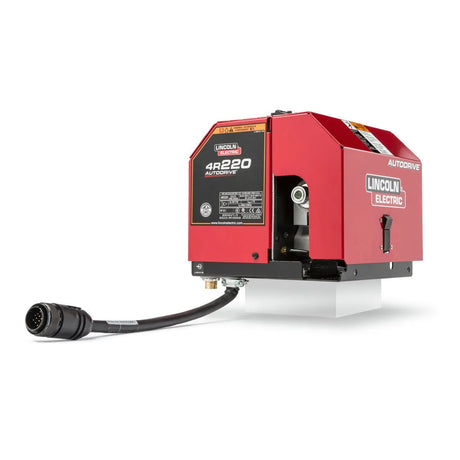

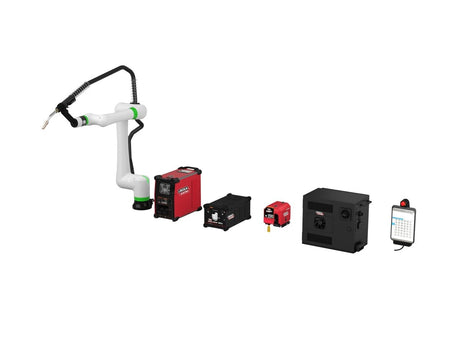
Lincoln Cooper CRX-10iA/L Water-Cooled Welding Cobot Package AD2495-10
$69,999.00Unit price /Unavailable
Lincoln Standard Seam Tracker Standard Control Unit K52020-1
$11,485.38$12,114.90Unit price /Unavailable
Lincoln ST250 10 x 10 Seam Tracker Standard System One-Pak K52007-1010
$34,527.51$36,344.70Unit price /Unavailable
Lincoln Magnum Pro Robotic One-Pak 120ID/12L K3359-120ID/12L
$3,124.56$3,676.08Unit price /Unavailable
Lincoln Seam Tracker Control Package for CS250 and CS450 (Control, Pendant, Cables) K52016-1
$18,451.68Unit price /Unavailable

Lincoln Magnum PRO Robotic 550 Welding Gun, External Dress 11 ft. K2647-11
$1,995.77$2,429.35Unit price /Unavailable


Lincoln Magnum PRO External Dress Water-Cooled Robotic Torch One-Pak 11ft K5415-11
$4,131.18$4,936.03Unit price /Unavailable
Lincoln Seam Tracker Advanced Programming Control Unit K52021-1
$16,088.51$16,935.28Unit price /Unavailable
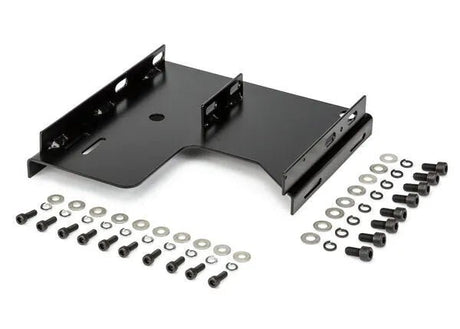

Lincoln CS250 10 x 10 Cross Slide Assembly K52014-1010
$13,159.01$13,851.60Unit price /Unavailable
Lincoln AutoDrive SA Control Cable for Fanuc 100iD/8L K3390-16
$1,289.30$1,651.09Unit price /Unavailable


Lincoln Dress-Out Kit for Yaskawa MA1440 Robotic Arm K4251-MA1440-B
$2,776.70$3,613.82Unit price /Unavailable
 $1,532.66
$1,907.50Unit price /Unavailable
Lincoln MS Control Package (Control, Pendant and Cables) CS250 AND CS450 K52018-1
$9,641.84Unit price /Unavailable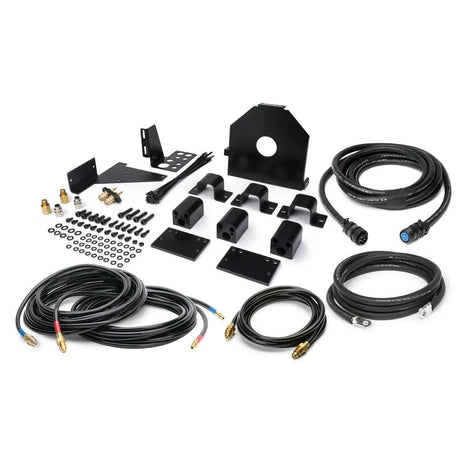
Lincoln Dress-Out Kit for ABB IRB2600 and IRB2600ID- Servo Feeders K4253-IRB2600ID-A
$2,099.81Unit price /Unavailable

Lincoln AutoDrive SA Gas Diffuser 550A 25/pack KP4380-1-B25
$651.00$682.50Unit price /Unavailable
Lincoln Magnum PRO Water-Cooled Robotic Torch, Air Blast, Fanuc Arm 120iD/12L K3593-29A
$5,140.58$6,047.48Unit price /Unavailable


Lincoln AutoDrive S Wire Feeder One-Pak for MotoMan 1440 K4306-MA1440
$17,445.90Unit price /Unavailable
Lincoln Magnum PRO Air-Cooled Robotic Torch, Wire Brake, KUKA arm KR8R2100HW K3359-KR8R2100HWW
$4,036.44$4,567.04Unit price /Unavailable
Lincoln Ethernet Patch Cable 100' with Bayonet Connection K4907-100
$528.00Unit price /Unavailable
Lincoln Ethernet Patch Cable 125' with Bayonet Connection K4907-125
$645.00Unit price /Unavailable

Lincoln MS250 5 x 5 Motorized Slide System One-Pak K52009-0505
$27,086.91$28,512.50Unit price /Unavailable



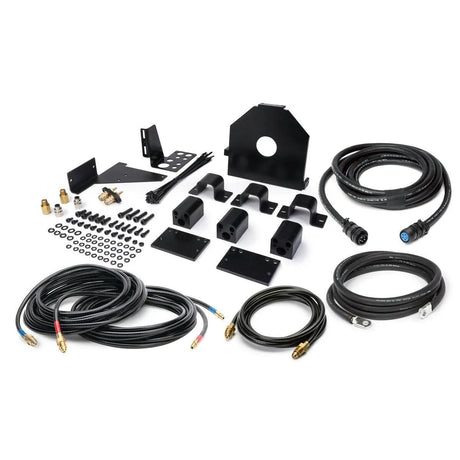
Lincoln MS250 10 x 10 Motorized Slide System One-Pak K52009-1010
$24,485.61$25,774.35Unit price /Unavailable

Lincoln Dress-Out Kit for Yaskawa Motoman Robotic Arm MA1440- Servo Feeders K4251-MA1440-A
$2,292.56$2,982.19Unit price /Unavailable
Lincoln Magnum PRO Air-Cooled Robotic Torch, ABB Arm 2600ID-20 K3359-2600ID-20
$3,649.20$4,585.56Unit price /Unavailable
Lincoln AutoDrive SA One-Pak for Fanuc M710iC/12L K4678-M710IC/12L
$36,134.75Unit price /UnavailableWelding Robots, Robotic Welding Machines, and Auto Welding Machines: Overview and Key Insights
Robotic welding solutions have become an essential component in modern manufacturing, offering numerous advantages over manual techniques.
Introduction to Welding Automation
Learn how robotic innovations and automation have revolutionized the industry.
Definition and Overview of Robotic Welding
Welding automation refers to the use of advanced technologies, such as welding robots, robotic welding machines, and auto welding machines, to perform welding tasks with minimal human intervention. These systems utilize computer-controlled programming to execute precise welds, ensuring high repeatability and accuracy. The integration of automation in welding processes has transformed industrial manufacturing, enabling businesses to handle large-scale production demands with consistent quality.
Importance in Manufacturing
In today’s competitive manufacturing landscape, welding automation is crucial for maintaining productivity and quality standards. Companies across industries such as automotive, construction, aerospace, and heavy machinery rely on robotic welding solutions to meet rigorous timelines, reduce errors, and adhere to stringent safety requirements. The adoption of welding robots and technologies not only streamlines manufacturing operations but also supports scalability and fosters customer satisfaction.
Types of Welding Technologies
Different welding processes include arc welding, laser welding, and plasma cutting, each offering unique benefits.
Robotic Welding Systems
Robotic welding systems consist of programmable robotic arms equipped with welding heads and torches. These systems excel in repetitive, high-volume production environments, producing uniform welds across identical parts. Their flexibility allows manufacturers to switch between various welding tasks by reprogramming the robot, making them ideal for applications that demand both adaptability and precision.
Automatic Welding Machines
Automatic welding machines are dedicated units designed to automate specific welding processes—such as MIG, TIG, or spot welding—without the need for a robotic arm. These machines consistently apply welds based on set parameters, delivering reliability and efficiency in applications like pipeline construction, sheet metal fabrication, and steel structures.
Collaborative Robots
Collaborative robots, or cobots, are a newer category designed to work safely alongside human operators. Cobots offer flexible assistance with welding tasks that require a blend of manual skill and automation. Their ability to integrate into existing workflows enhances safety, reduces operator fatigue, and enables small- and medium-sized manufacturers to access automation benefits without large-scale investments.
Benefits of Welding Automation
Increased Efficiency and Productivity with Robotic Welder Integration
Automated welding systems significantly boost productivity by operating continuously with minimal downtime, cutting the need for manual intervention. They also complete tasks faster than manual processes, allowing manufacturers to meet higher production targets.
Cost-Effectiveness and Quality Consistency
By reducing weld defects and minimizing metal waste, automated welding processes ensure consistently high-quality results. This leads to lower rework costs and scrap rates, enhancing overall cost-effectiveness for businesses of all sizes. The use of arc welding robots has significantly contributed to achieving weld quality.
Addressing Labor Shortages
With skilled welders in short supply, automation helps bridge the gap by performing repetitive or hazardous welding tasks. This enables companies to meet production demands and improve service delivery even when experienced personnel are scarce.
Challenges and Considerations
Initial Investment and ROI of Welding Equipment
While welding automation offers long-term savings, the upfront cost of purchasing and implementing robotic or automatic welding machines can be substantial. Manufacturers must carefully evaluate their production needs and projected return on investment before adopting these systems.
Employees require training to operate, program, and maintain automated welding equipment, arc welding tools, and robotic systems effectively.
Employees require training to operate, program, and maintain automated welding equipment effectively. Ongoing support and preventive maintenance are necessary to ensure optimal system performance and longevity.
Future Trends in Welding Automation
Technological Advancements
The future of welding automation is driven by innovations in artificial intelligence, machine learning, and advanced sensors. These advancements enable smarter, more adaptive robotic welding machines capable of self-optimizing their operations for improved efficiency and weld quality.
Sustainability in Welding Processes
Modern welding automation also prioritizes sustainability by optimizing energy use and minimizing waste. As environmental regulations tighten, adopting energy-efficient and eco-friendly welding solutions will become increasingly important for manufacturers. This approach not only helps maintain environmental standards but also enhances weld seam precision.
Automating welding with robotic welding machines and tools is reshaping the manufacturing sector by enhancing productivity, ensuring consistent quality, and addressing labor challenges. Understanding the technologies, benefits, and future trends of welding automation empowers manufacturers and industrial engineers to make informed decisions for a more efficient and sustainable future in welding processes.


