
Shop welding helmets and hoods from top brands like Lincoln Electric. Featuring auto-darkening lenses, superior safety, and comfortable designs, these helmets provide reliable protection and visibility for safer, more efficient welding.
-

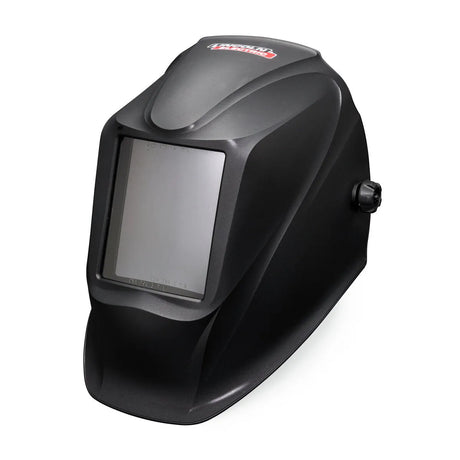
Lincoln VIKING Industrial Passive Black Welding Helmet - K3371-1
$59.79$87.65Unit price /Unavailable
Lincoln VIKING 3350 ADV Hot Rodders Welding Helmet - K4440-5
$498.88$764.84Unit price /Unavailable
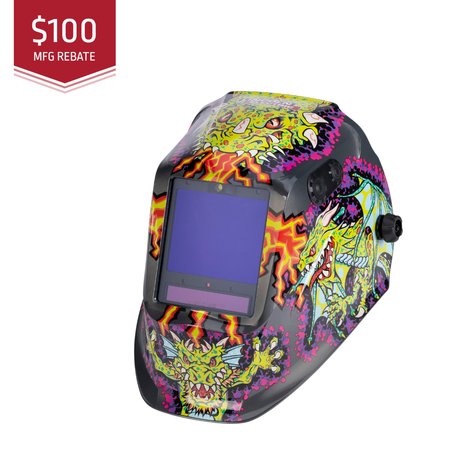


Lincoln VIKING 3350 ADV Star-Spangled-250th Edition Welding Helmet - K6064-5
$398.22$599.99Unit price /Unavailable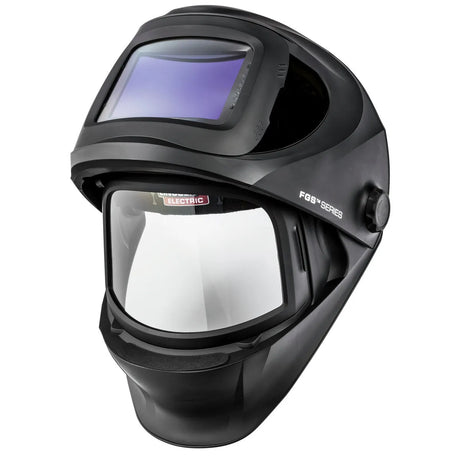
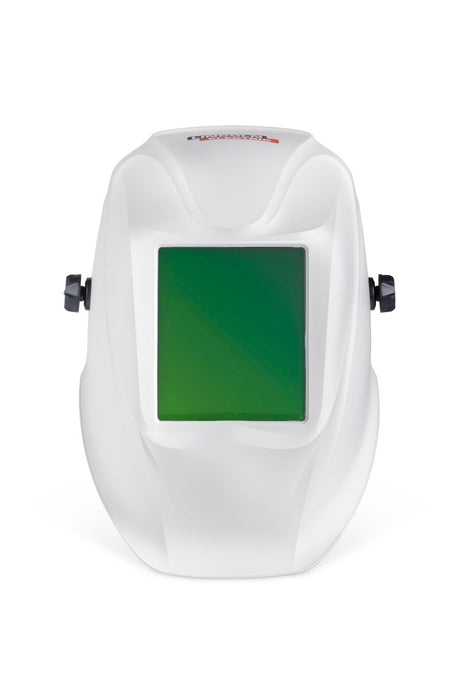

Lincoln Viking 3350 Series Auto-Darkening Welding Helmet
From $432.88$652.58Unit price /Unavailable
Lincoln Viking 3350 ADV Star Spangled Welding Helmet - K5559-5
$628.00$728.42Unit price /Unavailable

Lincoln VIKING 3350/2450 5th Gen Code Red Replacement Shell - KP4577-2
$102.16$126.69Unit price /Unavailable


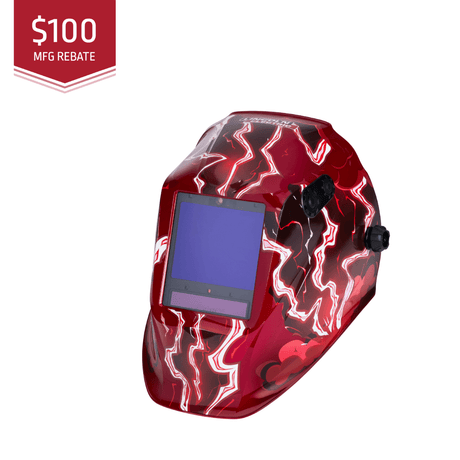
Lincoln VIKING 3350 ADV Red Strike Welding Helmet - K5754-5
$504.03$759.41Unit price /Unavailable


Lincoln Viking 2450 ADV Series Auto-Darkening Welding Helmet
From $391.34$608.57Unit price /Unavailable

Lincoln Viking 2450 Series Auto-Darkening Welding Helmet
From $385.41$540.54Unit price /Unavailable
Lincoln Viking 1740 Series Auto-Darkening Welding Helmet
From $160.87Unit price /Unavailable

Lincoln Viking 3350 ADV Series Auto-Darkening Welding Helmet
From $490.88$764.84Unit price /Unavailable
Lincoln VIKING 3350/2450 5th Gen Steampunk Replacement Shell - KP4574-2
$102.16$126.69Unit price /Unavailable
Lincoln VIKING 3350/2450 5th Gen Daredevil Replacement Shell - KP4576-2
$102.16$126.69Unit price /Unavailable
Lincoln Viking 1840 Series Auto-Darkening Welding Helmet
From $318.88$478.98Unit price /Unavailable
Lincoln VIKING 3350/2450 5th Gen Hot Rodders Replacement Shell - KP4580-2
$102.16$126.69Unit price /Unavailable

Welding Helmets & Welding Hoods — Auto-Darkening, Passive & PAPR
A welding helmet is the single piece of PPE a welder reaches for before every arc strike. The right welding hood protects your eyes, face, and neck from ultraviolet and infrared radiation, spatter, and heat while giving you a clear, undistorted view of the puddle. This guide covers every factor that matters — lens technology, optical clarity ratings, arc response speed, shade range by process, and which Lincoln VIKING model fits each application — so you can weld safely.
WeldingMart is an authorized Lincoln Electric dealer. Every VIKING helmet sold here carries Lincoln's full manufacturer warranty with no grey-market risk.
What to Look for in a Welding Helmet
Five parameters directly determine safety and weld quality.
Arc Sensors and Trigger Reliability
Auto-darkening helmets use photoelectric arc sensors to detect the welding arc and switch the lens from light state to dark state in a fraction of a second. Entry-level helmets carry two sensors. Professional-grade helmets — including the Lincoln VIKING 2450 ADV and 3350 ADV series — use four sensors, which matters when your body position, a fixture, or a corner can block one or two sensors from seeing the arc. With four sensors you get consistent triggering regardless of angle or obstruction. If a sensor misses the arc, even momentarily, the lens stays light and your retinas absorb the full unfiltered arc. Four sensors is the professional minimum for out-of-position, pipe, and structural welding.
Lens Shade Range
Lens shade is the optical density number that determines how much arc light reaches your eyes. AWS Z49.1 minimum shade requirements by process:
- Shade 5–6: Light-duty plasma cutting under 20 amps, torch brazing
- Shade 7–9: Low-amperage TIG (5–150A), plasma cutting 20–40A, light MIG under 60A
- Shade 10: TIG 150–250A, MIG 60–160A, stick 100–175A
- Shade 11–12: TIG 250–500A, MIG 160–250A, stick 175–300A, heavy flux-core
- Shade 13–14: High-amperage stick over 300A, carbon arc gouging
Auto-darkening helmets with variable shade 5–13 cover every common welding and cutting process in a single hood. All VIKING series helmets provide shade 5–13 variable range.
Arc Response (Reaction) Time
Reaction time is the speed at which the auto-darkening filter switches from light state to dark state. A faster reaction time means less exposure to unfiltered arc light at arc initiation. The Lincoln VIKING 3350 ADV delivers 1/30,000-second switching speed. The VIKING 2450 ADV achieves 1/25,000 second — the professional standard. Both are well below the threshold where arc exposure causes cumulative eye damage. Entry-level acceptable starts at 1/16,000 second.
Optical Clarity Rating (1/1/1/1 Standard)
The EN 379 standard rates auto-darkening filter lenses across four parameters, each scored 1 through 3 (lower is better): optical class (distortion), diffusion of light (scatter), variation in luminous transmittance (shade uniformity), and angle dependence of luminous transmittance (consistency when welding out of position). A 1/1/1/1 rating is the highest achievable. Lincoln's 4C® Lens Technology, used in the VIKING 2450 ADV and 3350 ADV series, achieves 1/1/1/1 optical clarity. This matters most in TIG welding, where reading the puddle edge and tungsten position requires zero optical distortion.
Viewing Area
Viewing area is the size of the auto-darkening filter window in square inches. The VIKING 1740 delivers 9.5 sq. in. The VIKING 3350 ADV leads at 12.5 sq. in. — 31% larger — built for out-of-position, overhead, and complex fabrication work where peripheral visibility is critical. If you weld pipe overhead or structural connections in confined spaces, the 3350 ADV's window is the practical choice.
Auto-Darkening vs. Passive Lens Technology
Passive Welding Helmets
A passive welding helmet has a fixed-shade lens — usually shade 10 or shade 11 — that is always dark. To see your workpiece before striking an arc, you flip the hood up. To start welding, you flip it down and strike. No batteries, no sensors, no electronics to fail.
Advantages: Zero electronics, lower cost, no sensor failure risk, reliable in extreme cold, preferred by some high-amperage stick and TIG welders who trust fixed optics unconditionally.
Limitations: Requires flipping the hood between each weld pass (neck strain on production days), fixed shade cannot adapt across processes, repositioning introduces arc-starting positional errors in pipe and overhead positions.
The Lincoln VIKING Industrial Passive Black (K3371-1) uses a fixed shade-11 lens and meets ANSI Z87.1 and CSA Z94.3 standards. It is correct for students, training environments, backup helmets, and welders exclusively running single-process high-amperage work.
Auto-Darkening Welding Helmets
Auto-darkening helmets use an LCD filter that is transparent in its resting state (shade 3–4 light state) and switches to the selected dark shade the moment arc sensors detect the arc — in 1/25,000 second or faster. The welder positions the hood down before striking, maintaining proper joint position, and the lens darkens automatically.
Advantages: No head-nod required, variable shade range across processes, significant reduction in neck strain and fatigue on production days, enables precise positional starts, grinding mode (VIKING 2450 ADV and 3350 ADV) locks lens in light state for interpass grinding without removing the helmet.
For any welder doing production work, TIG precision welding, or switching between processes, auto-darkening technology pays for itself quickly in reduced fatigue and improved weld quality.
Welding Helmets by Application
MIG and Flux-Core Welding (GMAW/FCAW)
MIG and flux-core welding generates a bright, spattering arc at 80–400 amps. Key requirements: variable shade 9–13, spatter-resistant outer cover lens (replace regularly when clouded), fast reaction time (1/25,000 sec minimum), four sensors for positional work. Recommended: VIKING 3350 ADV for high-production MIG shops, VIKING 2450 ADV for professional MIG, VIKING 1740 for hobbyist and lighter-duty MIG. Cross-reference: MIG Welders.
TIG Welding — Low-Amp Sensitivity
TIG welding (GTAW) is the most demanding application for auto-darkening helmets. TIG starts at amperages as low as 5–15 amps for thin-gauge stainless or aluminum. A sensor calibrated for MIG or stick arc intensity will not reliably trigger — causing a dangerous failure mode where the lens fails to darken at arc initiation. Requirements: arc sensitivity rated to 1 amp or lower, user-adjustable sensitivity control, 1/1/1/1 optical clarity (4C lens), shade 5–9 light-end range. The Lincoln VIKING 2450 ADV and 3350 ADV both include high-sensitivity detection for low-amperage TIG. Cross-reference: TIG Welders.
Stick Welding (SMAW)
Stick welding generates a robust arc that triggers auto-darkening sensors reliably. Shade 10–13 covers the full stick amperage range. Two-sensor helmets are adequate since the stick arc triggers reliably even with partial obstruction. The VIKING 1740 Matte Black is the standard choice for stick-primary environments. Cross-reference: Lincoln Stick Welders, Stick Electrodes & Rods.
Plasma Cutting
Plasma cutting requires shade 6–12 depending on amperage. VIKING helmets with shade 5–13 variable range handle both welding and plasma cutting from a single helmet, eliminating the need for a separate cutting hood.
Grinding Mode
Grinding mode on the VIKING 2450 ADV and 3350 ADV locks the lens in light state (shade 3–4) for light-touch grinding between weld passes. This is not a substitute for a proper grinding face shield during aggressive material removal. Use grinding mode only for interpass touch-up grinding in production workflows.
Lincoln VIKING Helmet Lineup
WeldingMart carries the complete Lincoln VIKING lineup. Every model ships with full Lincoln Electric manufacturer warranty.
Lincoln VIKING 1740 Series
The entry point to the VIKING lineup. Four arc sensors, shade 5–13 variable, 1/25,000 sec reaction time, 9.5 sq. in. viewing area. Right for hobbyists, vocational students, and welders running one or two processes at consistent settings. The Matte Black version (K3282-4) is a clean, shop-durable option. The best first auto-darkening helmet for anyone moving up from a passive hood.
Lincoln VIKING 1740 Series | VIKING 1740 Matte Black (K3282-4)
Lincoln VIKING 1840 Series
Sits between the 1740 and 2450. Four sensors, shade 5–13, 1/25,000 sec response. Suitable for hobbyist to light professional use, single-process or limited multi-process applications.
Lincoln VIKING 2450 Series
The professional mid-range VIKING. 4C Lens Technology (1/1/1/1 optical clarity), larger viewing area versus the 1740, full ADV feature set including grinding mode, external controls, and optimized TIG sensitivity adjustment. The most popular VIKING model in professional fabrication shops. Recommended for TIG welding requiring 1/1/1/1 optical quality, multi-process shops, and welders who grind between passes.
Lincoln VIKING 2450 Series | Lincoln VIKING 2450 ADV Series
Lincoln VIKING 3350 ADV Series
Lincoln's flagship helmet. The 12.5 sq. in. viewing area is 31% larger than the 2450 series — the reason structural welders, pipe welders, and complex fabricators choose the 3350. 4C Lens Technology (1/1/1/1 optical clarity), four sensors, 1/30,000-second reaction time, grinding mode, external shade/sensitivity/delay controls. Available in Black, Dragon, Code Red, Daredevil, Steampunk, Hot Rodders, Doodles, Red Strike, Mojo, and Star Spangled graphics. All graphic shells are functional equivalents — lens and electronics identical.
VIKING 3350 Series | VIKING 3350 ADV Series | 3350 ADV Mojo | 3350 ADV Dragon | 3350 ADV Code Red | 3350 ADV Daredevil
Lincoln VIKING Industrial Passive Black (K3371-1)
Electronics-free reliability. Fixed shade-11, matte black shell, ratchet headgear, ANSI Z87.1 and CSA Z94.3 certified. Right for schools, training centers, backup helmets, and welders who exclusively run single-process high-amperage work where passive optics are preferred.
Lincoln VIKING Industrial Passive Black (K3371-1)
Lincoln VIKING FGS Hard Hat Helmet Assembly (KP4474-3)
Combines ANSI Z89.1-compliant hard hat protection with a VIKING auto-darkening helmet in a single assembly. Required on construction and structural sites where OSHA or site rules mandate simultaneous head and face protection. Replaces two separate pieces of PPE in one certified unit.
Lincoln VIKING FGS Hard Hat Helmet Assembly (KP4474-3)
Other Brands: Hobart
Beyond Lincoln VIKING, WeldingMart carries Hobart welding safety products — a trusted name for reliable, value-oriented PPE. Browse the full collection for current Hobart inventory.
Helmet Care and Lens Replacement
Cover Lens Replacement
The outer cover lens is a sacrificial component — its job is to take the spatter that would otherwise pit the auto-darkening filter. Inspect before every shift. Replace when spatter accumulation clouds visibility, scratches create optical distortion, or any impact damage is present. In high-production MIG environments, weekly replacement is normal. TIG welders with minimal spatter may go months. The cover lens is inexpensive relative to the filter — replace it proactively. A clouded cover lens is the most common cause of poor puddle visibility complaints that welders mistakenly attribute to the helmet itself.
Shop: Helmet Lenses & Accessories
Battery and Solar Cell Maintenance
Most VIKING helmets use solar cells plus replaceable CR2032 batteries. Replace CR2032 batteries annually or immediately if the helmet shows slow darkening, incomplete darkening, or failure to trigger. Store away from direct sunlight when not in use.
Shell and Headgear Care
Clean with a soft cloth and mild soapy water. Avoid solvents, acetone, or abrasives. Inspect the ratchet headgear every 90 days for worn teeth or cracked plastic. Replacement headgear assemblies are available for all VIKING series models. A properly fitted headgear distributes the helmet weight evenly across the head — a correctly fitting helmet reduces fatigue dramatically versus one that rocks or sits too low. Store in a cool, dry location away from UV and impact risk.
PAPR Helmets and Powered Air-Purifying Respirators
Welding fumes are a documented occupational health hazard. OSHA's Permissible Exposure Limits for manganese and hexavalent chromium are regularly revised downward. In inadequately ventilated environments — enclosed spaces, tanks, confined structural sections — a respirator is required, not optional.
WeldingMart carries Lincoln Electric PAPR systems integrating welding protection with powered respiratory protection. A PAPR draws ambient air through a filtration cartridge and delivers continuous clean airflow into the helmet, creating positive pressure that pushes fumes and weld smoke away from the breathing zone.
Key Lincoln PAPR systems available:
- Lincoln VIKING 3350 PAPR (K3930-1): Flagship PAPR based on the VIKING 3350 — 12.5 sq. in. viewing area, 4C lens, powered respiratory protection
- Lincoln FGS PAPR Assembly (KP4474-1): Hard-hat-mount PAPR for construction and structural environments requiring simultaneous head protection
- Lincoln VIKING 3250D FGS PAPR Extended Battery (K4550-3): Extended battery for longer shifts
- Lincoln OMNIShield XCF PAPR Belt Mount (K5324-1): Belt-mounted blower for mobility and reduced head weight on overhead and positional welding
PAPR systems are appropriate when welding stainless, chrome-moly, or galvanized steel where fume exceeds OSHA PELs; in confined spaces; or in high-production environments with cumulative fume exposure at threshold limits. Browse: PAPR Helmets
Related Welding Collections
Complete welding safety requires a full PPE kit:
- Welding Gloves
- Welding Jackets, Bibs & Aprons
- Welding Blankets & Tarps
- Helmet Lenses & Accessories
- MIG Welders (GMAW/FCAW)
- TIG Welders
- Lincoln Stick Welders
- All Welding Machines & Equipment
Frequently Asked Questions: Welding Helmets and Hoods
What is the best welding helmet for beginners?
The Lincoln VIKING 1740 is the best starting point for most beginners — four-sensor auto-darkening, shade 5–13 variable range, professional safety standards at an accessible price. The Lincoln VIKING Industrial Passive Black (K3371-1) is right for absolute entry-level budgets or training environments where electronics-free simplicity is the priority.
What is the difference between auto-darkening and passive welding helmets?
A passive welding helmet has a fixed-shade lens that is always dark. The welder flips the hood up to see, then flips it down before striking. An auto-darkening helmet has an electronically controlled lens that stays clear and darkens automatically in 1/25,000 second the moment arc sensors detect the welding arc. Auto-darkening eliminates the head-nod motion, reduces neck strain, and lets the welder position the electrode precisely before arc initiation. Passive works for single-process training and backup; auto-darkening is the standard for professional and production welding.
What shade lens should I use for TIG welding?
AWS Z49.1 recommends shade 8–9 for TIG at 5–100 amps, shade 10 for 100–200 amps, shade 11–12 for 200–400 amps, shade 13–14 for over 400 amps. The critical issue for TIG is ensuring the auto-darkening helmet has high sensitivity capable of triggering at 1–5 amps — where budget helmets fail at low-amperage starts. The Lincoln VIKING 2450 ADV and 3350 ADV are both rated for low-amperage TIG detection.
How often should I replace my welding helmet lens?
Outer cover lenses in active MIG environments should be inspected before every shift and replaced when spatter accumulation, scratching, or impact damage reduces clarity — often weekly in production shops. TIG welders with minimal spatter may replace cover lenses quarterly. The auto-darkening filter lens rarely requires replacement unless physically damaged. Lens kits for all VIKING models are in the Helmet Lenses & Accessories collection.
What does 4C Lens Technology mean on Lincoln VIKING helmets?
4C Lens Technology is Lincoln Electric's proprietary auto-darkening filter design used in the VIKING 2450 ADV and 3350 ADV series. It achieves a 1/1/1/1 EN 379 optical clarity rating — the highest possible — across all four clarity parameters. In practice: true-color view of the base material (no green tint), zero distortion at lens edges, consistent shade when welding out of position. For TIG welders, 4C makes puddle reading and tungsten positioning accurate and fatigue-free over a full shift.
What shade should I use for plasma cutting?
AWS Z49.1 recommends shade 6 for under 20 amps, shade 8 for 20–40 amps, shade 9 for 40–60 amps, shade 10 for 60–80 amps, shade 11–12 for 80–160 amps. Lincoln VIKING helmets with shade 5–13 variable range serve as both welding helmet and cutting hood without a separate purchase.
What is a PAPR welding helmet and when do I need one?
A PAPR (Powered Air-Purifying Respirator) welding helmet combines welding face protection with a powered air filtration system that delivers continuous filtered airflow into the helmet. You need a PAPR when welding stainless, chrome-moly, or galvanized material where hexavalent chromium or zinc fume exceeds OSHA PELs; welding in confined spaces; or in high-production environments with cumulative fume exposure at threshold limits. Lincoln Electric PAPR systems based on the VIKING 3350 platform are available at WeldingMart.
How do I adjust sensitivity on an auto-darkening welding helmet?
Turn sensitivity up (higher setting) for low-amperage TIG where the arc is subtle and sensors may not trigger at factory default. Turn sensitivity down in environments with bright ambient light, reflective surfaces, or sunlight where false triggers occur. The VIKING 2450 ADV and 3350 ADV have external sensitivity controls adjustable without removing the hood. Start at the midpoint and adjust until you achieve reliable triggering without false triggers.
What is the difference between the VIKING 2450 and VIKING 3350?
Primary differences: viewing area and reaction time. The VIKING 3350 ADV has a 12.5 sq. in. viewing area (31% larger than the 2450 series) and a 1/30,000-second reaction time versus 1/25,000 for the 2450 ADV. Both use 4C Lens Technology (1/1/1/1 optical clarity), four sensors, shade 5–13 variable range, and grinding mode. The 2450 ADV is lighter for production MIG and fab work. The 3350 ADV is the premium choice for out-of-position, overhead, structural, and pipe welding where the largest possible viewing area matters.
Can I use a welding helmet for grinding?
The VIKING 2450 ADV and 3350 ADV have grinding mode that locks the lens in light state (shade 3–4) for light interpass grinding without removing the helmet. For aggressive material removal with angle grinders or cutting discs, use a dedicated grinding face shield. Welding helmets are not rated as impact-resistant grinding shields, and grinding mode is not a substitute for proper grinding PPE during heavy material removal.


