
Shop welding helmets and hoods from top brands like Lincoln Electric. Featuring auto-darkening lenses, superior safety, and comfortable designs, these helmets provide reliable protection and visibility for safer, more efficient welding.
-

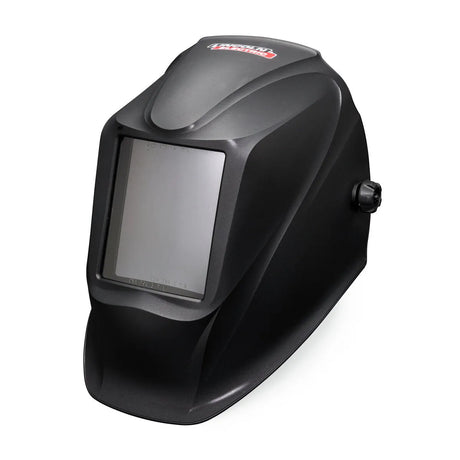
Lincoln VIKING Industrial Passive Black Welding Helmet - K3371-1
$59.79$87.65Unit price /Unavailable
Lincoln VIKING 3350 ADV Hot Rodders Welding Helmet - K4440-5
$498.88$764.84Unit price /Unavailable
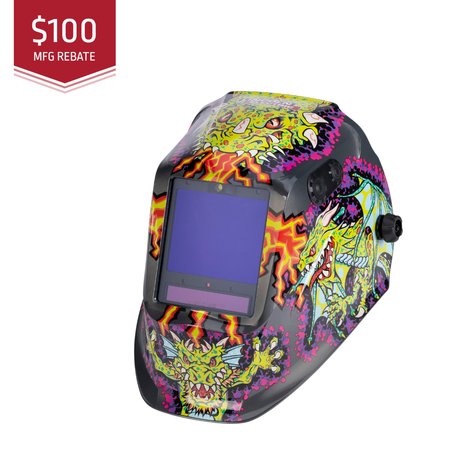


Lincoln VIKING 3350 ADV Star-Spangled-250th Edition Welding Helmet - K6064-5
$398.22$599.99Unit price /Unavailable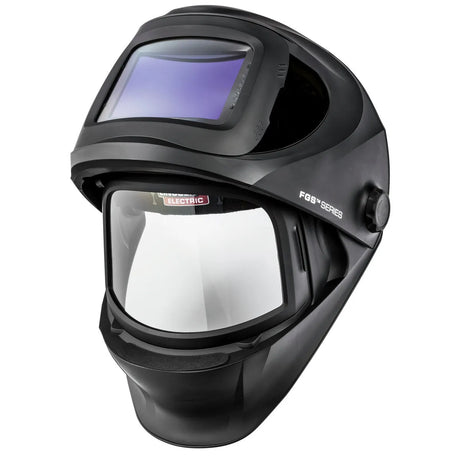
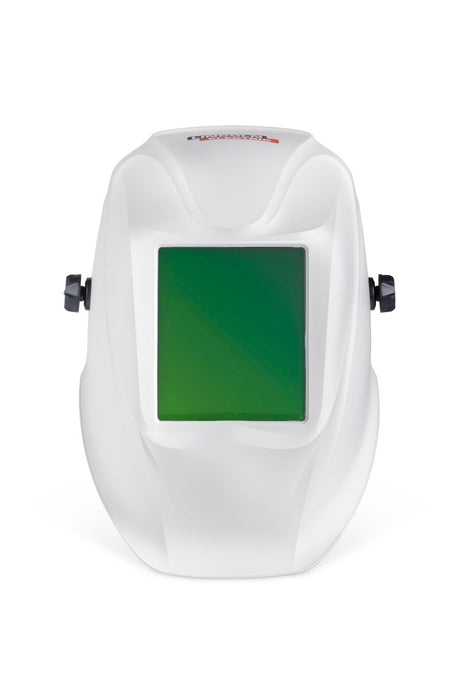

Lincoln Viking 3350 Series Auto-Darkening Welding Helmet
From $432.88$652.58Unit price /Unavailable
Lincoln Viking 3350 ADV Star Spangled Welding Helmet - K5559-5
$628.00$728.42Unit price /Unavailable

Lincoln VIKING 3350/2450 5th Gen Code Red Replacement Shell - KP4577-2
$102.16$126.69Unit price /Unavailable


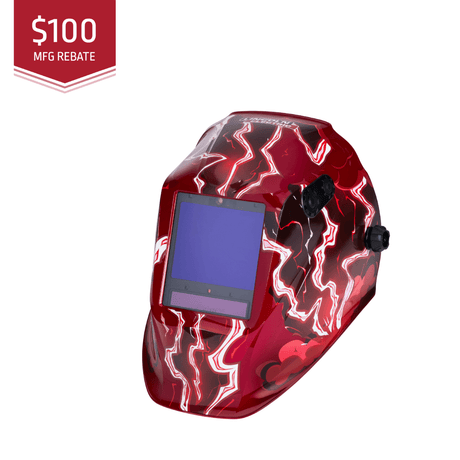
Lincoln VIKING 3350 ADV Red Strike Welding Helmet - K5754-5
$504.03$759.41Unit price /Unavailable


Lincoln Viking 2450 ADV Series Auto-Darkening Welding Helmet
From $391.34$608.57Unit price /Unavailable

Lincoln Viking 2450 Series Auto-Darkening Welding Helmet
From $385.41$540.54Unit price /Unavailable
Lincoln Viking 1740 Series Auto-Darkening Welding Helmet
From $160.87Unit price /Unavailable

Lincoln Viking 3350 ADV Series Auto-Darkening Welding Helmet
From $490.88$764.84Unit price /Unavailable
Lincoln VIKING 3350/2450 5th Gen Steampunk Replacement Shell - KP4574-2
$102.16$126.69Unit price /Unavailable
Lincoln VIKING 3350/2450 5th Gen Daredevil Replacement Shell - KP4576-2
$102.16$126.69Unit price /Unavailable
Lincoln Viking 1840 Series Auto-Darkening Welding Helmet
From $318.88$478.98Unit price /Unavailable
Lincoln VIKING 3350/2450 5th Gen Hot Rodders Replacement Shell - KP4580-2
$102.16$126.69Unit price /Unavailable

What Is an Auto Darkening Welding Helmet?
An auto darkening welding helmet — also called an auto dim welding hood or auto-darkening filter (ADF) helmet — protects your eyes and face from arc radiation, ultraviolet (UV) and infrared (IR) light, spatter, and heat while automatically adjusting lens shade the moment an arc is struck. Unlike a passive welding helmet with a fixed dark lens, an auto darkening welding hood sits at a light shade (typically DIN 3–4) when the arc is off, then darkens to the appropriate welding shade (typically DIN 5–13) within milliseconds of arc initiation — letting you position the torch precisely before striking, then protecting your eyes instantly.
The technology inside every welding helmet auto darkening lens is a liquid crystal display (LCD) cell sandwiched between polarizing filters. When arc sensors detect the intense light of the welding arc, they trigger an electrical signal that realigns the liquid crystals to block light within the lens's rated reaction time. Premium auto-darkening helmets from Lincoln Electric's VIKING line achieve reaction times as fast as 1/25,000 second (0.04 milliseconds) — faster than any physiological eye response. Once the arc stops, the lens returns to the light state, typically within 0.1–1.0 second (delay time), adjustable by the welder.
Auto darkening welding helmets must meet ANSI Z87.1+ (the American National Standard for Occupational and Educational Personal Eye and Face Protection Devices) to be sold in the United States. Z87.1+ certified helmets have passed impact resistance, optical clarity, and shade-switching tests. For the European market and as an international benchmark, EN 379 classifies auto-darkening filter optical quality on a 4-number scale — the best rating is 1/1/1/1 (luminous transmittance / diffusion of light / variations in luminous transmittance / angular dependence). Lincoln Electric VIKING helmets achieve EN 379 1/1/1/1 optical classification, meaning the clearest, most distortion-free view available in any welding lens.
How to Choose an Auto Darkening Welding Helmet
Choosing the right auto darkening welding helmet starts with matching the helmet's capabilities to your welding process, environment, and work habits. The following factors determine which welding hood is right for you:
Welding Process
Stick welding (SMAW): High-amperage, high-spatter process. Requires shade DIN 10–13 depending on electrode size and amperage. Choose a helmet with a variable shade range of DIN 5–13 and at least 3 arc sensors for reliable darkening — stick welding produces broad-spectrum arc light that can trigger slower sensors differently than MIG. Lincoln Electric VIKING helmets are standard equipment in pipe shops and structural fabrication for a reason.
MIG welding (GMAW/FCAW): Mid-amperage process, continuous wire feed. Shade DIN 10–12 typical. The primary concern for MIG welders is reaction time — the wire feeds and the arc re-strikes continuously. A 1/25,000-second reaction time eliminates any flash between tack positions. Grinding mode is valuable for MIG welders who alternate between welding and grinding frequently.
TIG welding (GTAW): Low-amperage precision process, especially for aluminum and thin stainless. Shade DIN 8–11 typical. TIG welding at low amperages (under 20A) can challenge arc sensors on basic helmets — look for helmets rated for TIG down to 1A or with TIG-specific sensitivity settings. A large viewing area is important for the close-in torch positioning TIG requires. True-color lens technology helps TIG welders see puddle color accurately.
Plasma cutting: Shade DIN 5–8 typical. Requires fast reaction time and good lens clarity since the kerf is narrow and precise positioning matters. Some Lincoln VIKING helmets include a dedicated plasma-cutting shade range.
Arc Time and Duty Cycle
Production welders logging 4–8 hours of arc time per shift benefit most from solar-assist + battery hybrid power systems, which never fail due to battery drain. Entry-level helmets with battery-only power can fail mid-shift without warning. The Lincoln VIKING 3350 ADV uses four arc sensors plus an independent solar cell as primary power — the result is consistent arc detection across every position and lighting condition.
Outdoor and Variable-Light Work
Outdoor welding, field fabrication, and work under variable lighting conditions require helmets with adjustable sensitivity controls. Full-sun outdoor light can falsely trigger arc sensors on poorly designed helmets. The Lincoln VIKING X-Mode uses an electromagnetic field detection algorithm — rather than relying solely on light sensors — to eliminate false triggering in variable or bright ambient light conditions.
Grinding Mode
Any welder who alternates between welding and angle grinding benefits from a helmet with a dedicated grinding mode. In grinding mode, the auto-darkening lens locks at a fixed light shade (DIN 3–4) so the lens does not darken when grinding sparks appear. This eliminates the need to flip up the helmet shell for grinding work — keeping your face protected and maintaining workflow speed.
Viewing Area
Viewing area is measured in square inches (or square centimeters) and directly affects how much of the weld puddle you can observe. Standard auto darkening helmets offer approximately 9 sq in (58 cm²) of viewing area. Large-format helmets like the Lincoln VIKING 3350 offer 9.2 sq in (59.3 cm²) with an ergonomic shape designed for downhand and overhead work. For pipe welding, structural work, and TIG, a larger viewing area reduces repositioning and fatigue.
Battery vs. Solar Power
Auto darkening helmet power systems fall into three types: (1) Battery-only — simple, low-cost, requires periodic battery replacement, risk of failure if batteries are depleted; (2) Solar-only — requires ambient light to charge internal capacitors, may respond slowly in dim shops; (3) Solar-assist + replaceable battery (hybrid) — the best system, used on all Lincoln VIKING 3350 and 3250 series helmets. The solar cell provides primary power while the helmet is in use; the battery maintains memory and powers the ADF in dark environments. Batteries are user-replaceable — no need to discard the helmet when a battery wears out.
Top Welding Helmet Categories
WeldingMart carries auto darkening welding helmets across five performance tiers, all from Lincoln Electric — the world's largest welding equipment manufacturer and the source of the industry-benchmark VIKING helmet line:
True Color Auto Darkening — Highest Optical Clarity
Lincoln VIKING helmets with True Color technology use a specially engineered LCD filter that removes the green tint common in standard welding lenses. The result is a true-to-life color representation of the weld puddle — critical for TIG welding aluminum (reading oxide color), stainless steel TIG (monitoring heat input by puddle color), and any application where puddle color conveys process information. All Lincoln VIKING 3350 ADV and VIKING 3250D FGS helmets feature True Color.
X-Mode — Outdoor and Variable-Light Welding
Lincoln VIKING helmets with X-Mode technology detect the electromagnetic field generated by the welding arc rather than relying solely on light sensors. This makes X-Mode helmets immune to false triggering in bright sunlight, flash-heavy environments, and applications where multiple arcs are operating nearby. X-Mode is standard on the Lincoln VIKING 3350 ADV series — the choice for pipeline, structural, and outdoor fabrication.
Grinding Mode — Alternating Weld/Grind Work
Helmets with dedicated grinding mode lock the lens at a light shade (DIN 3–4) so the auto-darkening system does not respond to grinding sparks. This lets welders use a single helmet for both welding and grinding without removing it — improving workflow and maintaining consistent face protection. Most Lincoln VIKING helmets include grinding mode.
Respirator-Ready and PAPR Helmets
For welding in environments with fume exposure — galvanized steel, stainless, coated metals, confined spaces — Lincoln Electric offers welding helmets compatible with PAPR (Powered Air-Purifying Respirator) systems. These helmets integrate directly with PAPR blower units to deliver clean, filtered air inside the helmet shell. See our PAPR Helmets collection for integrated respirator-welding helmet systems.
Passive Welding Helmets — Fixed Shade
Lincoln VIKING passive helmets use a fixed-shade polycarbonate or glass lens — typically DIN 10 for general welding, DIN 5 for cutting and inspection. Passive helmets are lighter, simpler, and require no batteries. They remain the standard for high-heat, high-spatter production stick welding environments and for welders who prefer the flip-up workflow. Lincoln's VIKING Industrial Passive and VIKING 1740 represent the premium passive helmet tier.
Welding Helmet Specifications — Reference Table
Helmet / Category Shade Range (DIN) Arc Sensors Reaction Time Viewing Area Weight Certifications Lincoln VIKING 3350 ADV (auto darkening) DIN 5–13 (variable) 4 1/25,000 sec 9.2 sq in (59.3 cm²) ~21 oz ANSI Z87.1+, EN 379 1/1/1/1 Lincoln VIKING 3250D FGS (auto darkening) DIN 5–13 (variable) 4 1/25,000 sec 9.2 sq in (59.3 cm²) ~22 oz ANSI Z87.1+, EN 379 1/1/1/1 Lincoln VIKING Series (entry auto darkening) DIN 9–13 (variable) 2 1/20,000 sec ~7.7 sq in (49.7 cm²) ~19 oz ANSI Z87.1+ Typical premium auto dim welding hood DIN 5–13 (variable) 4 1/25,000 sec 9.0–9.5 sq in 19–24 oz ANSI Z87.1+, EN 379 1/1/1/1 Typical mid-range auto darkening helmet DIN 9–13 (variable) 2–3 1/20,000 sec 6.5–9.0 sq in 18–22 oz ANSI Z87.1+ Typical entry-level auto darkening DIN 9–11 (fixed or 2-step) 2 1/10,000 sec ~3.8 sq in 16–20 oz ANSI Z87.1 Lincoln VIKING 1740 Passive DIN 10 (fixed) N/A N/A (passive) ~7.4 sq in ~17 oz ANSI Z87.1+ PAPR-Ready Welding Helmet DIN 5–13 (variable) 4 1/25,000 sec 9.0 sq in ~28 oz (without PAPR unit) ANSI Z87.1+, NIOSH (PAPR) Hard-Hat Compatible Helmet DIN 5–13 (variable) 4 1/25,000 sec ~8.7 sq in ~24 oz ANSI Z87.1+, ANSI Z89.1 (hard hat) EN 379 1/1/1/1 (European standard benchmark) DIN 5–13 typical 4 ≤ 1/25,000 sec ≥ 9.0 sq in 19–24 oz ANSI Z87.1+, EN 379 1/1/1/1, CE Compatible Accessories for Welding Helmets
Maximize the life and performance of your auto darkening welding helmet with the right accessories. WeldingMart carries the following helmet-compatible items:
- Helmet Lenses & Accessories — Replacement auto-darkening lenses, cover lenses, inner protective lenses, and lens covers for Lincoln VIKING and other welding helmets. Protect your ADF lens with outer cover lenses — the lowest-cost maintenance step for any auto darkening welding helmet.
- Welding Gloves — Lincoln Electric welding gloves for MIG, TIG, stick, and multi-process welding. Full-grain leather, split leather, TIG-weight, and heavy spatter-duty gloves.
- Welding Jackets, Bibs & Sleeves — Lincoln Electric FR cotton and split leather welding jackets, welding sleeves, and welding aprons to complete your PPE system. Pairs directly with your welding helmet for full-body arc flash and spatter protection.
- Protective Gear Accessories — Additional PPE accessories including welding caps, bandanas, and supplemental head protection for welders.
- PAPR Helmets — Powered Air-Purifying Respirator welding helmets for fume-exposed welding environments including galvanized steel, stainless, and confined-space welding.
Frequently Asked Questions — Auto Darkening Welding Helmets
- What does ANSI Z87.1+ mean on a welding helmet?
- ANSI Z87.1+ is the American National Standard for Occupational and Educational Personal Eye and Face Protection Devices, published by the American National Standards Institute. The "+" suffix indicates the product has passed the higher-impact test (versus the base Z87.1 impact test), meaning the lens and frame have been tested against a high-mass and high-velocity projectile. Any welding helmet sold legally in the United States for occupational use must meet at minimum ANSI Z87.1. Lincoln Electric VIKING helmets meet ANSI Z87.1+ — the higher, plus-rated standard.
- What shade do I need for MIG welding?
- For MIG welding (GMAW), the ANSI and AWS-recommended shade range is DIN 10–12 for most wire diameters and amperages used in small-shop and production MIG welding. At lower MIG amperages (under 60A — tack welding, thin sheet), DIN 8–9 is acceptable. Most variable-shade auto darkening welding helmets allow you to set the exact shade you prefer within the DIN 5–13 range, letting you fine-tune for comfort at your specific amperage setting.
- Solar vs. battery power — which is better for an auto darkening welding helmet?
- The best auto darkening welding helmets use a solar-assist + replaceable battery hybrid system. The solar cell provides primary power during welding and extends battery life dramatically. The replaceable battery ensures the helmet functions in low-light or indoor environments and never fails mid-session due to depleted solar charge. Battery-only helmets are the most common failure mode for entry-level auto darkening hoods — the batteries drain without warning. Solar-only systems can be slow to respond in dim shop conditions. The Lincoln VIKING 3350 ADV hybrid system is the industry standard for reliability.
- How long does an auto-darkening lens last?
- A quality auto-darkening lens from a reputable manufacturer like Lincoln Electric is rated for 7+ years of normal use under typical welding conditions. Actual lens life depends on: UV/IR exposure intensity (amperage level), hours of arc time, temperature extremes, and whether cover lenses are used consistently. The most common early-failure cause is physical damage to the ADF cell from spatter — which is why replacing outer cover lenses regularly (every 10–20 hours of welding) is critical. Lincoln VIKING replacement lenses and cover lenses are available at WeldingMart. See: Helmet Lenses & Accessories.
- Can I use my auto darkening welding helmet for grinding?
- Yes — if your helmet has a grinding mode. In grinding mode, the auto-darkening system is disabled and the lens locks at a light shade (DIN 3–4), allowing full visibility for grinding while still protecting your face and eyes from sparks and debris. Without grinding mode enabled, the helmet will falsely darken every time a grinding spark appears, creating a disorienting strobe effect. Most Lincoln VIKING helmets include grinding mode as a standard feature. Do not grind without face protection — always confirm grinding mode is active before starting.
- What is "True Color" in an auto darkening welding helmet?
- True Color technology (branded by Lincoln Electric on VIKING helmets) refers to a specially engineered LCD filter that reproduces the weld puddle in natural, accurate colors rather than the green or yellow tint produced by standard welding lenses. Standard ADF lenses tend toward a green hue because of the spectral absorption characteristics of basic liquid crystal filter stacks. True Color helmets use a multi-layer optical filter that corrects this green shift, giving TIG welders accurate puddle color (important for reading heat on stainless and aluminum), MIG welders better wire-to-work visibility, and all welders reduced eye fatigue on long sessions. All Lincoln VIKING 3350 ADV helmets use True Color technology.
- Is EN 379 1/1/1/1 worth it for a welding helmet?
- Yes — if you weld TIG, perform precision work, or weld for long shifts. EN 379 rates auto-darkening filters on four optical properties (luminous transmittance, diffusion of light, variation of luminous transmittance, and angular dependence of luminous transmittance) each scored 1–3, where 1 is highest quality. A 1/1/1/1 rating means the lens has passed the highest standard on all four dimensions — the clearest, most consistent, and least-distorting view possible. For high-production or long-duration welding, the optical quality difference between a 1/1/1/1 lens and a 3/3/3/3 entry-level lens is significant in terms of eye fatigue and puddle clarity. Lincoln VIKING 3350 ADV and 3250D FGS helmets carry EN 379 1/1/1/1 certification.


