Call to Talk With A Product Expert - 877-532-WELD (9353)

Welders for Sale | TIG, MIG, Stick & Engine Driven Welding Machines


Browse professional-grade welders for sale at WeldingMart, including TIG welders, MIG welders, stick welders, and engine-driven welding machines. Whether you’re equipping a fabrication shop, upgrading field equipment, or purchasing your first welding machine, we offer industrial-ready systems built for performance, durability, and arc stability.

Our selection includes new welding machines and certified used/demo welders from trusted manufacturers. Shop by welding process below to find the right solution for your application.


Shop Welders by Process

Choosing the right welding machine depends on material type, jobsite conditions, power availability, and production requirements. Explore our welding equipment categories below:


TIG Welders

Precision welding machines ideal for stainless steel, aluminum, and specialty fabrication.

πŸ‘‰Shop TIG Welders


MIG Welders

High-efficiency welding machines designed for production, structural fabrication, and general shop use.

πŸ‘‰MIG Welding Machines


Stick Welders

Reliable, versatile welders for outdoor work, maintenance, and heavy-duty repair applications.

πŸ‘‰ Shop Stick Welders


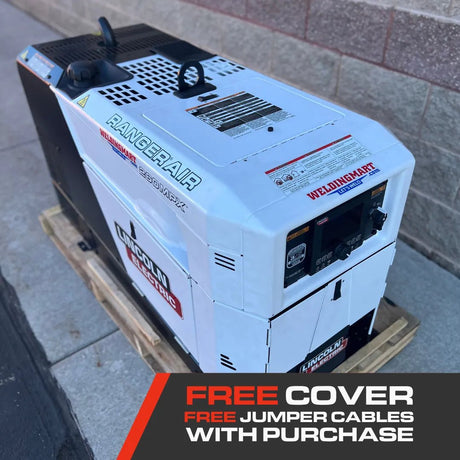
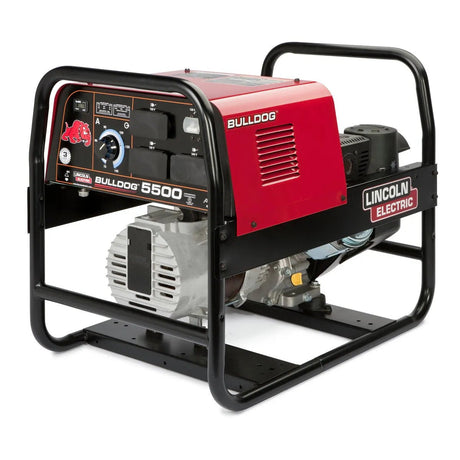
Engine Driven Welders

Mobile welding machines designed for fieldwork, pipeline applications, and remote job sites.

πŸ‘‰ Engine Driven Welders


New & Used Welders for Sale

We offer both new welding machines and professionally inspected used/demo welders:

β€’ New Welders – Latest models with full manufacturer warranty
β€’ Used / Demo Welders – Certified, inspected, cost-effective options

πŸ‘‰ Browse Used Welders:

How to Choose the Right Welding Machine

When selecting a welding machine, consider:

  • Required amperage range

  • Input voltage (120V / 230V / 3-phase)

  • Duty cycle rating

  • AC/DC capability (for aluminum welding)

  • Portability vs stationary use

Choosing the correct welder ensures consistent performance, proper penetration, and long-term reliability.


Why Buy Welders from WeldingMart?

β€’ Authorized distributor
β€’ Competitive pricing
β€’ Expert technical support
β€’ Nationwide shipping
β€’ Decades of industry experience

Frequently Asked Questions

What is the difference between a MIG welder and a multi-process welder?
A dedicated MIG welder is optimized for GMAW and FCAW processes, typically offering deeper wire feed control and voltage adjustments tuned for those processes only. A multi-process welder β€” such as the Lincoln Electric Power MIG 215 MPi β€” adds stick (SMAW) and DC TIG (GTAW) capability in one machine, eliminating the need for separate power sources in a shop or on a job site. The trade-off is that multi-process machines can cost more upfront, but for welders who regularly switch between processes they offer significant savings in equipment and space.
What input voltage do I need for the Lincoln Power MIG 215 MPi?
The Lincoln Power MIG 215 MPi accepts both 120V and 230V single-phase, 60 Hz input, making it compatible with standard household and shop circuits. On 120V it delivers up to 140 A output; on 230V it delivers up to 220 A MIG output, 175 A stick, and 175 A DC TIG. The dual-voltage design means you can use it on a standard 20A household outlet for lighter work, then plug into a 230V outlet for full-capacity welding on heavier material.
What is an engine-driven welder and when do I need one instead of a plug-in machine?
An engine-driven welder β€” like the Lincoln Ranger 225 or Ranger 260MPX β€” contains its own gasoline or diesel engine and generator, providing welding power and auxiliary AC power without requiring an external electrical connection. They are essential for field construction, pipeline work, rural maintenance, and any job site where grid power is unavailable or unreliable. The Lincoln Ranger 225 (K2857-1), for example, delivers 50–225 A DC CC for stick and TIG, CV output for MIG and flux-cored, plus 9,000 watts continuous AC generator power.
How do I choose between a stick welder and a MIG welder for my shop?
Stick (SMAW) welders excel outdoors, on dirty or rusty steel, and in situations where portability matters, because the process requires no shielding gas cylinder and is tolerant of surface contamination. MIG welders offer faster travel speeds, easier arc starts, and cleaner welds on prepared steel in a controlled shop environment, making them more productive for fabrication work. For most general shops, a multi-process machine like the Lincoln Power MIG 215 MPi covers both processes and adds TIG capability, offering the most flexibility per dollar spent.
What is a TIG welder best used for, and does it require more skill than MIG?
TIG (GTAW) welding produces the highest-quality, most precise welds of any arc process and is the preferred method for stainless steel, aluminum, titanium, and thin-gauge exotic alloys where appearance and low heat input are critical. The Lincoln Square Wave TIG 200 provides AC output for aluminum and DC output for steel and stainless, with up to 200 A output. TIG does require more skill than MIG because both hands are used simultaneously β€” one for the torch and one for feeding filler rod β€” and arc length must be maintained manually without a wire feeder.
What duty cycle rating means on a welding machine, and why does it matter?
Duty cycle is the percentage of a 10-minute period that a machine can weld continuously at a specified amperage without overheating. For example, a machine rated at 215 A at 30% duty cycle can weld at 215 A for 3 minutes out of every 10, then must rest. Exceeding the duty cycle triggers thermal protection and can shorten machine life. For production welding or long bead runs, look for machines with higher duty cycles at your target amperage; engine-driven welders like the Lincoln Ranger 225 are rated at 100% duty cycle at 210 A, making them suitable for continuous field work.
Can I MIG weld aluminum with the Lincoln Power MIG 215 MPi?
Yes, the Power MIG 215 MPi has built-in spool gun circuitry compatible with the optional Lincoln Magnum PRO 100 SG spool gun, which is the recommended method for feeding aluminum wire because the soft wire cannot be pushed reliably through a standard cable liner. Aluminum MIG welding requires 100% Argon shielding gas and ER4043 or ER5356 filler wire depending on the alloy and application. The spool gun keeps the wire feed path short, preventing kinking and bird-nesting common when feeding aluminum through a standard 10-foot cable.
What is the Lincoln LN-25X and why would I use a wire feeder separately from my welder?
The Lincoln LN-25X is a portable wire feeder designed to work with a separate CV power source β€” such as an engine drive or heavy-duty transformer/rectifier β€” when the welding location is far from the power source. It allows the welder to move freely around a large fabrication or field job without dragging heavy leads from the machine. The LN-25X with TVT (True Voltage Technology) reads voltage directly at the arc, automatically compensating for voltage drop across long cable runs to maintain consistent weld quality.
What is the difference between a CC and CV welding output, and which do I need?
Constant Current (CC) output maintains a relatively stable amperage as arc length changes and is used for stick (SMAW) and TIG (GTAW) welding, where the welder controls arc length manually. Constant Voltage (CV) output maintains a relatively stable voltage and is used for wire-fed processes β€” MIG (GMAW) and flux-cored (FCAW) β€” where a fixed wire feed speed combined with constant voltage produces a self-regulating arc. Most multi-process and engine-driven machines, including the Lincoln Ranger 225 and Power MIG 215 MPi, offer both CC and CV outputs to cover all common processes.
What is the Lincoln Eagle 10,000 Plus used for compared to the Ranger 225?
Both are gasoline-powered engine-driven welders, but the Eagle 10,000 Plus is designed for heavier construction and industrial maintenance applications, producing more auxiliary AC generator power (10,000 watts peak) for running tools, lights, and equipment simultaneously in the field. The Ranger 225 is more compact and optimized primarily for welding output with 9,000 watts continuous AC, making it a better fit for pipe crews, farm maintenance, and contractors who prioritize portability. Both machines support stick, TIG, MIG, and flux-cored welding processes.

Welders for Sale | TIG, MIG, Stick & Engine Driven Welding Machines Questions & Answers