
Welding electrodes for stick welding (SMAW), also sold as welding rods, stick electrodes or arc welding rods. 110 active Lincoln Electric and Harris stick welding electrodes in mild steel, low alloy, stainless and specialty classifications - 6010, 6011, 6013, 7014, 7018, 8018, 308L, 309L and 316L. Shop by AWS class, or match the electrode to base metal, welding position and power source with the selection table below.
-
 Sold out
Lincoln Fleetweld 5P+ E6010 Stick Welding Rod
From $99.78$131.60Unit price /Unavailable
Lincoln Pipeliner LH-D90 E9045-P2 Stick Welding Rod
From $377.97$437.10Unit price /Unavailable
Lincoln Chromet 92 Stick SMAW Welding Rod
From $266.20$286.42Unit price /Unavailable


Harris E6013 Mild Steel 1/8 x 14 in SMAW Welding Rod
From $35.25$49.60Unit price /Unavailable
Lincoln Electric Excalibur 7028 Stick Electrode
From $338.48$409.00Unit price /Unavailable
Lincoln Electric Excalibur 7018 Stick Electrode
From $187.62$222.00Unit price /Unavailable
Lincoln Tech Rod 112 Stick SMAW Welding Rod
From $285.75$300.80Unit price /Unavailable

Lincoln Electric Pipeliner E8045 Stick Electrode
From $359.64$413.10Unit price /Unavailable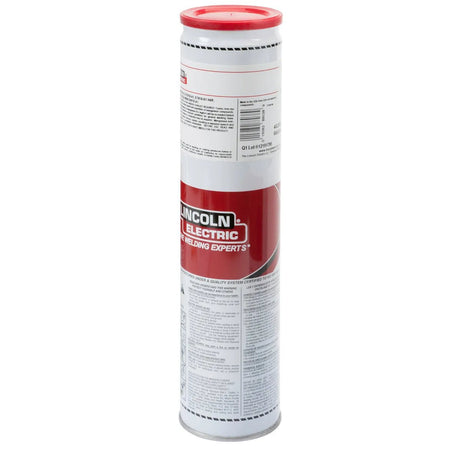
Lincoln Electric Excalibur 8018 E8018 Stick Electrode
From $177.75$185.75Unit price /Unavailable
Lincoln Electric Excalibur 316L Stick Electrode
From $169.68$180.96Unit price /Unavailable
Lincoln Electric Jetweld 1 E6024 Stick Electrode
From $275.75$340.50Unit price /Unavailable
Lincoln Wearshield BU Stick SMAW Welding Rod
From $64.08$109.70Unit price /Unavailable


Lincoln Electric Fleetweld 47 E7014 Stick Electrode
From $55.94$68.52Unit price /Unavailable


Lincoln E8018-C1 (Excalibur 8018-C1 MR x 14 SMAW Welding Rod)
From $268.00$312.60Unit price /Unavailable

Lincoln Electric Excalibur 9018M E9018M Stick Electrode
From $242.52$282.00Unit price /Unavailable
Lincoln Electric Excalibur 7018 Stick Electrode
From $167.40$204.90Unit price /Unavailable
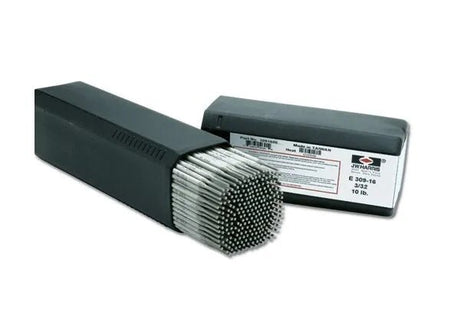

Lincoln Pipeliner LH-D100 E10045-P2 Stick Welding Rod
From $416.85$466.50Unit price /Unavailable
Lincoln Electric Fleetweld 37 E6013 Stick Electrode
From $54.50$66.78Unit price /Unavailable

Lincoln IronArc 7018-1 MR Stick SMAW Welding Rod
From $177.25$187.50Unit price /Unavailable

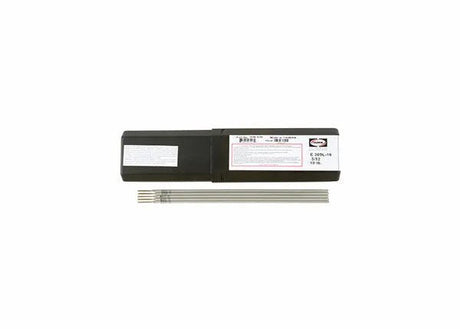


Lincoln Electric Excalibur 8018 Stick Electrode 14"
From $197.28$241.50Unit price /Unavailable
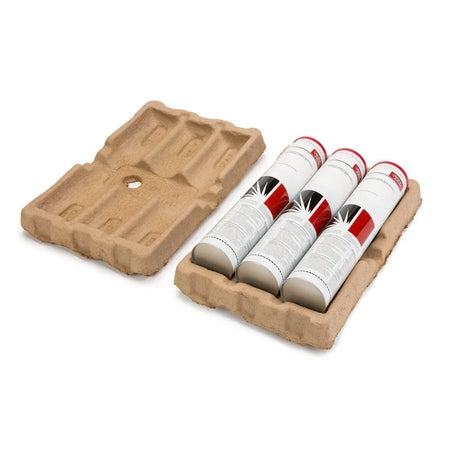
Lincoln Electric Excalibur 7018 Stick Electrode 14"
From $196.56$226.50Unit price /Unavailable
Lincoln Electric Excalibur 7018-1 Stick Electrode 14"
From $182.63$216.60Unit price /Unavailable

Lincoln Electric Excalibur 309L Stick Electrode
From $118.25$223.70Unit price /Unavailable
Lincoln Electric Excalibur 308L Stick Electrode
From $121.88$131.04Unit price /Unavailable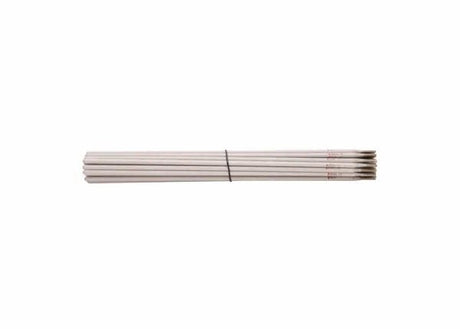


Harris 180 Hard Surface Stick (SMAW) Electrode
Call for PriceWelding rods and stick electrodes
This page is the welding rod and stick electrode category.
If what you want is an explanation of what the numbers on a rod mean and which type suits which job, read our complete guide to stick welding rods.
Reordering
Take the details from the packaging you are replacing rather than from memory: the exact rod designation and the diameter. Confirm both against the manufacturer's own documentation for that rod.
Electrode holders
Electrode holders are listed separately. Match a holder to your own machine and cable using the holder manufacturer's documentation.
Shop welding electrode holders
Keeping low hydrogen rods dry
Lincoln Electric states on its HydroGuard rod oven page: “HydroGuard® Rod Ovens from Lincoln Electric help you protect your stick electrodes from moisture pickup, a major contributor to weld cracking and porosity.” (Lincoln K2939-2)
Lincoln describes the portable HydroGuard as a “Portable Welding Rod Oven for storage of low hydrogen electrodes” with “capacity for 10 LBs of consumables,” running at a “Preset 300° F (149° C) temperature,” with an “Input Voltage 230” and “UL approved” construction. Those figures describe the 230 V model K2939-2 specifically.
Read that 300 °F correctly. It is a holding temperature for storing rods that are already dry — it is not a rebake or reconditioning schedule. Rebaking is electrode-specific and the correct temperature and time come from the electrode manufacturer's own datasheet for the rod you are using, not from the oven. Do not treat a storage oven as a substitute for that.
- Lincoln HydroGuard portable rod oven K2939-2 — the model the quoted figures above describe.
- Lincoln HydroGuard portable rod oven K2939-1 — specifications are stated on the product page, not here.
- Lincoln HydroGuard bench rod oven K2942-1 — specifications are stated on the product page, not here.
On that same page Lincoln lists two related accessories under “You May Also Need” — the HydroGuard Rod Canister K3166-1 and the HydroGuard Carrying Strap K3167-1. Lincoln presents these as suggested accessories, not as a certified fitment matrix, so confirm the fit for your own setup.
A simple restock list
- The rod designation and diameter, copied from the packaging you are replacing.
- A holder matched to your own machine and cable, using the holder manufacturer's documentation.
- Storage as directed by the electrode manufacturer's documentation for the rod you are using.
If you are unsure which rod you were running, send us the designation from the old packaging and we will confirm the equivalent before you order.
Mettle by WeldingMart
Put Me To The Test


