
Stick welding rods, also known as stick electrodes or arc welding rods, are used for reliable welding performance in field, repair, and structural applications. Designed for use with stick welders, these electrodes provide strong penetration and stable arc control across a wide range of materials and conditions. Common options such as 6010, 6011, and 7018 allow welders to match electrode type to the job, whether working outdoors, on dirty materials, or in high-strength structural welding. Available in multiple classifications including 6010, 6011, and 7018, allowing welders to select the right rod for penetration, strength, and welding conditions.
-
 Sold out
Lincoln Fleetweld 5P+ E6010 Stick Welding Rod
From $99.78$131.60Unit price /Unavailable
Lincoln Pipeliner LH-D90 E9045-P2 Stick Welding Rod
From $377.97$437.10Unit price /Unavailable
Lincoln Chromet 92 Stick SMAW Welding Rod
From $266.20$286.42Unit price /Unavailable


Lincoln Electric Excalibur 7028 Stick Electrode
From $338.48$409.00Unit price /Unavailable
Lincoln Electric Excalibur 7018 Stick Electrode
From $187.62$222.00Unit price /Unavailable


Lincoln Electric Pipeliner E8045 Stick Electrode
From $359.64$413.10Unit price /Unavailable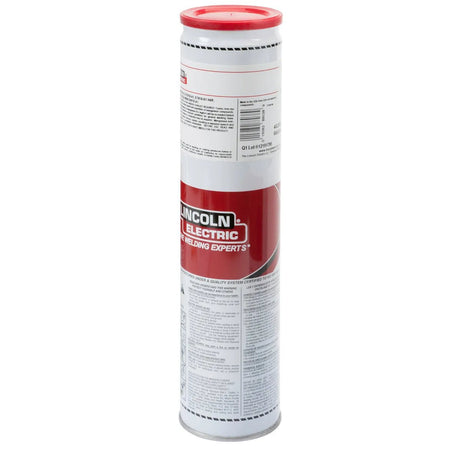
Lincoln Electric Excalibur 8018 E8018 Stick Electrode
From $180.54$185.75Unit price /Unavailable
Lincoln Electric Excalibur 316L Stick Electrode
From $168.56$180.96Unit price /Unavailable
Lincoln Electric Jetweld 1 E6024 Stick Electrode
From $275.75$340.50Unit price /Unavailable
Lincoln Wearshield BU Stick SMAW Welding Rod
From $64.08$109.70Unit price /Unavailable

Lincoln Electric Fleetweld 47 E7014 Stick Electrode
From $55.94$68.52Unit price /Unavailable

Lincoln E8018-C1 (Excalibur 8018-C1 MR x 14 SMAW Welding Rod)
From $268.00$312.60Unit price /Unavailable
Lincoln Electric Excalibur 9018M E9018M Stick Electrode
From $242.52$282.00Unit price /Unavailable
Lincoln Electric Excalibur 7018 Stick Electrode
From $167.40$204.90Unit price /Unavailable

Lincoln Pipeliner LH-D100 E10045-P2 Stick Welding Rod
From $416.85$466.50Unit price /Unavailable
Lincoln Electric Fleetweld 37 E6013 Stick Electrode
From $54.50$66.78Unit price /Unavailable

Lincoln IronArc 7018-1 MR Stick SMAW Welding Rod
From $153.36$187.50Unit price /Unavailable


Lincoln Electric Excalibur 8018 Stick Electrode 14"
From $197.28$241.50Unit price /Unavailable
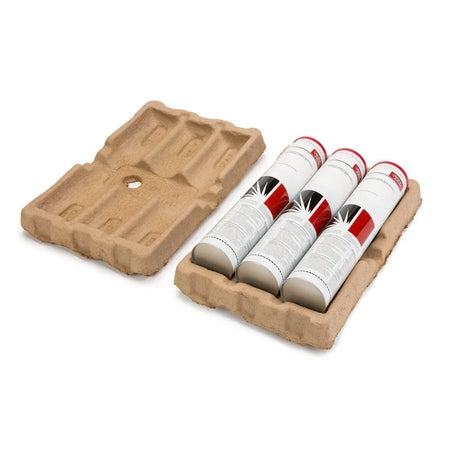
Lincoln Electric Excalibur 7018 Stick Electrode 14"
From $188.25$226.50Unit price /Unavailable
Lincoln Electric Excalibur 7018-1 Stick Electrode 14"
From $156.96$192.24Unit price /Unavailable

Lincoln Electric Excalibur 309L Stick Electrode
From $122.16$191.76Unit price /Unavailable
Lincoln Electric Excalibur 308L Stick Electrode
From $118.15$131.04Unit price /Unavailable

Lincoln Chromet 5 Stick (SMAW) Welding Rod
From $270.19$290.05Unit price /Unavailable
Lincoln Chromet 9 Stick (SMAW) Welding Rod
From $210.99$223.69Unit price /Unavailable
Lincoln Tech-Rod 308/308H-16 Stick (SMAW) Welding Rod
From $136.61$156.24Unit price /UnavailableLincoln Tech-Rod 308/308L Stick (SMAW) Welding Rod
From $107.23$155.84Unit price /Unavailable
Lincoln Tech-Rod 309/309L Stick (SMAW) Welding Rod
$126.24$206.20Unit price /UnavailableLincoln Tech-Rod 317L Stick (SMAW) Welding Rod
From $166.11$170.72Unit price /Unavailable
Lincoln Wearshield Super Rail Stick (SMAW) Electrode
$99.48$121.70Unit price /Unavailable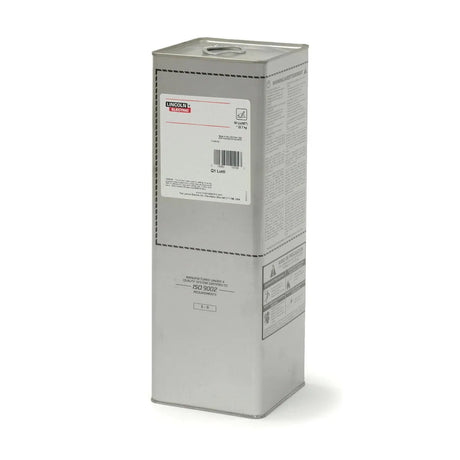
Lincoln Excalibur 11018M MR E11018-M Stick Welding Rod
From $239.76$293.40Unit price /UnavailableWelding Rods & Stick Welding Electrodes
- E7018 Stick Rods — low-hydrogen rods for structural and code work
- E8018 Stick Rods — low-alloy structural electrodes
- Stainless Steel Stick Rods — 308L, 309L, 316L stainless electrodes
- Stick Welding Accessories — electrode holders, leads, rod ovens
WeldingMart is an authorized Lincoln Electric distributor stocking 100+ stick welding electrode products: mild steel (6010, 6011, 6013, 7014, 7018, 7024, 7028), low-alloy (8018, 9018), stainless (308L, 309L, 316L), and Wearshield hardfacing. Every rod ships from our warehouse — not a third-party seller — with same-day shipping on in-stock orders and lifetime expert support from welders who use these products. Whether you are running a cross-country pipeline root pass with E6010 Pipeliner 5P+, pulling a structural ticket with E7018 Excalibur, or doing quick farm-shop repairs with E6011 Fleetweld 180, we have the rod you need in the size you need it.
All Lincoln Electric Stick ElectrodesComplete catalog — Fleetweld, Excalibur, Pipeliner, Wearshield, and stainless.
Lincoln Stick Welders →AC-225, Invertec V155-S, Idealarc series — machines built for stick electrodes (24 SKUs).
Stick Accessories →Electrode holders, ground clamps, rod ovens, and storage tubes (82 SKUs).
TIG Filler Rods →ER70S-2, ER308L, ER4043 and more for GTAW applications.
What Is Stick Welding? Overview & When to Use It
Stick welding — formally called Shielded Metal Arc Welding (SMAW) or Manual Metal Arc (MMA) welding — is an arc welding process that uses a consumable electrode coated in flux. When the arc forms between the electrode tip and the base metal, the flux coating vaporizes to create a shielding gas cloud that protects the molten weld pool from atmospheric contamination (oxygen, nitrogen, hydrogen). The flux also deposits slag that covers the solidifying weld bead and slows its cooling rate, improving toughness. The result is a simple, self-shielded process that requires no external shielding gas cylinder.
Stick welding is the right process when:
- You are outdoors or in windy conditions. SMAW self-shielding is immune to wind that would blow away MIG or TIG shielding gas. Pipeline crews, structural ironworkers, and field-repair crews use stick almost exclusively for this reason.
- The base metal is rusty, dirty, or coated. High-cellulose electrodes like E6010 and E6011 generate forceful penetrating arcs that cut through mill scale, rust, and light surface contamination. MIG wires and TIG rods cannot tolerate these conditions.
- You need to access tight joints. A 14-inch electrode holder and a 3/32-inch rod can reach places a MIG gun physically cannot. Maintenance welders rely on stick for this reason.
- Code-quality work requires certified procedures. AWS D1.1 structural steel, ASME B31.3 process piping, and API 1104 pipeline welding all list SMAW as a qualified welding process. The E7018 electrode is the backbone of structural code welding in North America.
- Equipment cost matters. A Lincoln AC-225 transformer welder costs a fraction of a MIG setup and runs every stick electrode you'll ever need. For farm shops, small contractors, and hobbyists, stick is the most economical entry into arc welding.
Where stick welding is not the best choice: thin sheet metal (MIG or TIG produces less distortion), high-volume production (MIG wire-feed is faster), and precision TIG-quality welds on aluminum or exotic alloys.
Buyer's Guide: How to Choose a Stick Electrode
Choosing the correct stick electrode comes down to four variables: base metal composition and condition, welding position, available power source, and required mechanical properties. Get any one of these wrong and you'll have porosity, underbead cracking, or a weld that fails inspection. Here's how to work through each variable.
1. Match the Electrode to the Base Metal
The rule of thumb is to match or slightly overmatch the tensile strength of the base metal. For mild steel (A36, A572), any E60XX or E70XX rod works — E70XX is the standard choice for structural work because the 70,000 psi minimum tensile strength of the weld deposit exceeds the 58,000–80,000 psi range of A36. For higher-strength steels (A514, A517), move to E8018, E9018, or E10018 low-alloy electrodes that match the higher yield strength. For stainless steel, use AWS A5.4 electrodes — E308L for 304 stainless, E309L for dissimilar joints, and E316L for marine or chemical service.
2. Account for Base Metal Condition
If the base metal is clean, primed, or freshly ground, you have the full range of electrode choices. If it's rusty, galvanized, or coated, reach for a high-cellulose electrode — E6010 or E6011 — whose deep-digging arc and fast-freeze slag handle contamination better than iron-powder or low-hydrogen rods. Never use E7018 (or any low-hydrogen rod) on heavily contaminated metal: the low-hydrogen coating is a moisture trap, and hydrogen cracking will result if the weld is made into contaminated material without proper preheat and joint prep.
3. Check Your Power Source
This is the selection step most beginners get wrong. Stick electrodes are rated for DC+, DC−, or AC polarity — and some machines only output one type. The Lincoln AC-225 (the most common farm-shop welder in North America) is an AC-only transformer. That means you cannot run E6010 on an AC-225: E6010 requires DC+ (DCEP) to maintain arc stability. E6011 was specifically engineered as the AC-compatible alternative to E6010. E6013, E7018, and most iron-powder rods run on both AC and DC. Before ordering electrodes, confirm whether your stick welder outputs AC, DC, or both. See our Lincoln stick welders page for machine specifications by model.
4. Consider Welding Position
The third digit in an AWS electrode designation tells you what positions the rod is rated for. A "1" in the third digit (E6011, E7018) means all-position — flat, horizontal, vertical, and overhead. A "2" in the third digit (E7024, E6020) means flat and horizontal only. Iron-powder rods in the 7020 and 7024 series are fast-deposition flat-position rods used on production fabrication where position is controlled. If you are welding overhead or vertical, do not buy a flat-only rod.
5. Low-Hydrogen Storage Rules
E7018 and other hydrogen-controlled (H4R, H8, H16) electrodes absorb moisture from the air and must be stored in a rod oven (250–300°F) or sealed container. Lincoln's "MR" (Moisture Resistant) designation on Excalibur 7018 MR means the rod can sit exposed in ambient conditions for up to 9 hours before needing to be returned to the oven. Standard 7018 gets only a few hours of exposure. Moisture in a low-hydrogen rod causes porosity and hydrogen-induced cracking. We stock Lincoln rod ovens, holding ovens, and sealed storage cans — see our stick accessories collection.
Electrode Classification Deep Dive — AWS A5.1 Mild Steel
AWS A5.1 covers carbon steel (mild steel) electrodes for shielded metal arc welding. The designation system reads: E = electrode, first two digits = minimum tensile strength in ksi (60 = 60,000 psi, 70 = 70,000 psi), third digit = welding position, fourth digit = flux coating type and current compatibility. Here are the seven AWS A5.1 classifications you'll encounter at WeldingMart.
E6010 — Deep Penetration, DCEP Only
The E6010 is a high-cellulose sodium electrode engineered for deep penetrating welds and fast-freeze slag. It runs DC+ (DCEP) only — do not attempt to run it on AC. Arc characteristics are forceful and "digging," making it the choice for root pass welding on pipe where the electrode must push through tight root openings and fuse both sidewalls. It tolerates dirty, rusty, and galvanized steel better than any other classification. Spatter is moderate and slag removal is easy. The Lincoln Electric trade name is Fleetweld 5P+. Common AWS designation: E6010.
Property E6010 Specification Min. Tensile Strength 62,000 psi (427 MPa) Min. Yield Strength 50,000 psi (345 MPa) Elongation 22% min. Polarity DCEP (DC+) only Positions All (F, H, V, OH) Flux Type High-cellulose sodium Best Applications Pipeline root pass, structural root, dirty/rusty steel, field repair Lincoln Trade Name Fleetweld 5P+, Pipeliner 6P+ E6011 — All-Position, AC/DC Compatible
The E6011 is the AC-compatible version of E6010. It uses a high-cellulose potassium flux coating that stabilizes the arc on AC current, enabling use with transformer welders like the Lincoln AC-225 that cannot run E6010. Penetration and slag characteristics are similar to E6010 — deep, fast-freeze, all-position — but the arc is slightly softer and spatter is marginally higher on AC. For field repairs, farm shops, and anywhere an AC machine is the only tool on site, E6011 is the go-to. The Lincoln trade name is Fleetweld 180. Runs on DCEP, DCEN, and AC.
Property E6011 Specification Min. Tensile Strength 62,000 psi (427 MPa) Min. Yield Strength 50,000 psi (345 MPa) Elongation 22% min. Polarity DCEP, DCEN, AC Positions All (F, H, V, OH) Flux Type High-cellulose potassium Best Applications AC machine repairs, dirty/rusty steel, galvanized, farm & field work Lincoln Trade Name Fleetweld 180 E6013 — Beginner-Friendly, Smooth Arc
The E6013 uses a high-titania potassium coating that produces a soft, easily controlled arc, a fluid weld pool, and a slag that lifts off cleanly — all traits that make it the easiest stick electrode for beginners. Penetration is shallow (a feature, not a bug, when welding light-gauge sheet metal where burn-through is the enemy). The arc can be run with a short arc length without sticking. Restrike is easy. The tradeoff: E6013 has no business on thick structural steel or on dirty base metal — its fluid slag can trap porosity on rough surfaces. Use it on clean, light-gauge steel for HVAC fab, ornamental iron, auto sheet metal, and hobby projects. Lincoln trade name: Fleetweld 37. Runs on DCEP, DCEN, and AC.
Property E6013 Specification Min. Tensile Strength 62,000 psi (427 MPa) Min. Yield Strength 50,000 psi (345 MPa) Elongation 17% min. Polarity DCEP, DCEN, AC Positions All (F, H, V, OH) Flux Type High-titania potassium Best Applications Sheet metal, light fab, beginners, clean mild steel, ornamental iron Lincoln Trade Name Fleetweld 37 E7014 — Iron-Powder, High Deposition, All-Position
The E7014 is an iron-powder titania electrode — essentially an E6013 with iron powder added to the coating to boost deposition rate and improve flat-position productivity. It lays smooth, flat beads with very low spatter and a slag that peels off easily. Unlike E7024 (which is flat-only), E7014 is rated for all positions, making it useful for production fillet welds that occasionally require vertical or overhead passes. Current can be AC, DCEP, or DCEN. Not a structural code rod — use E7018 for AWS D1.1 pre-qualified joints — but excellent for general fabrication, shipbuilding, and storage-tank work where code requirements are not strict. Lincoln trade name: Fleetweld 47.
Property E7014 Specification Min. Tensile Strength 72,000 psi (496 MPa) Min. Yield Strength 60,000 psi (414 MPa) Elongation 17% min. Polarity DCEP, DCEN, AC Positions All (F, H, V, OH) Flux Type Iron-powder titania Best Applications Production fillet welds, general fabrication, storage tanks, shipbuilding Lincoln Trade Name Fleetweld 47 E7018 — Low-Hydrogen, Structural Code Standard
The E7018 is the most important stick electrode in North American structural welding. Its low-hydrogen iron-powder coating deposits weld metal with exceptionally low diffusible hydrogen content (the "MR" Lincoln Excalibur version targets ≤4 mL/100g as-deposited), which prevents hydrogen-induced cold cracking (HICC) in high-restraint joints. It is the standard electrode for AWS D1.1 structural steel, ASME pressure vessel, and bridge welding. Weld deposit is smooth and flat with minimal spatter. All-position. Runs best on DCEP; most formulations also run on AC. Requires proper storage in a rod oven at 250–300°F (Lincoln Excalibur MR extends exposure tolerance to approximately 9 hours). Lincoln trade name: Excalibur 7018 MR.
Property E7018 Specification Min. Tensile Strength 72,000 psi (496 MPa) Min. Yield Strength 60,000 psi (414 MPa) Elongation 22% min. CVN Impact (−20°F) 20 ft-lbf min. Polarity DCEP (primary), AC Positions All (F, H, V, OH) Flux Type Low-hydrogen iron-powder Best Applications Structural steel (AWS D1.1), pressure vessels (ASME), heavy plate, high-restraint joints Lincoln Trade Name Excalibur 7018 MR Diffusible Hydrogen H4R (≤4 mL/100g) — Excalibur MR designation E7024 — Iron-Powder, Flat/Horizontal Only, Maximum Deposition
The E7024 is a high-iron-powder rutile electrode optimized for maximum deposition rate in flat and horizontal fillet welds. Its thick iron-powder coating (up to 50% iron powder by weight) produces deposition rates that rival semi-automatic FCAW — often 2–3× higher than E7018 in the flat position. This is the production welder's flat-fillet rod for shipyards, heavy fabrication, and structural assembly where positions are controlled and throughput matters. Do not use E7024 out-of-position — the fluid slag makes vertical and overhead welding impractical. Runs AC, DCEP, or DCEN. Lincoln trade name: Jetweld 1.
Property E7024 Specification Min. Tensile Strength 72,000 psi (496 MPa) Min. Yield Strength 60,000 psi (414 MPa) Elongation 17% min. Polarity DCEP, DCEN, AC Positions Flat & Horizontal only (F, H) Flux Type Iron-powder rutile (high iron content) Best Applications High-volume flat fillet welds, shipyards, structural fabrication shops Lincoln Trade Name Jetweld 1 E7028 — Low-Hydrogen Iron-Powder, Flat/Horizontal Code
The E7028 combines the low-hydrogen chemistry of E7018 with the iron-powder high-deposition characteristics of E7024. The result is a flat/horizontal-only rod that meets low-hydrogen code requirements (AWS D1.1 pre-qualified) while delivering higher deposition rates than E7018 in flat and horizontal positions. Used in structural fabrication shops where D1.1 code compliance is required and welding positions can be controlled. Low-hydrogen storage rules apply: keep in a rod oven at 250–300°F. Runs DCEP and AC. Lincoln trade name: Jetweld LH-70.
Property E7028 Specification Min. Tensile Strength 72,000 psi (496 MPa) Min. Yield Strength 60,000 psi (414 MPa) Elongation 22% min. Polarity DCEP, AC Positions Flat & Horizontal only (F, H) Flux Type Low-hydrogen iron-powder Best Applications D1.1 code structural work in flat/horizontal position, high-deposition bridge and building fab Lincoln Trade Name Jetweld LH-70 AWS A5.5 Low-Alloy Electrodes — E8018, E9018, E10018
AWS A5.5 covers low-alloy steel electrodes for SMAW. These electrodes deposit alloyed weld metal — typically containing Cr, Ni, Mo, or combinations — to match the mechanical properties of higher-strength, quenched-and-tempered steels. All A5.5 electrodes are low-hydrogen and require rod-oven storage at 250–350°F.
E8018-C3 / E8018-B2 — 80,000 psi Minimum Tensile
E8018 electrodes target minimum 80,000 psi tensile strength. The most common in general construction is E8018-C3 (Ni-Mo alloy system), used for welding higher-strength structural steels like A572 Grade 65, A514, and HY-80. E8018-B2 (1.25% Cr, 0.5% Mo) is used for chrome-moly alloy steel in elevated-temperature power plant piping. Both require DCEP polarity and preheat per the applicable WPS. Lincoln designation includes Excalibur 8018-C3 and Excalibur 8018-B2.
E9018-M — 90,000 psi, Military and Pressure Vessel
E9018-M (the "M" suffix = Military grade, meeting Mil-Spec hardness and toughness minimums) targets minimum 90,000 psi tensile strength with excellent low-temperature Charpy impact toughness. Used for A514, A517, HY-100, and submarine hull steel welding procedures. Also used in pressure vessels and heavy lifting equipment. DCEP only. Preheat and interpass temperature control is critical — these high-strength deposits are sensitive to hydrogen cracking if proper procedures are not followed. Lincoln designation: Excalibur 9018-M.
E10018-M — 100,000 psi, Ultra High Strength
E10018-M targets 100,000 psi minimum tensile strength for the highest-strength structural steels and military applications (HY-130, A514 Grade Q, T-1 steel). Requires strict hydrogen control, preheat per the AWS D1.1 Annex I table for high-strength steels, and careful interpass temperature management to avoid martensite formation. DCEP only. Available in select sizes from Lincoln Electric as part of their Excalibur high-strength series. Call 1-800-293-4483 to confirm availability on specific sizes and quantities.
AWS A5.4 Stainless Steel Electrodes — 308L, 309L, 316L
AWS A5.4 covers stainless steel electrodes for SMAW. Lincoln Electric's Stainless line covers the three most-used alloy families. Stainless stick electrodes run on DCEP (DC+) almost exclusively — the arc on AC is unstable with most stainless formulations. Use lower amperage than carbon steel equivalents of the same diameter to minimize carbide precipitation and heat input at the weld.
E308L-16 — General-Purpose 304 Stainless Welding
E308L-16 is the standard electrode for welding 304 and 304L stainless steel. The "L" suffix means low carbon (0.04% max in the weld deposit), which resists sensitization (chromium carbide precipitation at grain boundaries that leads to intergranular corrosion) in the 800–1500°F sensitization range. Used in food-service equipment, chemical processing, pharmaceutical manufacturing, and architectural stainless fabrication. The "-16" suffix indicates a rutile-type coating suitable for AC and DCEP — though most fabricators run DCEP for best arc stability. Lincoln designation: Lincoln 308L-16.
E309L-16 — Dissimilar Joints: Stainless to Carbon Steel
E309L-16 is formulated for joining 304/316 stainless steel to carbon or low-alloy steel — dissimilar metal joints where a high-chromium, high-nickel filler is needed to resist dilution cracking. It is also used as a buttering layer before applying stainless cladding over carbon steel, and for welding 309 and 310 stainless base metals. The higher alloy content (23% Cr, 13% Ni nominal) provides a more austenitic deposit that resists martensite formation in the dilution zone. DCEP. Lincoln designation: Lincoln 309L-16.
E316L-16 — Marine and Chemical Service
E316L-16 adds 2–3% molybdenum to the 308L chemistry, which dramatically improves resistance to pitting and crevice corrosion in chloride-containing environments (saltwater, bleach solutions, acids). Used in marine fabrication, offshore platforms, chemical plant equipment, and pharmaceutical vessels. If you are welding 316 stainless that will be exposed to seawater or chlorinated process streams, E316L-16 is the correct electrode. Do not substitute E308L in these applications — the weld deposit will pit. DCEP. Lincoln designation: Lincoln 316L-16.
Stick Electrodes by Application
Structural Steel and Bridge Welding
AWS D1.1 structural steel welding requires pre-qualified electrode-process combinations. E7018 (Lincoln Excalibur 7018 MR) is the dominant choice for multi-pass groove welds and fillet welds on structural shapes, plates, and connections. For flat/horizontal production work in a fabrication shop, E7028 (Jetweld LH-70) is permitted under D1.1 pre-qualified status with higher deposition rates. For higher-strength steels (ASTM A913, A992, A514), E8018 or E9018 electrodes with matching strength are required per the WPS. All structural low-hydrogen electrodes must be stored per D1.1 Annex A low-hydrogen electrode control requirements.
Pipeline Welding (API 1104 / CSA Z662)
Cross-country gas and liquid pipelines are welded using a two-rod system: E6010 (or E6010 equivalent Pipeliner 6P+) for the root pass and hot pass, then E7018 (Pipeliner LH-D80 or LH-D90) for the fill and cap passes. The Lincoln Pipeliner series is purpose-designed for this sequence — Pipeliner 6P+ provides the deep-digging, fast-freeze root pass characteristics required for open-root single-sided pipe joints, and the Pipeliner LH-D80/LH-D90 low-hydrogen fill and cap rods meet the toughness requirements of API 1104 and CSA Z662. Distribution pipe (smaller diameter, lower pressure) and gas transmission mainline use slightly different procedures — call our technical team to confirm the rod for your specific API procedure.
Repair and Maintenance Welding
Field repair welding on farm equipment, construction machinery, and industrial plant equipment typically involves unknown base metal, painted or galvanized surfaces, and AC-only welders. E6011 (Fleetweld 180) is the repair welder's most-used electrode: it runs on AC, handles contaminated surfaces, freezes fast enough for out-of-position work, and tolerates the wide variation in base metal chemistry found in castings and older structural steels. For hard-facing worn bucket teeth, crusher jaws, tractor track components, and mill hammers, the Lincoln Wearshield series provides abrasion-resistant hardfacing deposits — Wearshield BU for buildup layers and Wearshield 60 or Abr for the final abrasion-resistant cap.
Hardfacing and Wear-Resistant Applications
Hardfacing extends the life of earth-moving equipment, aggregate processing components, and farm tillage parts by depositing a wear-resistant alloy layer over the worn or rebuilt base. The Lincoln Wearshield series covers four deposit types: Wearshield BU is a buffer/buildup rod with a machinable deposit suitable as an intermediate layer; Wearshield 60 provides moderate hardness (approximately RC 55–60) for abrasion-only service like bucket lips and blade edges; Wearshield Abr provides high-hardness (RC 60–65) abrasion resistance for chute liners, crusher hammers, and conveyor screws; and Wearshield Mangjet is an austenitic manganese deposit for extreme impact service — bucket teeth, crusher jaws, and railroad frogs — where work-hardening in service is the wear mechanism. Hardfacing procedures typically use DCEP; check each rod's datasheet for amperage ranges by diameter.
Polarity Guide — DCEP vs. DCEN vs. AC
Current polarity is one of the most misunderstood topics in stick welding selection. Here is the complete reference.
DCEP — Direct Current Electrode Positive (Reverse Polarity)
In DCEP, current flows from the work (negative, ground clamp) through the arc to the electrode (positive). This concentrates approximately two-thirds of the arc heat at the electrode tip and work surface, producing deep penetration into the base metal. Most low-hydrogen electrodes (E7018, E8018, E9018) and high-cellulose pipeline rods (E6010) run best on DCEP. It is the standard polarity for modern inverter and transformer-rectifier DC stick welders. The Lincoln Invertec V155-S and most Lincoln DC machines output DCEP by default for the electrode holder circuit.
DCEN — Direct Current Electrode Negative (Straight Polarity)
In DCEN, current flows from the electrode (negative) to the work (positive). Heat distribution reverses: approximately two-thirds of the arc heat is at the base metal, which reduces penetration into the work but increases electrode melt-off rate (deposition rate). DCEN is used with certain specialty electrodes and for surfacing/cladding applications where shallow penetration is desired to minimize dilution of the hardfacing deposit. E6011 and E6013 can run DCEN; most iron-powder rods and low-hydrogen rods prefer DCEP.
AC — Alternating Current
AC current reverses polarity 60 times per second (60 Hz in North America). Arc stability on AC depends on the flux coating chemistry — the arc extinguishes at every zero crossing and must be re-ignited. High-cellulose potassium (E6011) and titania potassium (E6013) coatings contain potassium compounds that ionize the arc gap and allow re-ignition at each zero crossing. Sodium-based coatings (E6010) do not re-ignite reliably on AC — this is why E6010 is DC-only. For farm shops and smaller contractors with Lincoln AC-225 transformer welders, E6011 is the all-position work-horse and E6013 is the thin-metal rod. E7018 AC formulations exist for AC machines, but the standard Excalibur 7018 MR runs best on DCEP.
Polarity Heat Distribution Penetration Compatible Electrodes DCEP (DC+, Reverse) ~2/3 at electrode/work Deep E6010, E7018, E8018, E9018, stainless (308L, 309L, 316L) DCEN (DC−, Straight) ~2/3 at work Shallow (high deposition) E6011, E6013 (secondary), some cladding rods AC Alternating (equal avg.) Moderate E6011, E6013, E7018-AC, E7014, most iron-powder rods Amperage Settings by Electrode Diameter
Amperage is set by electrode diameter and position — not by rod classification (with a few exceptions). The table below gives typical starting ranges for the most common electrode diameters. Adjust up for flat position and larger groove sections; adjust down for vertical, overhead, or thin base metal. These are starting points — fine-tune by watching the weld pool and bead profile. A bead that is too narrow and convex needs more amps; a bead that undercuts the side walls needs less.
Diameter E6010 / E6011 (A) E6013 (A) E7018 (A) E7024 (A) 3/32 in. (2.4 mm) 40–85 45–90 65–100 N/A 1/8 in. (3.2 mm) 75–125 80–130 100–145 125–185 5/32 in. (4.0 mm) 110–170 105–180 140–190 160–240 3/16 in. (4.8 mm) 140–215 150–230 175–250 210–300 7/32 in. (5.6 mm) 170–250 175–255 225–300 275–375 1/4 in. (6.4 mm) 210–320 210–320 275–375 335–470 Welding Rod Pricing & Cost Guide
Stick welding electrode pricing varies by AWS classification, diameter, and package size. Use this guide to budget your next purchase and compare bulk vs. single-tube pricing across Lincoln Electric, Excalibur, Pipeliner, Harris, and Hobart brands at WeldingMart.
- E6010 / E6011 (general purpose): Roughly $0.60–$1.50 per stick in 5 lb tubes, $0.30–$0.90 per stick in 50 lb hermetically sealed cans. Best value for farm, shop, and repair work in 3/32" and 1/8" diameters.
- E6013 (mild steel, AC/DC): Roughly $0.50–$1.20 per stick in 5 lb tubes. The most economical AWS A5.1 electrode for hobby, home, and light fabrication.
- E7014 (iron powder mild steel): Mid-tier pricing — slightly above E6013 due to iron-powder coating that increases deposition rate. Most cost-effective for production fillet work.
- E7018 (low hydrogen): Premium pricing — typically $1.20–$3.00 per stick. Excalibur 7018 commands a premium for code-quality structural and pressure-vessel welding.
- E308L / E309L / E316L stainless: Highest per-stick cost due to nickel and chromium content; pricing varies with nickel commodity market.
Bulk 50 lb cans deliver 30–60% per-stick savings vs. 5 lb tubes. For shops running daily code-quality welds, the 50 lb hermetically sealed Excalibur 7018 cans are the most economical low-hydrogen option. Free shipping on orders over $99; same-day fulfillment on in-stock orders before 3 PM Central from Appleton, WI.
Welding Rod Sizes & Diameter Selection
Stick electrode diameter governs amperage range, deposition rate, and weld bead profile. The standard AWS diameter range is 3/32", 1/8", 5/32", 3/16", 7/32", and 1/4". Use this lookup to match diameter to base metal thickness and joint type:
- 3/32" (2.4mm) — 40–95 A. Sheet metal, thin gauge (1/16"–1/8" thick), tight joint access, vertical-up positions on 1/8" stock.
- 1/8" (3.2mm) — 75–145 A. The all-purpose diameter for general repair, farm work, and 1/8"–1/4" base metal. Most popular size in 5 lb tubes.
- 5/32" (4.0mm) — 105–180 A. Structural fillets on 1/4"–3/8" stock, code-quality flat and horizontal weld beads.
- 3/16" (4.8mm) — 140–225 A. Heavy structural, plate fabrication on 3/8"–1/2" base metal, multi-pass groove welds.
- 7/32" (5.6mm) & 1/4" (6.4mm) — 200–375 A. Industrial production, code structural, multi-pass on 1/2"+ plate. Specialty diameters for heavy fabrication only.
Lincoln Stick Welders — Machines to Run These Electrodes
Every stick electrode in our catalog was designed, classified, and field-tested by Lincoln Electric — the same company that manufactures the machines to run them. Pairing Lincoln electrodes with Lincoln machines gives you a matched system: the arc force curves, open-circuit voltage, and output characteristics of Lincoln stick welders are optimized for Lincoln electrode coatings.
Key machines from our Lincoln stick welders collection:
- Lincoln AC-225 (K1170) — The most common farm-shop stick welder in North America. AC output, 225A capacity, runs E6011, E6013, E7014, and AC-rated E7018. Cannot run E6010. Ideal for E6011 all-position repair work.
- Lincoln Invertec V155-S — Compact 155A inverter DC welder. DCEP/DCEN switchable. Runs all electrodes including E6010 and E7018. Portable (13 lbs) for field work.
- Lincoln Square Wave TIG 200 — Multi-process; runs stick (DCEP) and TIG. For shops that alternate between SMAW and GTAW.
- Lincoln Idealarc series — Heavy industrial AC/DC transformer-rectifiers for production shops. AC for E6011/E7018-AC and DC for E6010/E7018 code work.
Electrode Brands We Carry — Lincoln Electric, Hobart, Harris
WeldingMart specializes in Lincoln Electric as an authorized distributor, but we also carry Hobart Brothers and Harris Products Group electrodes for customers who specify those brands in their weld procedures.
Lincoln Electric — Fleetweld, Excalibur, Pipeliner, Lincore, Wearshield
Lincoln Electric is our primary electrode brand. We stock the full Lincoln stick electrode catalog — every series, most sizes, in both small-pack (1 lb, 5 lb) and production quantities (10 lb, 25 lb, 50 lb cans). Lincoln electrode trade-name families:
- Fleetweld — Field and utility electrodes: Fleetweld 5P+ (E6010), Fleetweld 180 (E6011), Fleetweld 37 (E6013), Fleetweld 47 (E7014). These are Lincoln's most-sold general-purpose rods, used on farms, in maintenance shops, and by general contractors.
- Excalibur — Code-quality low-hydrogen electrodes: Excalibur 7018 MR (H4R moisture resistant), Excalibur 7018-1 H4R (extra-low hydrogen toughness), Excalibur 8018-C3, Excalibur 9018-M. Used on AWS D1.1, ASME, and API-code jobs.
- Pipeliner — Pipeline-specific electrodes engineered for API 1104 welding: Pipeliner 5P+ (E6010 root), Pipeliner 6P+ (high-yield E6010 root), Pipeliner LH-D80, Pipeliner LH-D90, Pipeliner 16P, Pipeliner 17P, Pipeliner 18P for fill and cap passes. Each rod in the Pipeliner series is formulated for the specific arc characteristics pipeline welders expect in their position in the weld sequence.
- Lincore — Hard-facing and build-up cored wire (also available as stick): Lincore 60-O, Lincore BU, Lincore M. Lincore for SMAW is less common than Wearshield but used in some overlay procedures.
- Wearshield — Hardfacing stick electrodes: Wearshield BU, Wearshield 15CrMn, Wearshield 60, Wearshield Abr, Wearshield Mangjet, Wearshield MI. These cover the full range from buildup-layer to abrasion-resistant cap to manganese-impact service.
Hobart Brothers — Stainless and Low-Alloy Options
Hobart Brothers (an ITW company) produces a strong line of stainless steel and low-alloy stick electrodes that complement Lincoln's product range. For customers whose weld procedure specifications call out Hobart electrodes by name — common in chemical processing and food-service fabrication shops — we stock Hobart 308L-16, 309L-16, and 316L-16. Hobart's mild-steel stick electrodes (235, 418, 447-A) offer AC-machine compatibility and are an alternative to Lincoln Fleetweld for customers who have a Hobart brand preference.
Harris Products Group — Specialty and Brazing
Harris Products Group electrodes are available at WeldingMart primarily through our Harris brand collection. Harris stick electrodes are used in specialty applications including nickel-alloy welding and cast-iron repair. For customers requiring Harris stainless or low-alloy stick rods by specification, call our team at 1-800-293-4483 for availability and lead times.
Related Collections
Lincoln Stick WeldersAll Lincoln Electric SMAW machines — AC-225, Invertec V155-S, Idealarc series.
MIG Welders (GMAW/FCAW)Lincoln wire-feed MIG and flux-core machines for production welding.
TIG Filler RodsER70S-2, ER308L, ER4043, ER5356 — GTAW filler metals for all base metals.
Stick Welding AccessoriesElectrode holders, ground clamps, rod ovens, and moisture-sealed storage cans.
Stick Welding Troubleshooting — Why Your Rod Sticks to Metal
Stick electrode sticking to the workpiece is the most common SMAW troubleshooting issue. The cause is almost always one of four conditions: amperage too low, electrode angle wrong, dirty base metal, or moisture in the flux coating. Use this checklist to diagnose and clear stuck rods:
- Amperage too low: Increase amperage by 5–10 A. Match diameter to the AWS amperage range above. Most stuck-rod issues resolve with a 5–10 A bump above the manufacturer's minimum.
- Strike technique: Use the "drag a match" or "tap and lift" motion. Strike fast, lift just enough to maintain a tight arc (about the electrode diameter), and drag steadily. Long arcs cause porosity; short arcs stick.
- Electrode angle: Hold the electrode at a 10–15° drag angle for E6010, E6011, and E7018. A 90° vertical angle (perpendicular to base) makes sticking far more likely on flat-position welds.
- Dirty base metal: Wire-brush mill scale, paint, rust, and oil off the joint before striking. E6010 and E6011 tolerate dirty steel better than E7018, which requires clean, dry surfaces.
- Wet or damaged electrodes: E7018 absorbs moisture from humid air within 4–8 hours of opening the can. Store opened E7018 in a 250°F+ rod oven, or reseal in the hermetic can after each use. Wet E7018 produces porosity and worsens arc stability.
If amperage and technique are correct but the electrode still buries itself, switch from DCEP (electrode positive) to AC or vice versa — polarity mismatch on a transformer welder can cause persistent sticking. Use our welding rods quick reference chart below to confirm correct polarity for your electrode classification.
Frequently Asked Questions — Stick Welding Electrodes
What is 7018 used for?E7018 is the standard electrode for structural steel welding under AWS D1.1, ASME pressure vessel codes, and bridge fabrication. Its low-hydrogen iron-powder coating produces weld deposits with minimum 72,000 psi tensile strength, good Charpy impact toughness at −20°F, and diffusible hydrogen content below 8 mL/100g (H4R grade below 4 mL/100g). It is used in structural shapes, heavy plate, columns, beams, and everywhere an X-ray-quality weld with documented hydrogen control is required. Lincoln trade name: Excalibur 7018 MR.What is the difference between 6011 and 6013?E6011 and E6013 both run on AC and DC, but they serve opposite ends of the welding spectrum. E6011 is a high-cellulose electrode with a forceful, digging arc and fast-freeze slag — it handles dirty, rusty, and contaminated metal and works in all positions. It is the field-repair and pipeline-compatible rod for AC machines. E6013 is a titania-coated beginner rod with a soft arc, fluid weld pool, and smooth, flat bead — ideal for clean, light-gauge sheet metal where the welder needs easy arc control and easy slag removal. E6013 cannot tolerate contaminated surfaces and will trap porosity on rust or mill scale. Use E6011 for field work and dirty metal; use E6013 for thin clean sheet metal and learning.7018 vs. 6010 — which should I use?E7018 and E6010 are not interchangeable — they serve different applications. E6010 is a high-cellulose DCEP-only rod used for root pass welding on pipe, dirty metal, and anywhere a fast-freeze, deep-penetrating arc is needed. It is the standard pipeline root rod. E7018 is a low-hydrogen iron-powder rod used for fill/cap passes, structural work, and code welding where hydrogen control is required. E7018 cannot run on AC and requires rod-oven storage. E6010 does not need special storage. On pipeline work, the standard procedure is E6010 root, then E7018 fill and cap. In structural fab, E7018 is used throughout. Choose E6010 for pipe root and dirty metal; choose E7018 for structural code work and fill passes.What is the best stick welding rod for beginners?For absolute beginners, E6013 (Lincoln Fleetweld 37) on a DC machine is the easiest: soft arc, easy to strike, easy to restart, minimal spatter, and the slag peels off cleanly. If you have an AC-only machine (like a Lincoln AC-225), E6011 (Fleetweld 180) is the better starting rod because E6013 does not always behave well at lower AC amperages. E6011 is more forgiving of arc length variation and works on a wider range of base metals. Avoid E6010 as a beginner rod — its DC-only, forceful arc is harder to control than E6011 or E6013, and it does not run on AC at all.Can I run 6010 on an AC welder?No. E6010 uses a high-cellulose sodium coating that cannot stabilize the arc through the 60 Hz zero crossings of AC current. The result is arc extinction, spitting, and an unusable weld. If you have an AC-only machine (Lincoln AC-225, Lincoln Tombstone), use E6011 instead. E6011's potassium-based coating re-ignites reliably at each AC zero crossing and delivers similar penetration and all-position capability. E6010 requires DCEP (DC electrode positive) from a rectifier or inverter-based welder.How do I store E7018 low-hydrogen electrodes?E7018 must be stored in a rod oven at 250–300°F (121–149°C) after the original hermetically sealed container is opened. Exposure to ambient humidity causes the low-hydrogen coating to absorb moisture, which increases diffusible hydrogen in the weld deposit and risks hydrogen-induced cold cracking (HICC). Lincoln's Excalibur 7018 MR designation extends the ambient exposure tolerance to approximately 9 hours before re-baking is required. Standard 7018 should be returned to the oven after 2–4 hours of exposure. If rods have been left out overnight, re-bake at 700–800°F (371–427°C) for 1 hour — do not re-bake more than twice. We carry Lincoln rod ovens and holding ovens in our stick accessories collection.What does the E in E7018 stand for?The "E" stands for electrode. In AWS A5.1 and A5.5 designation: E = electrode for shielded metal arc welding; first two digits (70) = minimum tensile strength of the weld deposit in ksi (70,000 psi); third digit (1) = welding position (1 = all position, 2 = flat and horizontal only); fourth digit (8) = flux coating type, current compatibility, and hydrogen designator (8 = iron-powder low-hydrogen, DCEP or AC; H4R after the base designation = moisture-resistant, ≤4 mL/100g diffusible hydrogen).What is the difference between E6010 and E6011 for pipeline welding?Both E6010 and E6011 are used in pipeline welding, but they are not equivalent in the field. E6010 (Lincoln Pipeliner 5P+, Pipeliner 6P+) is the industry standard for root passes on gas and liquid transmission lines because its arc characteristics — fast freeze, deep penetration, tight control of the weld pool — match the demands of single-sided open-root pipe joints in all positions. E6011 can substitute on AC machines when DC is unavailable, but the softer arc makes root pass control more difficult and it is not used as a primary pipeline root rod on mainline work. E6010 is DC-only; E6011 runs on both AC and DC.What electrode should I use for welding cast iron?Cast iron stick welding typically uses a nickel-based electrode — the most common is an ENiFe-CI (nickel-iron) designation, sold under names like Lincoln Softweld 99Ni-1 or Harris Nickel-99. These electrodes deposit a soft, machinable nickel-iron alloy that tolerates the high carbon migration from cast iron and stays ductile as it cools. The alternative is a ENi-CI pure nickel rod, which is softer still but more expensive. Preheat (400–700°F depending on cast iron grade) and slow cool under insulation are critical to prevent cracking. Do not use E6013 or E7018 on cast iron — the hard, martensitic weld deposit will crack on cooling.How do I know what polarity to use for stick welding?Check the electrode's AWS designation and datasheet. The fourth digit in the AWS number tells you the compatible polarity. As a quick reference: E6010 = DCEP only; E6011 = DCEP, DCEN, or AC; E6013 = DCEP, DCEN, or AC; E7018 = DCEP (primary), AC (some formulations); E7024 = DCEP, DCEN, or AC; E8018, E9018 = DCEP only; stainless 308L/309L/316L = DCEP. When in doubt, DCEP (electrode positive, work negative) is the safe default for most iron-based electrodes — it provides good penetration and stable arc characteristics across most classifications.What is the Lincoln Excalibur 7018 MR and what does MR mean?Lincoln Excalibur 7018 MR is Lincoln Electric's premium low-hydrogen E7018 electrode for structural and pressure-vessel code work. "MR" stands for Moisture Resistant — a Lincoln-specific designation indicating that the electrode coating includes a proprietary moisture-resistant binder system that slows the rate at which the coating absorbs atmospheric humidity after the container is opened. A standard 7018 may need to return to the holding oven after 2–4 hours of ambient exposure; Excalibur 7018 MR tolerates approximately 9 hours of ambient exposure while maintaining H4R (≤4 mL/100g) diffusible hydrogen compliance. This is valuable on construction sites where rod ovens are not always accessible. The H4R designation meets the strictest low-hydrogen requirements of AWS D1.1 Table 4.1.What welding rod is best for structural steel?For AWS D1.1 structural steel welding, E7018 (Lincoln Excalibur 7018 MR) is the industry standard for most groove welds and fillet welds on A36, A572, and common structural shapes. It meets pre-qualified status under D1.1, provides the required 70 ksi tensile strength, and delivers the low-hydrogen chemistry needed to prevent cracking in restrained joints. For flat/horizontal production fillet welds in a controlled fabrication shop environment, E7028 (Lincoln Jetweld LH-70) is an alternative with higher deposition rates while still meeting D1.1 low-hydrogen requirements. For higher-strength steels (A514, A517, A913 Grade 65), move to E8018 or E9018 electrodes matched to the higher yield strength of the base metal.Expand your process arsenal: Welding Wire & Consumables for GMAW and FCAW, TIG Welders (GTAW) for precision work on stainless or aluminum, and Engine-Driven Welders & Generators for remote stick welding on structural steel. Top electrode brands: Lincoln Electric Welders & Supplies and Harris Products Group. See all categories at All Welding Machines & Supplies.
Related Categories
Welding rods quick reference — by job
Quick reference for picking the right welding rods based on what you're working on. Each rod number (E6010, E7018, etc.) encodes tensile strength, welding position, and coating type — for most home and small-shop jobs, the choice comes down to four core welding rods:
- 6010 — deep-penetrating cellulosic rod for dirty, rusty, or painted steel. The go-to rod for pipe root passes and farm/repair work. Runs on DC+ only. Shop 6010 welding rods →
- 6011 — same fast-freeze characteristics as 6010 but runs on AC or DC. Best choice if you're using a small AC buzz-box welder. Shop 6011 welding rods →
- 6013 — smooth, easy-to-strike rod for clean, light-gauge sheet metal and bodywork. Beginner-friendly. AC or DC. Shop 6013 welding rods →
- 7018 — low-hydrogen, all-position, high-tensile rod. Required for structural and code work. Must be kept dry. Shop 7018 welding rods →
For the full guide on AWS rod numbers, diameters, polarity, and storage, see our complete guide to stick welding rods.


