
Engine driven welders provide portable welding power for jobsites where utility electricity is unavailable. Often called welder generators or generator welders, these machines combine welding output with auxiliary generator power to support field fabrication, construction, pipeline work, and equipment repair. Lincoln Electric engine driven welders deliver reliable arc performance for demanding welding applications and are commonly used for stick welding, mobile repair, and remote jobsite fabrication
-
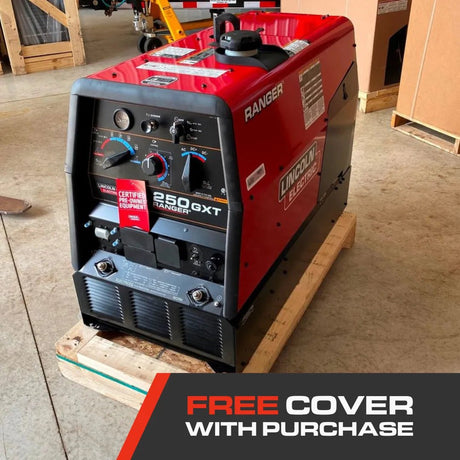
Lincoln Ranger 250GXT Engine-Driven Welder Generator
From $6,999.00$8,829.99Unit price /Unavailable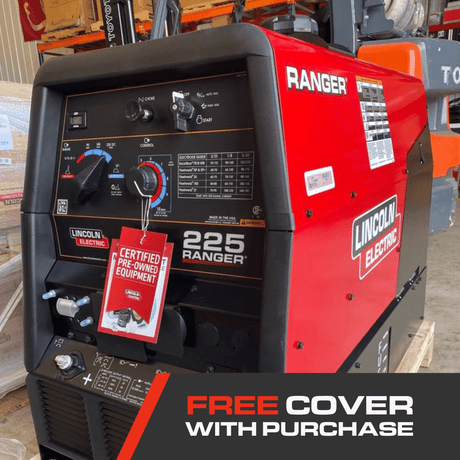
Lincoln Ranger 225 Engine-Driven Welder Generator
From $5,575.00$6,918.00Unit price /Unavailable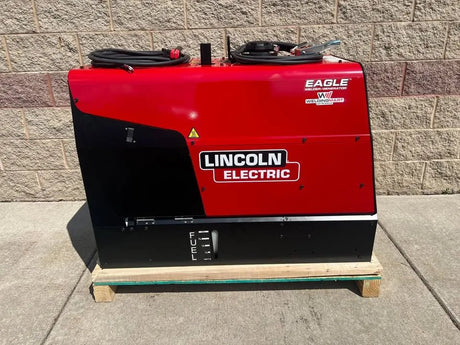
Lincoln Eagle 10,000 Engine-Driven Welder Generator
From $4,749.00$6,573.80Unit price /Unavailable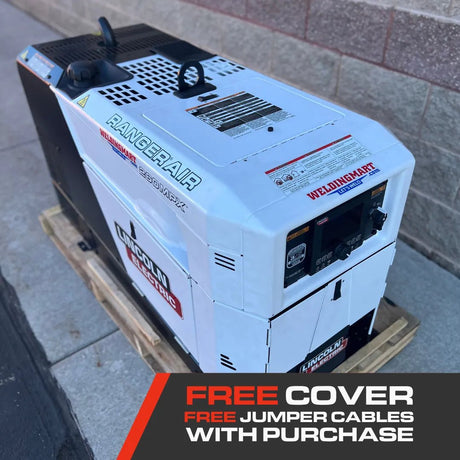
Lincoln Ranger Air 260 MPX Engine-Driven Welder Generator
From $12,799.00$17,163.00Unit price /Unavailable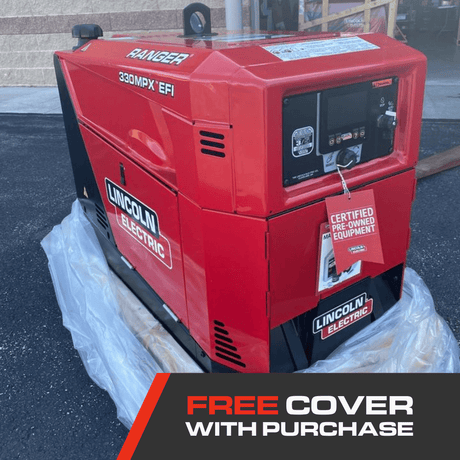
Lincoln Ranger 330MPX Welder/Generator
From $8,199.00$9,948.00Unit price /Unavailable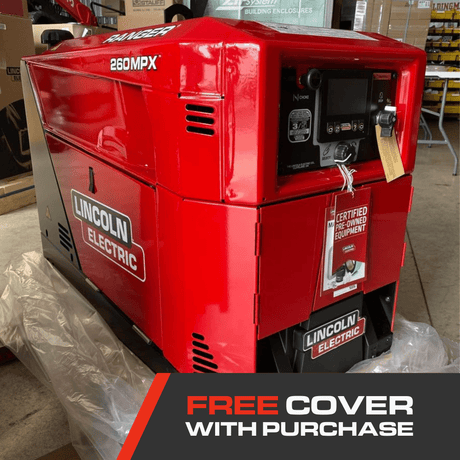
Lincoln Ranger 260 MPX Engine-Driven Welder Generator
From $6,899.00$8,211.00Unit price /Unavailable
Lincoln Maverick 325X Engine-Driven Welder Generator
From $16,599.00$20,889.00Unit price /Unavailable Sold out
Lincoln Ranger 305G Engine-Driven Welder Generator
From $8,235.00$10,323.00Unit price /Unavailable
Lincoln Crosscountry Engine-Driven Welder Generator
From $22,999.00$30,963.00Unit price /Unavailable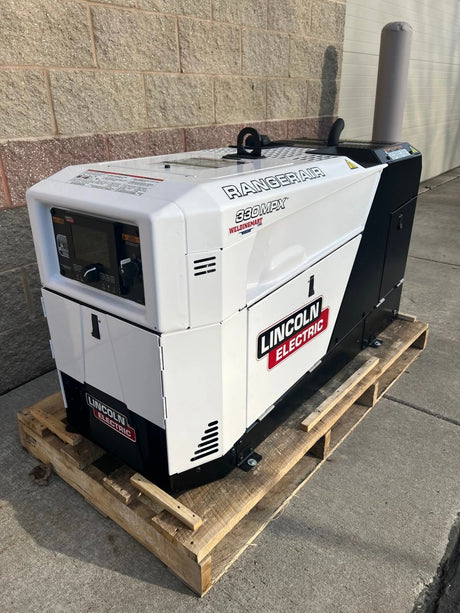
Lincoln Ranger 330 Air Engine-Driven Welder Generator
From $14,699.00$18,203.00Unit price /Unavailable
Lincoln Frontier 400X Pipe Kubota Engine-Driven Welder Generator
From $22,999.00$28,622.15Unit price /Unavailable
Lincoln Bulldog 5500 Engine-Driven Welder Generator
From $2,799.00$4,260.00Unit price /Unavailable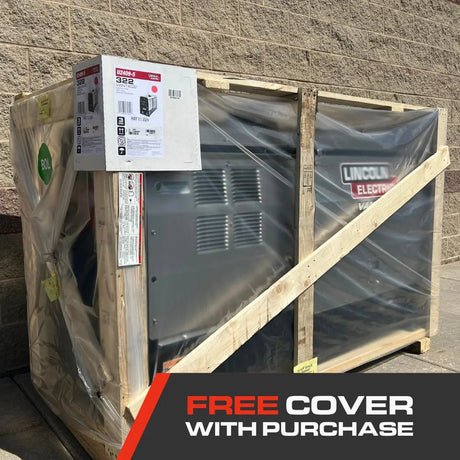
Lincoln Vantage 322 Engine-Driven Welder/Generator Kubota
From $19,999.00$25,431.00Unit price /Unavailable
Lincoln Frontier 400X Diesel Engine Driven Kubota Welder/Generator
From $18,999.00$26,079.00Unit price /Unavailable
Lincoln Ranger 305G LPG Kohler Engine Driven Welder
From $9,299.00$11,918.39Unit price /Unavailable
Lincoln Maverick 260X Engine-Driven Welder Generator
From $13,499.00$17,675.84Unit price /Unavailable

Lincoln Frontier 500X Engine-Driven Welder Generator
From $30,495.00$38,378.00Unit price /Unavailable
Lincoln Vantage 441X Engine-Driven Welder Generator
From $29,999.00$40,792.00Unit price /Unavailable
Lincoln Outback 185 Engine-Driven Welder Generator
From $4,799.00$6,219.99Unit price /Unavailable Sold out
Lincoln Ranger 305G EFI Engine-Driven Welder Generator
From $8,950.00$10,045.00Unit price /Unavailable
Lincoln Air Vantage 566X Diesel Engine Driven Welder/Generator
From $71,876.98$76,497.20Unit price /Unavailable
Lincoln Vantage 549X Engine Driven Welder Deutz - K3534-2
$36,098.21$44,179.00Unit price /Unavailable

Lincoln Vantage 566X Engine Driven Welder Deutz - K3239-3
$45,674.00$49,190.00Unit price /Unavailable Sold out
Lincoln Factory Demo Vantage 500 Compact Engine Driven Welder Perkins - U2686-1
$29,499.00$39,620.70Unit price /Unavailable Sold out
Lincoln Eagle 10,000 PLUS Factory Demo Engine Driven Welder Kohler - U2343-3
$4,799.00$6,138.00Unit price /Unavailable Sold out
Lincoln Factory Demo Frontier 400X Pipe Perkins Engine-Driven Welder/Generator - U3485-1
$21,699.00$26,378.00Unit price /UnavailableChoosing the Right Engine Driven Welder
Engine drive welders are designed for professionals who need dependable welding power outside of a shop environment. Contractors, maintenance crews, and field welders rely on these machines for construction projects, equipment repair, agricultural maintenance, and pipeline work.
Selecting the right engine driven welder typically depends on welding output requirements, generator capacity, and portability needs. Smaller engine drives are often used on service trucks for mobile repair work, while higher-output machines are preferred for structural fabrication and industrial welding applications where consistent arc performance is critical.
Engine Driven Welders for Construction, Pipeline, and Field Repair
Engine driven welders are widely used across industries where welding must be performed directly at the jobsite. Construction crews depend on portable welders for structural steel installation and repair, while pipeline welders require durable machines capable of running for long hours in demanding outdoor environments.
Maintenance technicians and equipment operators also rely on engine drive welders for field repairs where transporting machinery back to a shop is impractical. Portable welding equipment allows operators to complete repairs quickly and keep projects moving without delays.
Running MIG Welding with Engine Driven Welders
While stick welding is the most common process used with engine driven welders, many contractors also perform MIG and flux-cored welding when higher productivity is required. Portable suitcase feeders allow operators to run wire welding processes using engine driven power sources in remote jobsite conditions.
Engine drives paired with wire feed welders provide consistent wire delivery and improved welding speed for fabrication, structural repair, and outdoor welding projects.
Gas vs Diesel Engine Driven Welders
Engine driven welders are available with either gasoline or diesel engines depending on the intended application. Gasoline powered machines are commonly used for maintenance welding, farm repair, and light construction work where portability and lower machine weight are beneficial.
Diesel engine driven welders are often selected for heavy industrial applications that require longer run times and higher duty cycles. Pipeline contractors and structural welders frequently rely on diesel engine drives because they provide dependable performance for continuous welding in demanding jobsite environments.
Used & Demo Engine Driven Welders
Many contractors expand their welding equipment capabilities by purchasing previously owned machines that still deliver dependable performance. Quality pre-owned equipment can provide reliable welding output while reducing upfront equipment costs.
Browse available used engine driven welders to find inspected machines that offer dependable jobsite welding performance at a lower investment.
Welder Generator Accessories
Accessories help operators configure engine driven welders for specific jobsite needs. Remote controls, extension cables, protective covers, and mounting kits allow welders to improve portability, extend control range, and protect equipment during transport.
Explore available welder generator accessories designed to improve usability and support efficient welding operations in the field.
Frequently Asked Questions
What is the difference between a welder/generator and a plain generator — can I weld with both?
An engine-driven welder/generator is designed specifically to produce smooth DC (and sometimes AC) welding output alongside AC auxiliary generator power. The welding arc output is typically constant-current or constant-voltage, matched to the welding process. A plain generator produces only AC utility power; welding from it requires an inverter welder plugged into an outlet, which adds inefficiency and limits available current. Engine-driven welders like Lincoln's Ranger 225 (K2857-1, 210A/100% DC), Maverick 325X (K3581-1, 325A/100%), and Frontier 500X (K5350-2, 500A/100%) deliver both welding output and generator power from a single machine.
How much generator (auxiliary) power do engine-driven welders typically provide?
Auxiliary power varies significantly by model. Entry-level gas engine units like the Ranger 225 (K2857-1, Kohler 23 HP) deliver 9,000W continuous / 10,500W peak on 120/240V single-phase. Mid-range diesel models like the Maverick 325X (K3581-1, Kubota 24.8 HP) put out 10,000W continuous. Large units like the Air Vantage 566X (K3242-3, Deutz 65.7 HP) provide 12,000W single-phase and 20,000W three-phase continuous — enough for grinders, plasma cutters, and lighting simultaneously.
Should I choose a gasoline or diesel engine-driven welder for my application?
Gasoline engine models (Ranger 225, Ranger 260MPX, Ranger 305 LPG) are lighter, less expensive to purchase, and use commonly available fuel — good for occasional use, small contractors, and low-mileage farm or shop work. Diesel models (Maverick 325X, Frontier 400X/500X, Vantage 322, Air Vantage 566X) offer better fuel economy, longer service life, higher output ratings, and Tier 4 Final emissions compliance required for many job sites. Lincoln's Maverick 260X (K5272-1) runs a compact 16.8 HP Kubota diesel at just 620 lbs (281 kg) — a compact diesel option for tighter setups.
What welding processes can an engine-driven welder run?
Most Lincoln engine-driven welders support multiple processes. The Maverick 325X and Frontier series support Stick (SMAW), TIG (GTAW), MIG/Flux-Cored (GMAW/FCAW) with an external wire feeder, and Arc Gouging (CAC-A). The Air Vantage 566X also supports Submerged Arc (SAW). The Ranger 225 covers Stick, TIG, MIG, and Flux-Cored. To run MIG or flux-cored from an engine drive, you need a compatible wire feeder such as the LN-25X; the engine drive itself does not include a wire feeder.
What is CrossLinc® technology and does my engine-driven welder support it?
CrossLinc® allows a remote operator to adjust welding output at the arc without running a separate control cable — the signal travels over the standard welding cable. It eliminates the need to walk back to the machine or use a radio remote for current adjustments. Lincoln's Maverick 325X, Maverick 260X, Frontier 400X, Frontier 500X, Ranger 260MPX, and Air Vantage 566X all support CrossLinc when paired with a CrossLinc® Remote (K4345-1). Not all engine drives in the lineup include CrossLinc; confirm on the model spec sheet.
Do Lincoln engine-driven welders meet current EPA Tier 4 Final emissions requirements?
Most current Lincoln diesel models are Tier 4 Final compliant, as required for US job sites. The Maverick 260X uses a Kubota Z602 EPA Tier 4 Final engine; the Frontier 400X/500X use Kubota Tier 4 Final engines as well. The Air Vantage 566X runs a Deutz TD2.9L4 Tier 4 Final diesel. Older Vantage 322 (Kubota V1505) configurations should be verified on the spec sheet. If your work site requires Tier 4 Final compliance (common on government, hospital, and school construction), confirm the engine code in the product spec sheet.


