-


Lincoln Power Feed 84 U/I, No Reel, Gouge Kit, USB K3328-12
$7,569.77$8,089.67Unit price /Unavailable


Lincoln Seam Tracker Advanced Programming Control Unit K52021-1
$16,088.51$16,935.28Unit price /Unavailable

Lincoln LN-25X with TVT & Magnum PRO Curve 300 One-Pak K4266-1
$4,853.42$5,515.12Unit price /Unavailable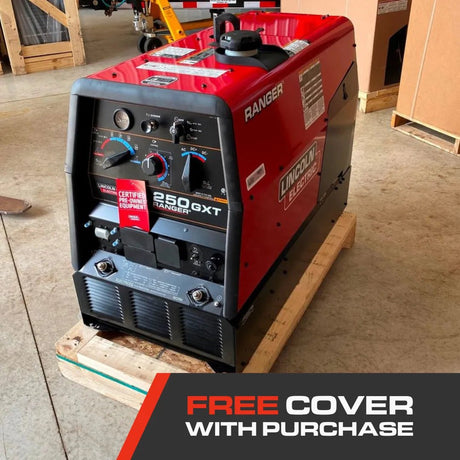
Lincoln Ranger 250GXT Engine-Driven Welder Generator
From $6,999.00$8,829.99Unit price /Unavailable

IWT LYNX4 Quickshot (1/4” Capacity) Stud Welding System - 1-IWT500054Q4
$2,999.00Unit price /Unavailable

Lincoln LF-74 Wire Feeder, Bench Model, Heavy Duty K2426-5
$3,490.87$3,966.53Unit price /Unavailable


Lincoln Idealarc DC-600 Multi-Process Welder
From $12,196.00$13,335.41Unit price /Unavailable


Lincoln Power MIG 140 MP Multi-Process Welder
From $699.00$1,139.99Unit price /Unavailable
Lincoln Power MIG 215 MPi Multi-Process Welder
From $1,949.00$2,249.99Unit price /Unavailable Sold out
Lincoln Square Wave TIG 200 AC/DC TIG Welder
From $2,199.00$2,599.00Unit price /Unavailable
Lincoln Bulldog 5500 Engine-Driven Welder Generator
From $2,799.00$4,260.00Unit price /Unavailable Sold out

Lincoln LN-25X w/CrossLinc and TVT (No Flowmeter, Tweco) K4267-2
$4,289.23$4,874.48Unit price /Unavailable
Lincoln LN-25X w/CrossLinc and TVT (with Flowmeter,Tweco) K4267-3
$4,342.88$4,934.80Unit price /Unavailable
Lincoln LN-25X with CrossLinc, TVT, Flowmeter, Twistmate/Dinse K4267-4
$4,413.81$5,015.92Unit price /Unavailable
Welders for Sale — Shop TIG, MIG, Stick & Engine-Driven Welding Machines
Browse industrial-grade welders for sale at WeldingMart — the largest selection of welding machines from Lincoln Electric, Miller, ESAB, Hobart, and Harris in one place. Whether you're outfitting a fabrication shop, replacing field equipment, or buying your first welder machine, we ship 173 active SKUs covering every arc process: TIG, MIG (GMAW/FCAW), stick (SMAW), multi-process, and engine-driven gas-powered welder generators. Authorized Lincoln Electric dealer pricing, fast shipping from Wisconsin, and same-day phone support from welders who've actually run the machines.
Three reasons buyers choose WeldingMart for welding equipment:
- Authorized Lincoln Electric dealer. Full warranty, factory pricing, and access to current production plus low-hour factory demos at discounted rates.
- 173 welders in stock. From 110V hobby TIG units to 500-amp engine-driven welder generators — covering hobbyist, contractor, fabrication, and pipeline applications.
- Real welders answering the phone. Process selection, duty-cycle math, generator sizing — call before you buy and we'll match the machine to the job.
Shop Welders by Process
Picking the right welding machine starts with the process. Each arc process matches a specific combination of base metal, joint geometry, productivity target, and operating environment. Use the categories below as your starting point.
TIG Welders (GTAW)
Precision welding machines for stainless steel, aluminum, chrome-moly, and exotic alloys. TIG delivers the cleanest welds of any arc process — no spatter, full-penetration root passes, and tight heat control for thin gauge work. Browse TIG welders from Lincoln Square Wave, Aspect, and Precision TIG series.
MIG Welders (GMAW/FCAW)
The fastest welding machines for production and fabrication. MIG runs solid wire (GMAW) for clean steel and stainless work, or flux-cored wire (FCAW) for outdoor structural and heavy-plate jobs. Shop MIG welders including the Lincoln Power MIG, Idealarc, and Weld-Pak families.
Stick Welders (SMAW)
The most rugged and portable arc process — stick welders run from generator power, work outdoors in wind and rain, and weld dirty or painted metal without prep. Browse Lincoln stick welders from the AC-225 buzzbox through the Invertec and Ranger inverter platforms.
Engine-Driven Welder Generators
Gas-powered welder generators for jobsites without grid power — pipeline, construction, agriculture, and remote field repair. Lincoln Ranger and Vantage models combine stick/TIG/MIG capability with onboard auxiliary power for tools and lights. Shop engine-driven welder generators in gas, diesel, and Kohler/Kubota configurations.
Multi-Process Welders
One machine, multiple processes. Lincoln Power MIG MPi, ASPECT 230 MP, and Square Wave TIG 200 platforms run stick, TIG, MIG, and flux-cored from a single inverter — ideal for shops and hobbyists who need versatility without three separate welders. See multi-process welders.
Used & Factory-Demo Welders
Certified low-hour factory demo welding machines from Lincoln Electric — full warranty, discounted pricing, and the same arc performance as current production. Shop refurbished welders or used Lincoln welders for sale.
How to Choose a Welder
The right welder depends on five variables — base metal, material thickness, available power, duty cycle, and portability. Use this matrix:
- Mild steel, 1/8" or thinner, indoor: 120V MIG (Lincoln Weld-Pak 140) or 230V stick (Lincoln AC-225).
- Mild steel, 1/4"+ structural: 230V MIG with flux-cored capability (Lincoln Power MIG 256) or engine-driven stick (Lincoln Ranger 330MPX).
- Stainless steel or aluminum, code work: AC/DC TIG (Lincoln Square Wave 200 or Precision TIG 225).
- Pipeline, outdoor, no grid power: Engine-driven stick/TIG/MIG (Lincoln Vantage 400, Maverick 325X, Ranger 305G).
- Production shop, high duty cycle: Industrial MIG or multi-process inverter (Lincoln Power Wave, Idealarc CV-400).
Not sure which welder fits your job? Call us at (715) 232-0345 or browse our welding machines for beginners buyer's guide.
Financing & Bulk Pricing
Welders are a capital investment. WeldingMart offers welder financing with no credit check on approved purchases, lease-to-own options, and bulk-pricing discounts for multi-machine orders. Contractors, fab shops, and schools call (715) 232-0345 for fleet pricing.


