-

Lincoln Power MIG 215 MPi Multi-Process Welder
From $1,949.00$2,249.99Unit price /Unavailable
Lincoln Power Feed 84 Dual Bench Wire Feeder Hvy Dty. Reel One-Pak K3330-10
$11,317.32$11,629.73Unit price /Unavailable
Lincoln Seam Tracker Advanced Programming Control Unit K52021-1
$16,088.51$16,935.28Unit price /Unavailable


Lincoln Seam Tracker Control Package for CS250 and CS450 (Control, Pendant, Cables) K52016-1
$18,451.68Unit price /Unavailable


 Sold out
Lincoln Square Wave TIG 200 AC/DC TIG Welder
From $2,199.00$2,599.00Unit price /Unavailable


Lincoln LN-25X w/CrossLinc and TVT (with Flowmeter,Tweco) K4267-3
$4,342.88$4,934.80Unit price /Unavailable

Lincoln Power Wave AC/DC 1000SD Submerged Arc Welder
From $45,999.00$53,458.00Unit price /UnavailableLincoln DH-10 16 FT GENERIC BOOM PACKAGE (STANDARD/STANDARD SPEED) K1521-7
$5,877.49Unit price /Unavailable

Lincoln Power Feed 84 Dual Bench Wire Feeder U/I, No Reel, USB K3330-3
$11,892.35$12,220.95Unit price /Unavailable
Lincoln LN-25X w/CrossLinc and TVT (No Flowmeter, Tweco) K4267-2
$4,289.23$4,874.48Unit price /Unavailable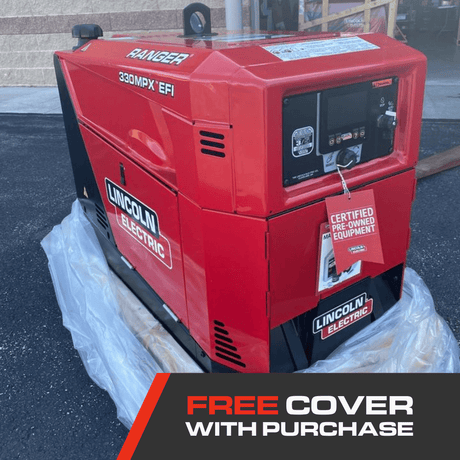
Lincoln Ranger 330MPX Welder/Generator
From $8,199.00$9,948.00Unit price /Unavailable
Lincoln LN-25X w/TVT K126 Pro 5/64-1/16 One-Pak K4266-2
$5,110.61$5,807.36Unit price /Unavailable
Lincoln Power Wave S350 Advanced Process Multi-Process Welder
From $8,799.00$11,602.00Unit price /Unavailable
Lincoln Crosscountry Engine-Driven Welder Generator
From $22,999.00$30,963.00Unit price /Unavailable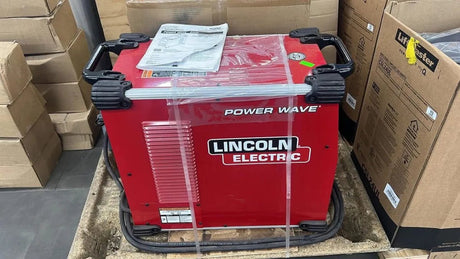
Lincoln Power Wave S500 Advanced Process Multi-Process Welder
From $12,414.25$15,778.00Unit price /Unavailable
Lincoln Idealarc DC-1000 Multi-Process Welder
From $19,635.00$24,147.19Unit price /Unavailable
Lincoln Power Feed 84 Dual Bench Wire Feeder U/I, Hvy. Dty Reel, Cntcrs., USB K3330-5
$10,935.59$11,238.33Unit price /Unavailable

Lincoln Power Feed 84 U/I, No Reel, Gouge Kit, USB K3328-12
$7,569.77$8,089.67Unit price /Unavailable
Lincoln Idealarc DC-600 Multi-Process Welder
From $12,196.00$13,335.41Unit price /Unavailable
Lincoln Bulldog 5500 Engine-Driven Welder Generator
From $2,799.00$4,260.00Unit price /Unavailable


Lincoln ST250 5 x 5 Seam Tracker System with APC One-Pak K52008-0505
$39,850.13$42,029.40Unit price /Unavailable


Lincoln Power Feed 84 Dual Bench Wire Feeder U/I, Std. Dty. Reel One-Pak K3330-7
$11,244.75$11,555.57Unit price /Unavailable
Lincoln Frontier 500X Engine-Driven Welder Generator
From $30,495.00$38,378.00Unit price /Unavailable


Lincoln Power Wave S500 Advanced Process Welder & Power Feed 84 One-Pak K3186-2
$22,964.61$23,599.36Unit price /Unavailable
Welding Machines for Sale — TIG, MIG, Stick & Engine-Driven
Browse industrial-grade welding machines at WeldingMart — the largest curated selection of TIG welding machines, MIG welders, Stick welders, and engine-driven welders from Lincoln Electric, Hobart, and Harris. With 18,100 monthly searches for "welding machine," this is the highest-volume term in the welding supply category — and WeldingMart's machine hub is the destination for buyers who need accurate specs, real duty-cycle data, and process-matched recommendations across all four major arc welding processes. All welding machines at WeldingMart ship factory-direct with full manufacturer warranty and are supported by our factory-authorized service team.
What Is a Welding Machine? Types, Processes, and Selection Overview
The term welding machine (also called a welder, welding power source, or welding unit) refers to any electrical device that generates and controls the arc energy needed to fuse metal. Modern welding machines fall into four primary categories by process, each optimized for different base metals, joint geometries, skill levels, and production environments:
- TIG welding machines (GTAW) — highest precision; required for aluminum, stainless, titanium, chrome-moly, and code-quality pipe work
- MIG welding machines (GMAW/FCAW) — fastest process; production workhorse for carbon steel, stainless, and aluminum (with spool gun)
- Stick welding machines (SMAW) — most portable; handles dirty, rusty, or painted steel; field repair and heavy structural work
- Engine-driven welding machines — self-powered; construction sites, pipeline, and remote field work with no electrical infrastructure
"Welding machine" and "welder" are interchangeable in industry usage — both refer to the power source. The term "welder" also describes the certified tradesperson operating the machine, which is why manufacturer documentation and AWS standards use "welding machine" or "welding power source" to avoid ambiguity.
Welding Machine Buyer's Guide — How to Choose the Right Process
The single most important welding machine buying decision is process selection — choosing the right arc welding process for your base metal, joint design, production requirements, and skill level. No single welding machine does everything optimally. Use this process-selection matrix to identify which machine type fits your primary application before evaluating specific models.
Process Selection Matrix
If your primary application is… Best welding machine type Why Lincoln Electric lineup Aluminum (any thickness) AC/DC TIG welding machine AC output required for oxide cleaning on aluminum; TIG provides precise heat control for distortion-sensitive parts Aspect 230, Aspect 375 Stainless steel fabrication, food-grade DC TIG welding machine Low heat input, no spatter, clean welds — required for sanitary and pharmaceutical applications Square Wave TIG 200, Precision TIG 275 Structural steel, production fabrication MIG welding machine Fast travel speed, continuous wire feed, easier to learn — ideal for carbon steel production Lincoln Power MIG series Field repair, outdoor welding, rusty metal Stick welding machine (SMAW) Self-shielded electrode tolerates contaminated base metal and wind; works on DC generator power Lincoln Flextec, Invertec series Pipeline, remote site, no utility power Engine-driven welding machine Integrated gasoline or diesel generator; runs SMAW, GTAW, and GMAW independently of grid power Lincoln Ranger, Vantage series Home shop, beginner, multi-process Multi-process welding machine Single machine handles MIG, Stick, and DC TIG — best value for shops with mixed welding needs Lincoln Power MIG 210 MP Pipe root passes, aerospace, thin-gauge AC/DC TIG welding machine with pulse HF arc start, pulse TIG, fine amperage control — required for ASME/AWS procedure qualification Aspect 375, Precision TIG 275 Welding Machine Process Technology — What the Specs Mean
Constant Current (CC) vs. Constant Voltage (CV)
Every welding machine operates in one of two output modes — and this single distinction determines process compatibility:
- Constant Current (CC) machines — maintain a set amperage level as arc length changes. Used for TIG (GTAW) and Stick (SMAW). Arc length variation changes voltage but not amperage — giving the welder manual control over heat input. All TIG welding machines and Stick welders operate in CC mode.
- Constant Voltage (CV) machines — maintain a set voltage level as wire feed speed varies. Used for MIG (GMAW) and flux-cored (FCAW). The self-regulating arc length of wire-feed processes requires CV output for stable operation.
Multi-process welding machines switch between CC and CV modes — providing TIG, Stick, MIG, and flux-core capability from one power source.
Transformer-Based vs. Inverter Welding Machines
- Transformer/rectifier machines — heavy, durable, simple circuitry; the Lincoln Electric SA-200 (now a collectible) and Lincoln Idealarc series are the most recognizable. Excellent for SMAW in harsh environments. Limited arc control features.
- Inverter welding machines — convert input AC to high-frequency DC, then regulate output precisely. 60–80% lighter than transformer machines of equivalent amperage. Enable advanced features: pulse, AC frequency/balance control, arc force, hot start, adjustable slope. All modern TIG and multi-process machines from Lincoln Electric are inverter-based.
Duty Cycle — The Most Misunderstood Welding Machine Specification
Duty cycle is the percentage of a 10-minute period during which a welding machine can operate at its rated output without overheating. A machine rated "200A at 30% duty cycle" can run at 200A for 3 minutes out of every 10 minutes. Critical selection guidance:
- Hobbyist/light fabrication: 20–30% duty cycle at rated output is adequate (shop welding is naturally intermittent)
- Professional fabrication: 40–60% duty cycle at working amperage — plan for the amperage you actually weld at, not the machine's maximum rating
- Production/industrial: 60–100% duty cycle required for sustained arc-on time in automated or high-production environments
Important: Duty cycle is always rated at a specific amperage. A machine rated "30% at 200A" may be rated "100% at 120A" — always check the full duty cycle curve on the specification sheet, not just the headline number.
Input Power Requirements for Welding Machines
Machine Class Typical Input Circuit Requirement Use Case Small hobbyist MIG/TIG 120V / 20A Standard household outlet Home garage, thin gauge only Dual-voltage entry welders 120V or 240V / 20–50A NEMA 6-50 or 14-50 dryer outlet Home shop, light fab, portable jobsite Professional single-phase 208–240V / 50–60A Dedicated 240V 60A circuit Small fab shop, professional TIG/MIG Industrial three-phase 208–575V 3Ø / 60–100A Three-phase service required Production welding, pipe shops, shipyards Welding Machine Applications by Industry
Automotive & Motorsports Fabrication
Automotive fabrication shops require both MIG welding machines (structural carbon steel — frames, roll cages, brackets) and TIG welding machines (aluminum — suspension components, intake manifolds, fuel tanks; stainless — exhaust systems, custom trim). A multi-process or dedicated TIG + MIG pair is standard in motorsports fab. The Lincoln Electric Aspect 230 (TIG) paired with a Lincoln Power MIG provides full process coverage.
Structural & Heavy Steel Fabrication
Structural welding shops operate primarily on carbon steel with AWS D1.1 Structural Welding Code requirements. MIG (GMAW) and flux-cored (FCAW) dominate production work; SMAW is used for tack welds and difficult-position joints. TIG is required for stainless cladding and code-qualified root passes on thicker material. The Lincoln Electric Flextec 650 and Flextec 500 provide the heavy-duty CC/CV output required for structural production environments.
Pipe Welding & Pressure Vessel
ASME Section IX and API 1104 pipeline codes require TIG (GTAW) for root passes on most pipe joints — giving TIG welding machines an essential role in any pipe shop. The root is welded with a TIG machine; fill and cap passes are typically completed with SMAW, FCAW, or GMAW. TIG machine selection for pipe: minimum 200A, HF arc start, foot pedal capability, and stable low-amperage performance (5–15A for root starts on thin-wall tubing). See our dedicated TIG welders collection for pipe-specific Lincoln Electric models.
Aerospace & Defense Manufacturing
Aerospace welding operates under AWS D17.1 (Fusion Welding for Aerospace Applications) and customer-specific WPS requirements. TIG welding machines dominate for aluminum and titanium structural components; electron beam and laser are used for specialty applications. Lincoln Electric TIG machines — particularly the Precision TIG 275 and Aspect 375 — are qualified in aerospace production environments for their precise arc control and parameter documentation capability.
Oil & Gas / Petrochemical
Downstream petrochemical plants require TIG root passes on stainless and alloy piping (per ASME B31.3) and SMAW or FCAW for fill/cap passes. Engine-driven welding machines (Lincoln Ranger, Vantage series) handle field construction and turnaround maintenance where utility power is unavailable. Hyperbaric and subsea welding applications require specialized Lincoln Electric wet welding and dry habitat TIG systems.
Agricultural & General Repair
Farm and ranch shops benefit from multi-process welding machines and engine-driven welders for versatility in repairing implements, trailers, and structures. The ability to run Stick electrodes — including E6010, E6011 for dirty or galvanized steel — from a single machine is critical. Hobart welding machines available at WeldingMart provide professional-grade reliability at accessible price points for farm shop and general repair applications.
Lincoln Electric Welding Machine Specifications Comparison
Model Process Output Range Duty Cycle Input Power Weight Best Application Square Wave TIG 200 TIG, Stick 5–200A CC 25% @ 200A 120V/240V 23 lb Entry TIG, hobby, training Aspect 230 AC/DC TIG, Stick 5–230A CC 40% @ 230A 208–240V 46 lb Professional TIG, aluminum, stainless Aspect 375 AC/DC TIG, Stick 5–375A CC 60% @ 375A 208–575V 1Ø/3Ø 78 lb Industrial TIG, pipe, heavy aluminum Precision TIG 275 AC/DC TIG, Stick 5–275A CC 60% @ 275A 208–460V 1Ø/3Ø 72 lb Aerospace, food-grade, production TIG Lincoln Power MIG 210 MP MIG, Flux-Core, TIG, Stick 20–220A CC/CV 30% @ 220A 120V/230V 40 lb Multi-process, home shop, light fab Lincoln Ranger 330 MPX Engine-driven MIG, TIG, Stick 20–330A CC/CV 100% @ 250A Gasoline (Kohler) 505 lb Pipeline, field construction, remote sites For complete engineering specifications, download the spec sheet from Lincoln Electric's welding machines page.
Top Welding Machine Brands at WeldingMart
Lincoln Electric
Lincoln Electric is the world's largest manufacturer of welding products and the cornerstone of WeldingMart's welding machine inventory. Founded in 1895 in Cleveland, Ohio, Lincoln Electric manufactures the full spectrum of arc welding equipment — from entry-level inverter TIG machines to automated robotic welding systems. Every Lincoln Electric welding machine at WeldingMart carries the full manufacturer warranty and is supported by Lincoln's authorized service network. View Lincoln Electric's complete welding machine catalog.
Hobart
Hobart welding machines deliver professional-grade arc performance at accessible price points — making them the most popular choice for small fabrication shops, agricultural repair operations, and serious home welders. Hobart's Handler (MIG), EZ-TIG (TIG), and Stickmate (SMAW) series cover all three primary processes with straightforward controls and reliable duty cycles. All Hobart machines at WeldingMart are factory-authorized with full warranty support.
Harris Products Group
Harris Products Group supplies the welding accessories that complete any welding machine setup — regulators, flowmeters, gas apparatus, and brazing alloys. Harris argon regulators, oxygen/fuel regulators, and TIG gas lens kits are stocked at WeldingMart to pair with every Lincoln Electric and Hobart welding machine purchase.
MK Products
MK Products manufactures the Cobramatic wire feed system and automated TIG torch assemblies for high-production and robotic TIG welding applications. Their water-cooled torch and wire feed solutions integrate directly with Lincoln Electric industrial welding machines for aerospace, pressure vessel, and automated manufacturing environments.
Welding Machine Accessories & Consumables
A welding machine is only as effective as its consumables and peripherals. WeldingMart stocks the full accessory ecosystem for every machine in our lineup:
- TIG welding machines — dedicated TIG welder collection with Lincoln Electric AC/DC inverter TIG line
- TIG filler rod & TIG welding rod — ER70S-2, ER308L, ER316L, ER4043, ER5356, ER80S-D2, and specialty alloys in 1 lb and 10 lb tubes
- TIG torch consumables — collets, collet bodies, back caps, gas lens kits, alumina and glass cups
- MIG wire & flux-cored wire — ER70S-6, ER308L, ER4043, E71T-1C in 2 lb to 44 lb spools
- Stick electrodes — E6010, E6011, E6013, E7018, E308L-16, E309L-16 in 5 lb and 50 lb containers
- Welding helmets & PPE — auto-darkening helmets, gloves, welding jackets, and respiratory protection
- Regulators & gas apparatus — Harris argon regulators, flowmeters, and dual-stage regulators for TIG and MIG shielding gas
Welding Machine FAQ
What welding machine should I buy for a beginner?
For most beginners, a multi-process welding machine or a dedicated MIG welder is the fastest path to learning. The Lincoln Electric Power MIG 210 MP handles MIG, flux-core, Stick, and DC TIG from a single unit — ideal for home shops and beginners who want to explore multiple processes. If you know your primary application is TIG welding, start with the Lincoln Electric Square Wave TIG 200 — it's the most capable entry-level AC/DC TIG machine available.
What is the difference between a welding machine and a welder?
"Welding machine" and "welder" are used interchangeably in industry to describe the power source. In formal AWS and ASME usage, "welder" refers to the certified person performing the weld, while "welding machine" or "welding power source" refers to the equipment. At WeldingMart, both terms refer to the machine when used in a product context.
Can I use one welding machine for both TIG and MIG?
Yes — multi-process welding machines switch between CC (Stick, TIG) and CV (MIG, flux-core) output modes. The Lincoln Electric Power MIG 210 MP is the most popular multi-process machine in WeldingMart's lineup. Note that TIG welding from a multi-process machine typically provides lift-arc or scratch start rather than HF start — for code-quality TIG work requiring HF start, a dedicated TIG welding machine is recommended.
How much does a welding machine cost?
Entry-level dual-voltage MIG and TIG welding machines start at $700–$900. Professional AC/DC TIG welding machines range from $1,800 (Lincoln Aspect 230) to $4,500+ (Lincoln Aspect 375). Industrial multi-output machines and engine-driven welders range from $3,500 to $15,000+ depending on output capacity and features. WeldingMart carries machines across all price tiers — all with factory warranty and authorized service support.
What is the best welding machine for aluminum?
Aluminum welding requires either an AC/DC TIG welding machine (for high-quality, low-distortion results) or a MIG welding machine with a spool gun (for faster production welding of aluminum plate). For precision work, thin gauge, or cosmetically demanding aluminum, the Lincoln Electric Aspect 230 or Aspect 375 are the benchmark choices. For production MIG welding of aluminum, the Lincoln Power MIG series with aluminum-rated spool gun is the standard configuration.
What welding machine do I need for stainless steel?
Stainless steel can be welded with TIG (DCEN for cleanest, code-quality results), MIG (with ER308L or ER316L stainless wire and tri-mix gas), or Stick (E308L-16, E316L-16 electrodes). For food-grade, pharmaceutical, and architectural stainless work, TIG is the only process that meets surface quality and low-heat-input requirements. The Lincoln Electric Square Wave TIG 200 and Precision TIG 275 are the primary stainless TIG machines stocked at WeldingMart.
Do welding machines come with a warranty?
Yes — every Lincoln Electric and Hobart welding machine purchased at WeldingMart carries the manufacturer's standard warranty. Lincoln Electric's warranty covers most machines for 3 years on the power source and 1 year on the torch/gun. Hobart machines carry a 5-year warranty on the transformer/circuit board and 3 years on other parts. WeldingMart's factory-authorized service network handles warranty claims directly.
What welding machine is best for pipe welding?
Pipe welding root passes under ASME Section IX require a TIG (GTAW) welding machine with HF arc start and foot pedal amperage control. The Lincoln Aspect 230 handles most schedule 40 and schedule 80 carbon steel and stainless pipe; the Aspect 375 covers heavy-wall pipe and chrome-moly applications. See our dedicated TIG welders collection for complete pipe welding machine specs and Lincoln Electric model comparisons.
Explore WeldingMart's complete category lineup: MIG Welders (GMAW/FCAW), Welding Wire & Consumables, Engine-Driven Welders & Generators, and Stick Welding Electrodes & Rods. Shop our top brand collections including Lincoln Electric Welders & Supplies and Harris Products Group.
Related Categories


