
Engine driven welders provide portable welding power for jobsites where utility electricity is unavailable. Often called welder generators or generator welders, these machines combine welding output with auxiliary generator power to support field fabrication, construction, pipeline work, and equipment repair. Lincoln Electric engine driven welders deliver reliable arc performance for demanding welding applications and are commonly used for stick welding, mobile repair, and remote jobsite fabrication
-
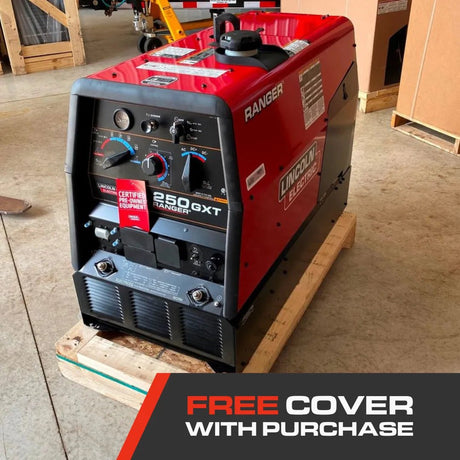
Lincoln Ranger 250GXT Engine-Driven Welder Generator
From $6,999.00$8,829.99Unit price /Unavailable

Lincoln Vantage 549X Engine Driven Welder Deutz - K3534-2
$36,098.21$44,179.00Unit price /Unavailable Sold out
Lincoln Ranger 305G Engine-Driven Welder Generator
From $8,235.00$10,323.00Unit price /Unavailable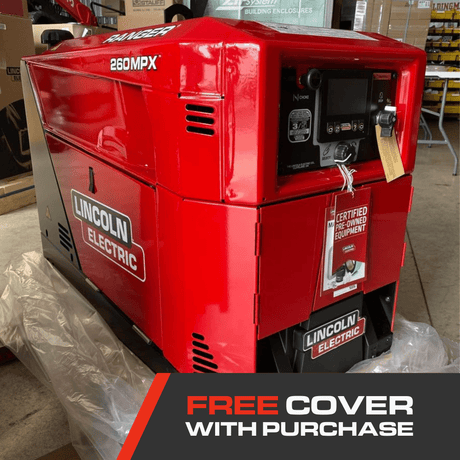
Lincoln Ranger 260 MPX Engine-Driven Welder Generator
From $6,899.00$8,211.00Unit price /Unavailable

Lincoln Eagle 10,000 Engine-Driven Welder Generator
From $4,749.00$6,573.80Unit price /Unavailable
Lincoln Ranger 305G LPG Kohler Engine Driven Welder
From $9,299.00$11,918.39Unit price /Unavailable
Lincoln Vantage 566X Engine Driven Welder Deutz - K3239-3
$45,674.00$49,190.00Unit price /Unavailable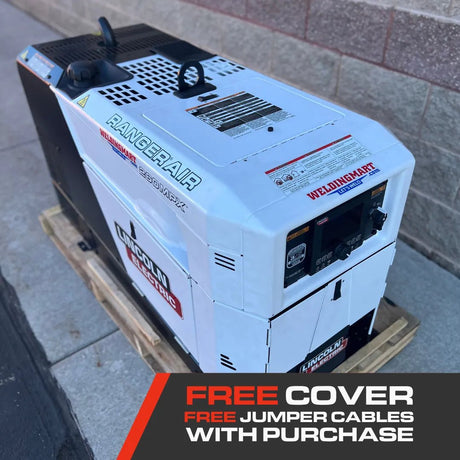
Lincoln Ranger Air 260 MPX Engine-Driven Welder Generator
From $12,799.00$17,163.00Unit price /Unavailable
Lincoln Vantage 441X Engine-Driven Welder Generator
From $29,999.00$40,792.00Unit price /Unavailable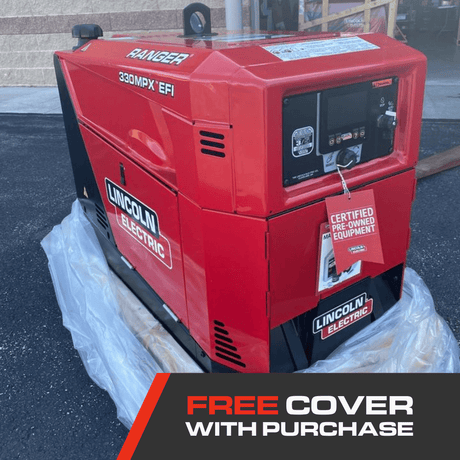
Lincoln Ranger 330MPX Welder/Generator
From $8,199.00$9,948.00Unit price /Unavailable
Lincoln Crosscountry Engine-Driven Welder Generator
From $22,999.00$30,963.00Unit price /Unavailable
Lincoln Maverick 325X Engine-Driven Welder Generator
From $16,599.00$20,889.00Unit price /Unavailable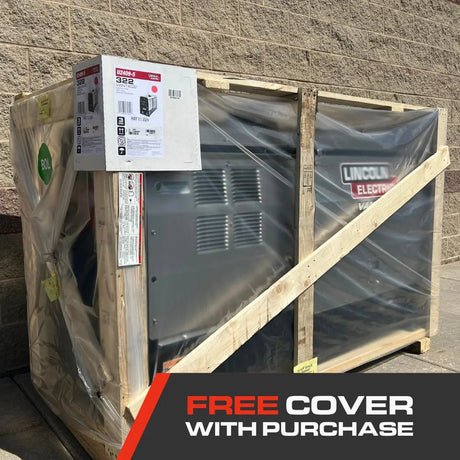
Lincoln Vantage 322 Engine-Driven Welder/Generator Kubota
From $19,999.00$25,431.00Unit price /Unavailable
Lincoln Bulldog 5500 Engine-Driven Welder Generator
From $2,799.00$4,260.00Unit price /Unavailable
Lincoln Frontier 500X Engine-Driven Welder Generator
From $30,495.00$38,378.00Unit price /Unavailable
Lincoln Maverick 260X Engine-Driven Welder Generator
From $13,499.00$17,675.84Unit price /Unavailable
Lincoln Frontier 400X Pipe Kubota Engine-Driven Welder Generator
From $21,699.00$26,378.00Unit price /Unavailable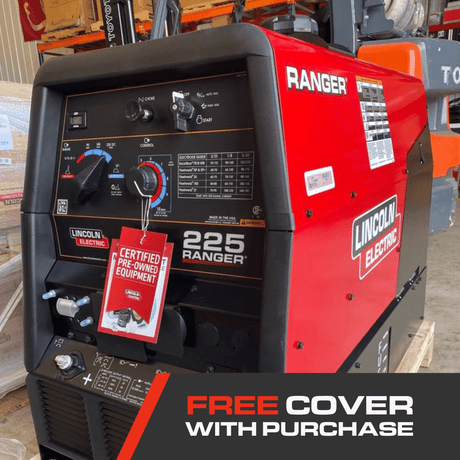
Lincoln Ranger 225 Engine-Driven Welder Generator
From $5,575.00$6,918.00Unit price /Unavailable Sold out
Lincoln Ranger 305G EFI Engine-Driven Welder Generator
From $8,950.00$10,045.00Unit price /Unavailable
Lincoln Outback 185 Engine-Driven Welder Generator
From $4,799.00$6,219.99Unit price /Unavailable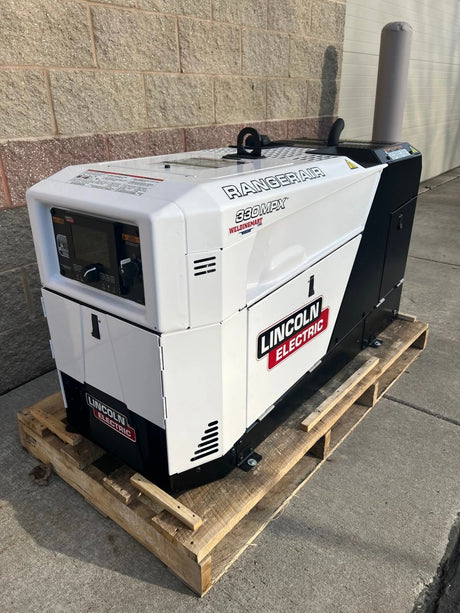
Lincoln Ranger 330 Air Engine-Driven Welder Generator
From $14,525.00$18,203.00Unit price /Unavailable
Lincoln Air Vantage 566X Diesel Engine Driven Welder/Generator
From $71,876.98$76,497.20Unit price /Unavailable
Lincoln Frontier 400X Diesel Engine Driven Kubota Welder/Generator
From $18,999.00$26,079.00Unit price /Unavailable
Engine Driven Welders & Welder Generators
WeldingMart is an authorized Lincoln Electric distributor stocking the complete lineup of engine driven welders and welder generators — from the Ranger 225 gasoline unit that service crews bolt to pickup beds for farm and maintenance repair, to the Frontier 500X diesel machine that pipeline contractors run all day on transmission rights-of-way. These self-powered units combine an internal combustion engine, an integrated generator, and a precision welding power source in a single portable machine, delivering both DC welding output and auxiliary AC power without any connection to grid electricity. Browse the full collection above or use the sections below to match the right engine drive to your application, amperage requirement, fuel type, and portability needs.
What Is an Engine Driven Welder? Generator vs. Engine Drive
An engine driven welder — also called a welder generator or generator welder — is not the same as a plain portable generator with a welder plugged into it. A plain generator produces only AC utility power; welding from it requires a plug-in inverter welder, which limits available current and adds inefficiency. An engine drive produces regulated DC welding output (constant current for stick and TIG, or constant voltage for MIG/FCAW) directly from the machine, alongside auxiliary AC generator power. The result is cleaner arc performance, higher duty cycle at rated amperage, and a single machine that replaces both a generator and a shop power source on any jobsite where grid power is unavailable.
Lincoln Electric engine driven welders are built around this principle. The Ranger 225 (K2857-1) delivers 210A at 100% duty cycle on DC output plus 9,000W continuous / 10,500W peak auxiliary power. The Maverick 325X (K3581-1) steps up to 325A with a Kubota diesel and 10,000W of generator power. The Air Vantage 566X (K3242-3) tops the lineup at 500A welding output alongside 12,000W single-phase or 20,000W three-phase auxiliary — enough to run grinders, plasma cutters, and work lights simultaneously.
Gas vs. Diesel Engine Driven Welders — Choosing the Right Fuel
Fuel type is the first decision for most buyers. Gasoline engine drives cost less upfront, start more easily in cold weather, and run on fuel available at any gas station — making them well-suited for occasional maintenance welding, farm repair, light construction, and service truck applications where the machine runs fewer than 200 hours per year. The Ranger 225 (Kohler 23 HP), Ranger 260MPX (Kohler 27 HP), and Ranger 305 LPG (propane option) cover this segment. Typical auxiliary power: 8,000–10,500W single-phase.
Diesel engine drives are the choice for pipeline contractors, structural ironworkers, and industrial maintenance crews running the machine daily. Lower fuel cost per hour, longer service intervals (oil at 250 hrs vs. 100 hrs for gasoline), and better durability at continuous high-amperage duty cycles justify the higher purchase price above roughly 200 operating hours per year. Lincoln's diesel lineup runs Kubota engines throughout: the compact Maverick 260X (K5272-1, Kubota Z602, 620 lbs), the workhorse Maverick 325X and Frontier 400X (Kubota 24.8–25 HP), and the heavy-end Frontier 500X and Air Vantage 566X (Deutz 65.7 HP). Tier 4 Final emissions compliance is standard on current Lincoln diesel models — required for government, hospital, and school construction sites.
CC vs. CV Output — Matching the Engine Drive to Your Welding Process
Constant current (CC) output maintains stable amperage while voltage adjusts to arc length — required for stick (SMAW), TIG (GTAW), and air arc gouging (CAC-A). All Lincoln engine drives include CC output. Root pass welding on pipeline with E6010 cellulosic electrodes runs 100–150A CC; fill and cap passes and structural work with E7018 low-hydrogen rod typically run 150–250A CC; gouging operations on heavier material push 300–400A CC.
Constant voltage (CV) output maintains stable voltage while current varies with wire feed speed — required for MIG (GMAW) and flux-cored (FCAW) welding with an external wire feeder. Not all engine drives include CV. The Maverick 325X, Frontier 400X/500X, Ranger 260MPX, and Air Vantage 566X all offer both CC and CV output, allowing multi-process operation with a compatible wire feeder such as the LN-25X suitcase feeder. Verify CV availability on the spec sheet before purchasing for MIG production work.
Single-phase vs. three-phase auxiliary output matters for shops drawing heavy tool loads. Most engine drives in the 200–325A range provide single-phase 120/240V auxiliary power. The Air Vantage 566X adds three-phase 208/230/460V output at 20,000W continuous — the field choice for crews running compressors, plasma cutters, and lighting banks simultaneously.
Engine Driven Welders for Pipeline, Construction, and Field Repair
Pipeline welding is the defining application for high-amperage diesel engine drives. Root passes on transmission pipeline with E6010 cellulosic rod at 100–150A demand consistent constant-current arc performance through a full shift. Fill and cap passes with E7018 low-hydrogen run 150–250A. Remote rights-of-way have no grid power; the engine drive is the only viable welding power source. Lincoln Pipeliner-rated machines — the Maverick 325X, Frontier 400X, and Frontier 500X — are commonly specified for mainline and tie-in work. CrossLinc® technology, available on these models with the K4345-1 remote, lets operators adjust welding amperage at the arc over the welding cable without a separate control lead — critical for pipeline crews walking long joints.
Structural steel and construction applications require mid-range machines in the 250–400A range. Ironworkers and bridge crews use engine drives for column base plates, shear studs, and repair of structural connections where temporary power is unavailable. High auxiliary wattage — 9,000W and above — powers angle grinders, work lights, and air tools simultaneously from the same machine.
Farm, ranch, and equipment repair is the volume application for gasoline engine drives. Repairing trailers, gates, fences, and farm machinery without moving the equipment to a shop is the core use case. Portability on a pickup truck bed or small trailer is the key requirement — the Ranger 225 at 553 lbs and the compact Maverick 260X at 620 lbs are the standard choices. Gasoline preferred here; diesel total cost of ownership advantage is not realized at low annual hours.
Service truck and utility crews require all-day runtime with remote amperage control. Idle-control (automatic throttle reduction when not welding) reduces fuel consumption and noise between welds. CrossLinc® remote control eliminates the need to walk back to the machine for output adjustments — particularly valuable on service trucks where the operator works at a distance from the cab-mount unit.
Selecting the Right Engine Drive — Amperage and Auxiliary Wattage
Two numbers define every engine drive selection: rated welding amperage at 100% duty cycle, and auxiliary generator wattage. Use the table below as a starting point, then confirm against the spec sheet for the exact model.
- Light maintenance and farm repair (150–225A, 8,000–10,500W aux): Lincoln Ranger 225 (K2857-1) — 210A/100% DC, 9,000W continuous / 10,500W peak, Kohler 23 HP gas, 553 lbs. Ideal for service trucks and occasional farm use.
- General construction and structural (225–325A, 9,000–10,000W aux): Ranger 260MPX (K2809-3) — CC/CV multi-process, 260A/100% DC, Kohler 27 HP gas; or Maverick 325X (K3581-1) — 325A/100% DC, 10,000W aux, Kubota diesel.
- Pipeline and heavy fabrication (400–500A, 11,000–12,000W aux): Frontier 400X (K4079-1) — 400A/100%, Kubota Tier 4 diesel. Frontier 500X (K5350-2) — 500A/100%, Kubota Tier 4 diesel. Air Vantage 566X (K3242-3) — 500A welding + 20,000W three-phase generator, Deutz Tier 4 diesel.
One of the most common oversights is underspecifying auxiliary wattage. If you are running an air compressor and work lights at the same time as welding, a 4,500W machine is not adequate — specify at least 8,000W of continuous auxiliary capacity. For simultaneous plasma cutter and grinder operation, step up to 12,000W or the three-phase Air Vantage 566X.
Towable vs. Portable Mounting Options
Engine drives in the 200–325A range are typically portable units designed for pickup truck bed mounting or small trailer transport. Verify machine weight against your truck's payload rating: the Ranger 225 ships at 553 lbs, the Maverick 325X at approximately 850 lbs. Machines above 400A — the Frontier 500X and Air Vantage 566X — are designed for trailer mounting with proper lifting eyes and optional ROPS-rated enclosures for larger jobsite configurations. Towable configurations make sense for crews moving between jobsite locations; truck-bed portable units are the preference for service truck operators covering a wide territory.
Browse available used and demo engine driven welders to find inspected Lincoln machines at reduced cost. Explore welder generator accessories including remote controls, extension cables, CrossLinc® remotes, and mounting kits. For full-line welding equipment including MIG, TIG, and stick machines, browse our welding machines collection. Call 1-800-293-4483 for machine selection assistance from our engine drive specialists.
Why Buy Engine Driven Welders From WeldingMart
WeldingMart is a direct Lincoln Electric authorized distributor. Every engine drive ships with the full Lincoln factory warranty registered in your name, direct access to Lincoln technical support, and guaranteed authentic Lincoln Electric machines — not grey-market or unauthorized imports. We stock the complete Lincoln engine drive lineup: Ranger, Maverick, Frontier, Vantage, and Air Vantage series, plus compatible wire feeders, CrossLinc® remotes, and replacement parts. Authorized dealer pricing with fast U.S. shipping to job sites and shop addresses. Call 1-800-293-4483 or use the chat for spec-sheet comparisons, application questions, or volume pricing.


