
Engine driven welders provide portable welding power for jobsites where utility electricity is unavailable. Often called welder generators or generator welders, these machines combine welding output with auxiliary generator power to support field fabrication, construction, pipeline work, and equipment repair. Lincoln Electric engine driven welders deliver reliable arc performance for demanding welding applications and are commonly used for stick welding, mobile repair, and remote jobsite fabrication
-
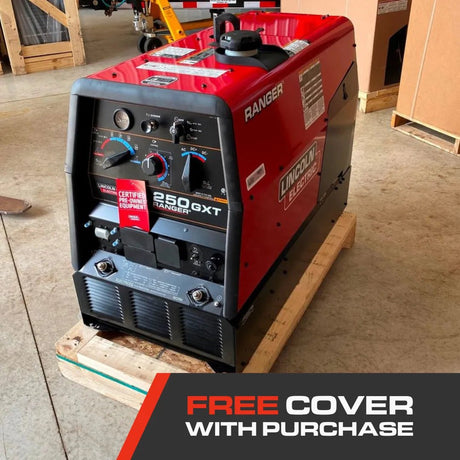
Lincoln Ranger 250GXT Engine-Driven Welder Generator
From $6,999.00$8,829.99Unit price /Unavailable

Lincoln Vantage 549X Engine Driven Welder Deutz - K3534-2
$36,098.21$44,179.00Unit price /Unavailable Sold out
Lincoln Ranger 305G Engine-Driven Welder Generator
From $8,235.00$10,323.00Unit price /Unavailable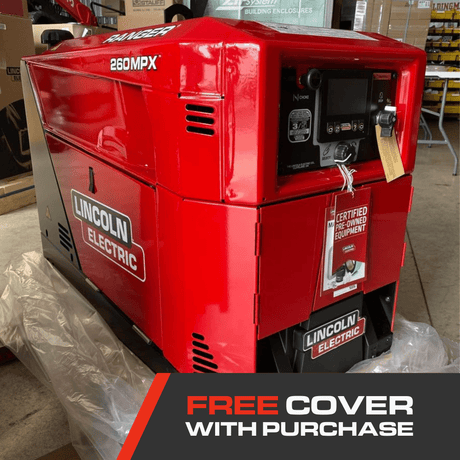
Lincoln Ranger 260 MPX Engine-Driven Welder Generator
From $6,899.00$8,211.00Unit price /Unavailable

Lincoln Eagle 10,000 Engine-Driven Welder Generator
From $4,749.00$6,573.80Unit price /Unavailable
Lincoln Ranger 305G LPG Kohler Engine Driven Welder
From $9,299.00$11,918.39Unit price /Unavailable
Lincoln Vantage 566X Engine Driven Welder Deutz - K3239-3
$45,674.00$49,190.00Unit price /Unavailable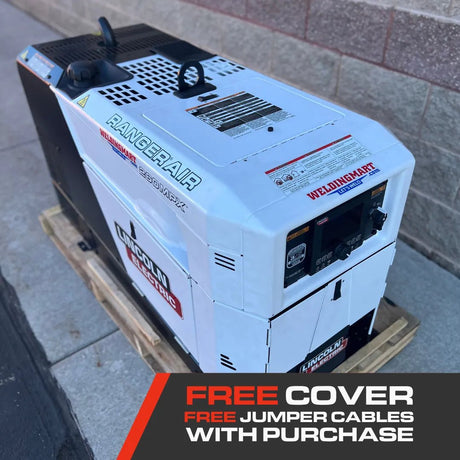
Lincoln Ranger Air 260 MPX Engine-Driven Welder Generator
From $12,799.00$17,163.00Unit price /Unavailable
Lincoln Vantage 441X Engine-Driven Welder Generator
From $29,999.00$40,792.00Unit price /Unavailable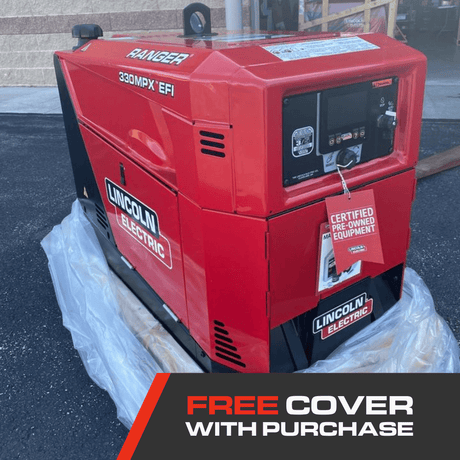
Lincoln Ranger 330MPX Welder/Generator
From $8,199.00$9,948.00Unit price /Unavailable
Lincoln Crosscountry Engine-Driven Welder Generator
From $22,999.00$30,963.00Unit price /Unavailable
Lincoln Maverick 325X Engine-Driven Welder Generator
From $16,599.00$20,889.00Unit price /Unavailable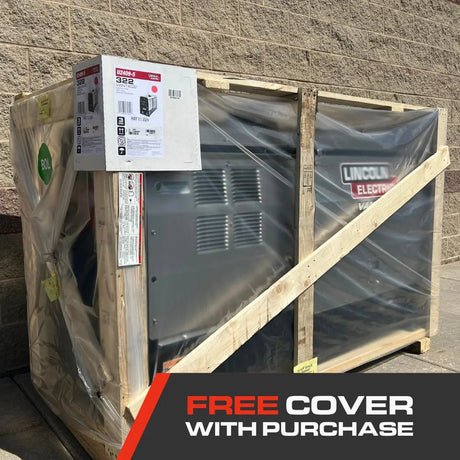
Lincoln Vantage 322 Engine-Driven Welder/Generator Kubota
From $19,999.00$25,431.00Unit price /Unavailable
Lincoln Bulldog 5500 Engine-Driven Welder Generator
From $2,799.00$4,260.00Unit price /Unavailable
Lincoln Frontier 500X Engine-Driven Welder Generator
From $30,495.00$38,378.00Unit price /Unavailable
Lincoln Maverick 260X Engine-Driven Welder Generator
From $13,499.00$17,675.84Unit price /Unavailable
Lincoln Frontier 400X Pipe Kubota Engine-Driven Welder Generator
From $21,699.00$26,378.00Unit price /Unavailable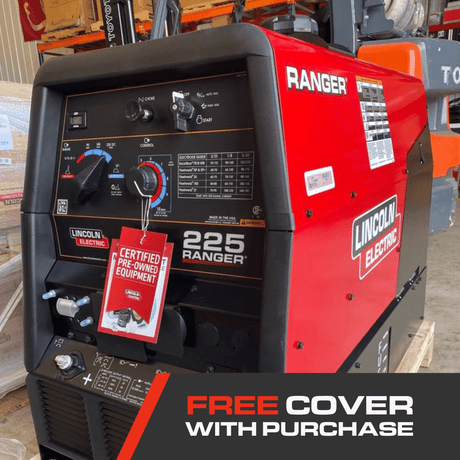
Lincoln Ranger 225 Engine-Driven Welder Generator
From $5,575.00$6,918.00Unit price /Unavailable Sold out
Lincoln Ranger 305G EFI Engine-Driven Welder Generator
From $8,950.00$10,045.00Unit price /Unavailable
Lincoln Outback 185 Engine-Driven Welder Generator
From $4,799.00$6,219.99Unit price /Unavailable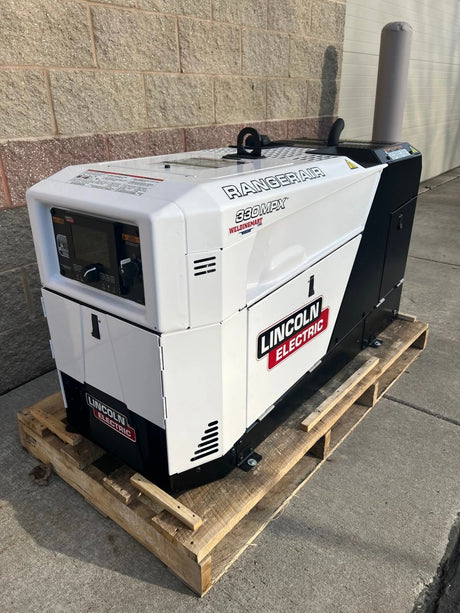
Lincoln Ranger 330 Air Engine-Driven Welder Generator
From $14,525.00$18,203.00Unit price /Unavailable
Lincoln Air Vantage 566X Diesel Engine Driven Welder/Generator
From $71,876.98$76,497.20Unit price /Unavailable
Lincoln Frontier 400X Diesel Engine Driven Kubota Welder/Generator
From $18,999.00$26,079.00Unit price /Unavailable
Engine Driven Welders & Welder Generators — Lincoln Electric Lineup
Engine driven welders — also called welder generators — are self-powered welding machines that run on gasoline or diesel rather than grid electricity. WeldingMart is an authorized Lincoln Electric distributor stocking the complete engine drive lineup: Ranger, Maverick, Frontier, Vantage, and Air Vantage series, plus compatible wire feeders, CrossLinc® remotes, and replacement parts. Whether you need a 210A gas-powered unit for a service truck or a 500A diesel machine for mainline pipeline welding, every model ships factory-warranted directly to your job site or shop address. Browse the full collection above, or use the sections below to match the right engine drive to your application, amperage class, fuel type, and portability needs.
Looking to save on Lincoln engine-driven equipment?
WeldingMart's reconditioned engine-driven welders are our most popular category — 19+ Lincoln models in certified demo & reconditioned condition, $1,300–$10,800 below new retail. Every unit inspected, documented, and ready to ship.
Shop reconditioned engine-driven welders — save 19%–34% on certified Lincoln equipment →What Is an Engine Driven Welder? Generator vs. Engine Drive Explained
The term engine driven welder — or welder generator — describes a machine that houses an internal combustion engine, an integrated electrical generator, and a precision welding power source in a single portable enclosure. The fundamental difference from a portable generator with a plug-in inverter welder is how the welding output is produced.
A plain portable generator produces only AC utility power at 120V or 240V. Welding from it requires a separate plug-in inverter welder drawing from that AC outlet. The inverter welder is then limited to the generator's surge capacity — typically 4,000–6,500W on consumer units — which constrains welding output to roughly 150–180A under realistic load. Arc stability suffers when generator load fluctuates from other tools drawing simultaneously.
An engine drive produces regulated DC welding output directly from the machine's generator windings, bypassing the AC-to-DC conversion step entirely. The result is:
- Higher rated amperage: 200A–500A at 100% duty cycle on professional engine drives vs. 150A effective ceiling on a generator + plug-in welder
- Cleaner arc: Dedicated welding output windings produce tighter constant current or constant voltage regulation vs. grid power or generator-sourced AC
- Simultaneous welding and tool power: Engine drives output both welding current AND auxiliary AC generator power (8,000–20,000W on Lincoln models) from the same machine — run grinders, lights, and compressors while welding
- Higher duty cycle: Industrial engine drives are rated at 100% duty cycle at their nameplate amperage — the machine runs continuously without the thermal cycling limitations of inverter-based plug-in welders
For any application where grid power is unavailable — pipeline rights-of-way, remote construction, farm repair, disaster relief — an engine driven welder is the only viable professional welding power source.
Engine Driven Welder Buyer's Guide — How to Choose the Right Machine
Selecting the right engine driven welder comes down to five variables: rated welding amperage, fuel type, CC vs. CV output capability, auxiliary generator wattage, and physical portability. Use the framework below before comparing specific models.
Step 1 — Determine Your Required Welding Amperage at 100% Duty Cycle
Nameplate amperage on an engine drive is rated at 100% duty cycle — the machine delivers that output continuously without stopping to cool down. Match your application to the amperage class below:
- 150–225A: Farm and ranch repair, light maintenance, gate and fence welding, trailer repair. Stick (SMAW) with E6013 or E7018 at up to 5/32 in. diameter. Primary machines: Lincoln Ranger 225
- 225–325A: General construction, structural steel, equipment repair, service truck applications. Stick with 3/16 in. rod, MIG/FCAW with wire feeder, TIG. Primary machines: Ranger 260MPX, Maverick 325X
- 325–400A: Pipeline root and fill/cap passes, heavy structural fabrication, heavy equipment repair, offshore maintenance. Stick with pipeliner rod (E6010/E7018), air arc gouging on medium material. Primary machines: Frontier 400X
- 400A+: Mainline pipeline transmission, offshore platforms, shipyard work, simultaneous welding and heavy tool load. Air arc gouging on heavy sections (400–450A), E7018 on heavy structural joints. Primary machines: Frontier 500X, Air Vantage 566X
Step 2 — Choose Fuel Type: Gasoline vs. Diesel
Fuel selection is the second decision and has significant operating cost and maintenance implications over the machine's service life.
Factor Gasoline Engine Drives Diesel Engine Drives Purchase price Lower — $3,500–$8,500 typical Higher — $9,000–$22,000+ typical Fuel availability Gas stations everywhere — ideal for rural service Diesel widely available; bulk fuel practical on large sites Cold weather starting Easier cold starts, especially with electronic fuel injection Glow plugs required; harder starting below 20°F without block heater Fuel cost per hour Higher — gas engines consume more fuel per horsepower-hour Lower — diesel delivers more energy per gallon; 20–30% less fuel cost at sustained load Oil change interval Every 100 hours typical Every 250 hours typical (Kubota engines on Lincoln models) Engine longevity Typically 3,000–5,000 hours with proper maintenance Typically 8,000–15,000 hours on Kubota diesel; lower fuel dilution and higher compression durability Emissions compliance EPA compliant; not always Tier 4 Final rated Tier 4 Final standard on current Lincoln diesel models — required for government, hospital, and school sites Break-even point Best choice under ~200 operating hours/year Best choice over ~200 operating hours/year — TCO advantage compounds quickly at daily use Practical rule: If the machine runs occasionally on a farm or service truck that covers a wide rural territory, gasoline wins on cost and convenience. If the machine runs 5–6 days a week on a pipeline spread or construction site, diesel total cost of ownership beats gasoline within the first operating season.
Step 3 — Confirm CC vs. CV Output Capability
Constant current (CC) output is the standard welding output type for stick (SMAW), TIG (GTAW), and air arc gouging (CAC-A). All Lincoln engine drives include CC output. CC maintains stable amperage while voltage adjusts automatically to arc length — the correct behavior for rod-based and TIG processes.
Constant voltage (CV) output is required for MIG (GMAW) and flux-cored (FCAW) welding with an external wire feeder. CV maintains stable voltage while current varies with wire feed speed. Not all engine drives include CV output. The Lincoln models offering both CC and CV are: Ranger 260MPX, Maverick 325X, Frontier 400X, Frontier 500X, and Air Vantage 566X. If you plan to run a wire feeder — such as the LN-25X suitcase feeder — from the engine drive in the field, confirm CV capability before ordering.
Single-phase vs. three-phase auxiliary output: Most engine drives in the 200–400A range provide single-phase 120/240V auxiliary power (8,000–12,000W). The Air Vantage 566X adds three-phase 208/230/460V output at 20,000W continuous — the field choice for crews running compressors, plasma cutters, and lighting banks simultaneously.
Step 4 — Verify Auxiliary Wattage for Your Tool Load
Undersizing auxiliary wattage is one of the most common engine drive spec errors. To size correctly, add up the starting wattage (not running wattage) of every tool you will run simultaneously with the welder:
- 4.5 in. angle grinder: ~1,200W running / 1,800W starting
- 7 in. angle grinder: ~1,800W running / 2,700W starting
- Air compressor (1.5 HP): ~1,200W running / 4,500W starting
- Plasma cutter (40A, 120V): ~4,000W running / 4,800W starting
- Work lights (LED string, 50W ea.): 50W running each
- LN-25X wire feeder: ~300W running (low auxiliary draw)
A crew running two grinders and work lights alongside welding needs approximately 5,000–6,500W of continuous auxiliary capacity — covered by any Lincoln engine drive at 8,000W+. Adding an air compressor brings the requirement to 8,000–10,000W. Running a plasma cutter simultaneously with welding requires 12,000W or more — the Frontier 500X or Air Vantage 566X.
Engine Driven Welder Applications by Industry
Pipeline Welding — Transmission and Distribution
Pipeline welding is the defining high-amperage application for diesel engine drives. Root passes on transmission pipeline (24–48 in. OD, wall thickness 0.375–0.750 in.) use E6010 cellulosic electrodes at 100–150A CC — demanding consistent constant-current arc performance through a full shift in all weather conditions. Fill and cap passes with E7018 low-hydrogen rod run 150–250A. Remote rights-of-way have no grid power; the engine drive is the only viable welding power source.
Lincoln Pipeliner-rated machines — the Maverick 325X, Frontier 400X, and Frontier 500X — are commonly specified for mainline and tie-in work. CrossLinc® technology, available on these models with the K4345-1 remote, allows operators to adjust welding amperage at the arc over the welding cable without a separate control lead — critical for pipeline crews walking long joints on large-diameter pipe. For pipeline welding, also specify the compatible pipeliner stick electrodes and welding leads rated for the expected current and cable run length.
Tier 4 Final diesel emissions compliance is standard on current Lincoln diesel engine drives — required on most transmission pipeline projects under environmental permit conditions.
Structural Steel and Construction
Ironworkers, bridge crews, and heavy construction contractors use engine drives for column base plates, moment connections, shear studs, and structural repair where temporary power is unavailable. Typical structural welding runs E7018 low-hydrogen rod in the 200–300A range; heavier sections and air arc gouging push 350–450A. High auxiliary wattage — 9,000W and above — powers angle grinders, impact tools, and work lights simultaneously from the same machine. CrossLinc® remote control is particularly valuable on construction sites where the operator works at height and cannot walk back to the machine for output adjustments.
The Ranger 260MPX and Maverick 325X are the standard construction market machines. For heavier structural applications — large weld buildup, CAC-A gouging, and heavy plate — the Frontier 400X at 400A/100% duty cycle is the specification choice.
Farm, Ranch, and Equipment Repair
Farm and ranch repair is the volume application for gasoline engine drives. Repairing trailers, gates, grain augers, loader attachments, and farm machinery in the field — without moving the equipment to a shop — is the core use case for the Ranger 225. Portability is the key requirement: the Ranger 225 at 553 lbs bolts to a standard pickup truck bed. Weld processes on farm jobs are almost entirely stick (SMAW) — E6013 for light sheet and general repair, E7018 for structural trailer tongue and hitch repair, E6011 for dirty or rusty material where pre-cleaning is impractical.
Gas-powered preferred for farm use: diesel total cost of ownership advantage does not realize at the low annual hours typical of agricultural use (50–150 hours/year). Easy access to gasoline, simpler cold-start procedure, and lower purchase price make the Ranger series the natural choice for this application.
Service Truck and Utility Crews
Municipal utility crews, natural gas distribution maintenance, and industrial plant service truck operators require all-day runtime with remote amperage control. Key requirements for service truck application:
- Idle control: Automatic throttle reduction to low idle when not welding — reduces fuel consumption 30–40% and noise between welds
- CrossLinc® remote control: Eliminates walking back to the truck cab-mount engine drive to adjust output between jobs
- Weight within truck payload: Verify engine drive weight against truck's rated payload — the Ranger 225 at 553 lbs is well within most 3/4-ton pickups; the Maverick 325X at ~850 lbs requires a 1-ton or flatbed
- High auxiliary wattage: Service crews use grinders, lights, and air tools from the engine drive — 9,000W minimum, 10,500W+ preferred
Rental Fleet and Hire Equipment
Engine drives are one of the most-rented items in the equipment hire industry because jobsites do not always justify owning a machine for short-duration projects. Rental fleet operators favor diesel engine drives for their lower operating cost per hour and longer engine service life. Lincoln's Tier 4 Final diesel compliance satisfies environmental permit conditions on most government, school, and hospital construction sites where rental machines are deployed. The Maverick 325X and Frontier 400X are the standard rental-spec machines at 325A and 400A.
Agriculture and Remote Irrigation Infrastructure
Irrigation system installation, pump station repair, and agricultural building construction in remote areas — where grid power is miles away and running a temporary service is cost-prohibitive — are primary applications for the Ranger 225 and Ranger 260MPX. The machines also serve as emergency backup generators for critical farm equipment: the Ranger 225's 10,500W peak generator output can power a 7.5 HP submersible pump for emergency irrigation in a power outage scenario.
Power Output Classes — Gas vs. Diesel, 200A–500A+
Engine driven welders are sold in well-defined amperage classes that correspond to application type, price, and physical size. Understanding the output class system helps narrow selection before comparing specific models.
200–225A Class — Light Maintenance and Farm
The entry-level professional class. Machines in this range are gasoline-powered, physically compact enough for truck-bed mounting without a crane, and priced for individual tradespeople and farms. Typical rated output: 200–210A at 100% duty cycle. Auxiliary power: 8,000–10,500W single-phase. Representative Lincoln model: Ranger 225 (K2857-1) — 210A/100%, 9,000W continuous / 10,500W peak, Kohler 23 HP, 553 lbs. This class dominates service truck mount applications.
225–325A Class — General Construction and Multi-Process
The workhorse class. Machines in this range include both gasoline and diesel options, offer CC and CV output for multi-process capability, and are heavy enough to require either a dedicated truck bed mount or fork lift/crane placement. Auxiliary power: 9,000–10,000W. Representative Lincoln models:
- Ranger 260MPX (K2809-3) — 260A/100% DC, CC/CV multi-process, Kohler 27 HP gas, 585 lbs. The standard all-process jobsite machine for construction contractors who need both stick and wire feeder capability.
- Maverick 325X (K3581-1) — 325A/100% DC, CC/CV, 10,000W aux, Kubota diesel engine, ~850 lbs. The entry diesel in Lincoln's lineup — the step-up for contractors logging over 200 hours per year who want diesel economics.
- Maverick 260X (K5272-1) — 260A/100% DC, Kubota Z602 diesel, 620 lbs — the lightest diesel in Lincoln's lineup, designed for contractors who need diesel but still require truck-bed portability.
325–400A Class — Pipeline and Heavy Construction
The mid-heavy class. All diesel. Designed for pipeline, structural fabrication, and heavy equipment maintenance. CC/CV output standard, CrossLinc® capable. Representative Lincoln model: Frontier 400X (K4079-1) — 400A/100% DC, CC/CV, Kubota Tier 4 Final diesel, 12,000W aux, ~1,150 lbs. The standard pipeline contractor machine at this amperage class.
400A+ Class — Mainline Pipeline and Industrial
The heavy industrial class. These machines are towable-trailer rated rather than truck-bed portable. Three-phase auxiliary output available. Representative Lincoln models:
- Frontier 500X (K5350-2) — 500A/100% DC, CC/CV, Kubota Tier 4 Final diesel, 12,000W aux, ~1,450 lbs. The mainline pipeline standard.
- Air Vantage 566X (K3242-3) — 500A welding output + 12,000W single-phase OR 20,000W three-phase auxiliary, Deutz Tier 4 Final diesel. The top-of-line for crews needing maximum simultaneous tool power alongside high-amperage welding.
Single-Phase vs. Three-Phase Auxiliary Output
Single-phase 120/240V auxiliary power (available on all Lincoln engine drives) is sufficient for grinders, work lights, small air compressors, and inverter welders. Three-phase 208/230/460V output — available on the Air Vantage 566X — is required for high-horsepower compressors, plasma cutters above 80A rated input, and commercial HVAC equipment. The vast majority of jobsite and service truck applications are adequately served by single-phase; specify three-phase only when your tool inventory genuinely requires it.
Multi-Process Capability — MIG, TIG, and Stick from One Engine Drive
One of the most important modern developments in engine drive technology is the availability of full multi-process CC/CV output from a single machine. Prior-generation engine drives were CC-only — adequate for stick and TIG but requiring a separate generator or utility power to run a wire feeder for MIG or flux-cored welding. Current CC/CV engine drives — the Ranger 260MPX, Maverick 325X, Frontier 400X/500X, and Air Vantage 566X — support full multi-process operation from the machine's own output.
Running MIG and FCAW from an Engine Drive
To run MIG (GMAW) or flux-cored (FCAW) wire welding from an engine drive in the field, you need a compatible wire feeder with its own wire drive mechanism, control panel, and shielding gas plumbing. The standard Lincoln Electric field wire feeder is the LN-25X Pro suitcase feeder — a portable, self-contained unit that connects to the engine drive's CV output terminals. Setup requires: the LN-25X feeder, a welding gun (Lincoln Magnum Pro series), a gas cylinder or bulk manifold for shielding gas, and a CrossLinc®-capable machine for over-cable control. This setup supports:
- Solid wire MIG (GMAW): ER70S-6 at 0.030–0.045 in. on carbon steel, ER308L on stainless
- Self-shielded FCAW (no gas): Lincoln Innershield NR-211-MP or NR-232 at 0.035–0.045 in. — field production welding without gas cylinders
- Gas-shielded FCAW: Lincoln Outershield 71M at 0.045 in. on structural fill/cap passes for high-deposition rate fabrication
Visit our MIG welders and wire feeders collection for compatible feeders and accessories.
Running TIG from an Engine Drive
Engine drives with CC output support TIG (GTAW) welding by connecting a TIG torch directly to the output terminals. Basic setup (scratch start): TIG torch + tungsten electrode + shielding gas (argon) + foot pedal. The limitation is that engine drives typically provide scratch-start or lift-arc TIG initiation — not high-frequency arc start — which is acceptable for many field applications but not compliant with welding procedure specifications (WPS) that require HF start. For code-quality TIG on pressure piping or structural joints, a dedicated TIG welder remains preferable. For field root passes on process piping where convenience matters more than WPS compliance, engine drive TIG performs reliably with good technique.
Stick Welding Process — The Primary Engine Drive Application
Stick welding (SMAW) remains the primary process for engine driven welders. Advantages of stick from an engine drive vs. a plug-in inverter welder in the field:
- No wire feeder required — minimal equipment to transport and set up
- Works on dirty, rusty, or coated metal (E6010, E6011) without pre-cleaning — critical for repair work
- No shielding gas cylinder required — fully portable to the most remote sites
- E7018 low-hydrogen rod at 250A produces X-ray-quality structural welds on clean carbon steel
- E6010 cellulosic rod at 100–150A is the mandatory process for API 1104 pipeline root passes
See our stick welding electrodes collection for a full selection of Lincoln Electric pipeliner and structural rods in all diameter and pound ranges.
Lincoln Electric Engine Driven Welder Lineup — Complete Model Guide
WeldingMart stocks only Lincoln Electric engine driven welders — every machine is backed by Lincoln's factory warranty registered in your name, direct Lincoln technical support access, and WeldingMart's authorized dealer service commitment. The Lincoln engine drive lineup is organized into five named series: Ranger (gas), Maverick (diesel, compact-to-mid), Frontier (diesel, heavy), Vantage (diesel, industrial), and Air Vantage (diesel, three-phase capable).
Ranger Series — Gasoline Engine Drives
The Ranger series is Lincoln's gasoline engine drive lineup — the most popular class for service trucks, farm repair, and light construction. All Ranger models use Kohler gasoline engines and are designed for truck-bed mounting without a crane.
- Lincoln Ranger 225 (K2857-1) — The best-selling engine drive in Lincoln's lineup. 210A/100% DC welding output, 9,000W continuous / 10,500W peak auxiliary power, Kohler 23 HP OHV gasoline engine, CC output for stick and TIG, 553 lbs. GFCI-protected 120V receptacles. Automatic idle control standard. Recommended for: farm and ranch repair, light construction, service truck with 1/2-ton to 3/4-ton pickup, general maintenance. The standard recommendation for customers who need reliable portable welding power without multi-process wire feeder capability.
- Lincoln Ranger 260MPX (K2809-3) — Multi-process upgrade from the Ranger 225. 260A/100% DC, CC and CV output for stick, TIG, MIG, and FCAW, 9,000W continuous / 10,500W peak auxiliary power, Kohler 27 HP gasoline engine, 585 lbs. CrossLinc® over-cable remote control compatible. Recommended for: contractors who need both stick capability for repair work and wire feeder capability for production MIG/FCAW. The standard all-process service truck machine.
- Lincoln Ranger 305 LPG — Propane-powered variant of the Ranger series. Runs on liquid propane, meeting propane-only jobsite fuel requirements (enclosed garages, indoor facilities with propane supply). 305A output, single-phase auxiliary, Kohler propane engine. Recommended for: indoor or partially enclosed facilities where gasoline is prohibited and propane is the available fuel.
Maverick Series — Compact to Mid-Range Diesel
The Maverick series represents Lincoln's entry-to-mid diesel engine drives. Kubota engines throughout. Designed for contractors transitioning from gasoline to diesel who still need relative portability.
- Lincoln Maverick 260X (K5272-1) — The lightest diesel in Lincoln's lineup. 260A/100% DC, Kubota Z602 diesel engine (2-cylinder), 620 lbs — light enough for some heavy-duty pickup truck beds. 9,000W continuous auxiliary. CC output (stick, TIG). Recommended for: contractors who need diesel economics but cannot accommodate the weight of a full-size diesel engine drive on their service truck.
- Lincoln Maverick 325X (K3581-1) — The workhorse mid-diesel. 325A/100% DC, CC/CV output, 10,000W continuous auxiliary, Kubota 24.8 HP diesel engine, ~850 lbs. CrossLinc® compatible. Pipeliner rated. Recommended for: pipeline tie-in crews, construction contractors logging 200+ hours/year, service operations requiring both stick and wire feeder. The most versatile diesel engine drive in Lincoln's lineup at this weight class.
Frontier Series — Heavy Pipeline and Construction Diesel
The Frontier series is Lincoln's heavy-duty diesel engine drive lineup. Designed for mainline pipeline welding, heavy structural fabrication, and industrial maintenance. All Frontier models use Kubota Tier 4 Final diesel engines and are towable-trailer rated at their operating weight.
- Lincoln Frontier 400X (K4079-1) — 400A/100% DC, CC/CV output, 12,000W continuous auxiliary, Kubota 25 HP Tier 4 Final diesel, ~1,150 lbs. CrossLinc® and AC-Pro technology. Recommended for: pipeline main line and tie-in, heavy structural, offshore maintenance. The standard specification for contractors moving from the 325A to 400A class.
- Lincoln Frontier 500X (K5350-2) — 500A/100% DC, CC/CV output, 12,000W continuous auxiliary, Kubota Tier 4 Final diesel, ~1,450 lbs. Recommended for: mainline pipeline, heavy fabrication requiring 400–500A continuous output, crews that air arc gouge on large structural sections.
Vantage and Air Vantage Series — Industrial Diesel
- Lincoln Vantage 400 — 400A industrial diesel engine drive with Lincoln's Variable Voltage Idle Control (VVIC) system for fuel savings. Designed for industrial plant maintenance and heavy fabrication where fuel economy over long operating seasons matters. CC/CV output, Perkins diesel engine, 12,000W single-phase auxiliary.
- Lincoln Air Vantage 566X (K3242-3) — The flagship Lincoln engine drive. 500A welding output alongside 12,000W single-phase OR 20,000W three-phase auxiliary power, Deutz Tier 4 Final diesel, ~2,200 lbs. CC/CV, CrossLinc® and AC-Pro. Recommended for: crews running compressors, plasma cutters, and heavy tool loads simultaneously with pipeline-class welding. The three-phase auxiliary covers high-amperage plasma and industrial compressors that single-phase cannot handle.
- Lincoln SAE 400 (K2809-2) — Industry-standard pipeline and construction diesel engine drive at 400A. SAE (Society of Automotive Engineers) designation indicates compliance with SAE J1349 output standards used in pipeline contractor specifications. Perkins diesel engine, CC output, 350A/60% or 400A/100% depending on configuration. Commonly specified by name in pipeline construction contracts ("SAE 400 class machine"). Recommended for: contractors bidding pipeline projects where SAE 400 is the specified machine class.
- Lincoln Eagle 10,000 Plus — High-generator-output engine drive prioritizing auxiliary power (10,000W generator) with 225A welding output. Designed for applications where generator power is the primary requirement and welding is secondary — disaster relief, temporary power, construction sites needing both power generation and occasional welding. Honda or Kohler gasoline engine options.
Engine Driven Welder Maintenance — Duty Cycle, Service Intervals, and Best Practices
Engine driven welders require two parallel maintenance disciplines: engine maintenance (oil, filters, fuel system) and welding power source maintenance (brushes, alternator, output terminals, controls). Neglecting either reduces machine life significantly.
Engine Maintenance Schedule
Service Item Gasoline Engines (Kohler) Diesel Engines (Kubota) Engine oil and filter Every 100 operating hours or annually Every 250 operating hours (initial change at 50 hours for new machines) Air filter inspection Every 50 hours — more frequently in dusty environments Every 100 hours — replace when contaminated Fuel filter Annually or every 200 hours Every 200–250 hours Spark plugs (gasoline only) Every 200 hours or annually N/A (diesel compression ignition) Coolant (liquid-cooled engines) Every 2 years or 800 hours Every 2 years or 800 hours (Kubota WG972 and larger) Battery Test annually; replace every 3–5 years Test annually; replace every 3–5 years Drive belts Inspect every 250 hours; replace when cracked or frayed Inspect every 250 hours Welding Power Source Maintenance
- Output terminals and cable connections: Inspect for oxidation and heat damage every 250 hours. Clean with wire brush and apply anti-oxidant compound. Loose connections cause voltage drop and overheating.
- Brushes and slip rings (on brush-type generators): Inspect at 500 hours. Brushes wear to minimum length over time; worn brushes cause erratic arc performance before complete failure. Replace in pairs.
- Blower and cooling fins: Blow out welding end with compressed air every 100 hours on dusty jobsites. Accumulated metal dust on the armature creates current leakage paths.
- Control panel and connections: Inspect output selector, amperage control, and contactor wiring annually. Check for evidence of moisture intrusion if the machine has been stored outdoors.
- Welding leads and work clamp: Inspect cable insulation for cuts and abrasion every use. Damaged insulation is a shock hazard. Replace cable when the copper braid is visible.
Understanding Duty Cycle on Engine Drives
Industrial engine drives are rated at 100% duty cycle at their nameplate amperage — meaning the machine delivers rated output continuously without a required cool-down period. This is the key performance difference from inverter-based MIG welders (which are typically rated at 60% duty cycle at rated amperage, requiring 4 minutes of cool-down for every 6 minutes of welding). For production welding environments and pipeline where the arc runs nearly continuously for hours, 100% duty cycle is a hard requirement.
Note that even at 100% duty cycle rating, ambient temperature affects actual output capability. Lincoln engine drives are rated at specific ambient temperatures in their spec sheets; output may be derated at sustained high ambient temperatures (above 104°F / 40°C). Ensure adequate airflow and shade on hot-weather jobsites.
Cold Weather Operation
Cold weather starting is a more significant concern for diesel engine drives than gasoline. Best practices for cold weather diesel operation:
- Allow glow plugs to fully preheat before cranking (10–20 seconds depending on temperature)
- Use a block heater when the machine will sit overnight in temperatures below 25°F / -4°C
- Verify engine oil viscosity is rated for the ambient temperature range — switch to 5W-40 synthetic for sub-zero conditions
- Use No. 2 diesel blended with anti-gel additive in temperatures below 20°F, or use No. 1 diesel if available
- Run the machine at low idle for 3–5 minutes after starting before applying load in temperatures below 32°F
Frequently Asked Questions — Engine Driven Welders & Welder Generators
What is the difference between an engine driven welder and a welder generator?
An engine driven welder and a welder generator are the same type of machine described from different angles. "Engine driven welder" emphasizes the welding capability — the machine produces regulated DC welding current directly from its generator windings. "Welder generator" emphasizes the dual function — the machine is both a welding power source and an auxiliary AC generator that can power tools, lights, and equipment simultaneously. All Lincoln Electric engine drives sold by WeldingMart perform both functions: they produce welding output for stick, TIG, MIG, and FCAW processes AND deliver 8,000–20,000W of auxiliary AC generator power.
What welding processes can I run from an engine driven welder?
All Lincoln engine drives support stick (SMAW) and TIG (GTAW) welding via constant current (CC) output. Models with CC/CV output — the Ranger 260MPX, Maverick 325X, Frontier 400X, Frontier 500X, and Air Vantage 566X — also support MIG (GMAW) and flux-cored (FCAW) welding when paired with a compatible wire feeder such as the Lincoln LN-25X suitcase feeder. Air arc gouging (CAC-A) is supported on all CC-output models at the appropriate amperage class — the Frontier 400X and 500X are the standard machines for production gouging applications.
Should I buy a gasoline or diesel engine driven welder?
The break-even decision point is approximately 200 operating hours per year. Below 200 hours: gasoline wins on purchase price, cold-start ease, and fuel availability. Above 200 hours: diesel's lower fuel cost per hour and longer oil change intervals (250 hours vs. 100 hours for gasoline Kohler engines) deliver lower total cost of ownership that exceeds the higher purchase price. For farm and service truck applications running 50–150 hours/year, the Lincoln Ranger series (gasoline) is the correct choice. For pipeline, construction, and industrial applications running the machine daily, Lincoln's Kubota-powered diesel series (Maverick, Frontier) is the correct choice.
Can I run tools and equipment from the engine drive while welding?
Yes. All Lincoln engine drives produce auxiliary AC generator power (8,000–20,000W depending on model) from the same machine simultaneously with welding output. You can run angle grinders, work lights, air compressors, and other tools from the generator receptacles while welding. The critical requirement is not to exceed the machine's continuous auxiliary wattage rating.
What is CrossLinc technology on Lincoln engine drives?
CrossLinc is Lincoln Electric's remote amperage control technology that transmits control signals over the welding cable itself — eliminating the need for a separate remote control lead. With CrossLinc, a welder working 100+ feet from the engine drive can adjust output amperage at the arc using the K4345-1 handheld remote. Available on: Ranger 260MPX, Maverick 325X, Frontier 400X, Frontier 500X, Air Vantage 566X.
Are engine driven welders suitable for pipeline welding?
Yes — diesel engine drives are the standard power source for all pipeline welding. API 1104 pipeline root passes use E6010 cellulosic electrodes at 100–150A CC output. Lincoln's Pipeliner-rated machines — Maverick 325X, Frontier 400X, Frontier 500X — are the industry standard for mainline and tie-in pipeline welding. Tier 4 Final diesel emissions compliance, standard on current Lincoln diesel models, satisfies emissions permit conditions on most pipeline rights-of-way.
What is the difference between the Lincoln Ranger and Lincoln Vantage series?
The Ranger series uses gasoline (Kohler) engines and targets service truck, farm, and light construction applications in the 200–325A range. The Vantage series uses diesel engines and targets industrial maintenance and heavy construction in the 300–400A range with Lincoln's Variable Voltage Idle Control (VVIC) system for improved fuel economy at sustained load. In simple terms: Ranger = gas, portable, truck-bed mountable; Vantage = diesel, industrial, long-life continuous operation.
What output power do I need for my engine driven welder application?
Match amperage to application: 200–225A for farm repair and light maintenance (Ranger 225); 260–325A for general construction and multi-process service truck work (Ranger 260MPX, Maverick 325X); 400A for pipeline and heavy structural (Frontier 400X); 500A+ for mainline pipeline and heavy industrial with three-phase power needs (Frontier 500X, Air Vantage 566X).
Can engine driven welders be used indoors?
No. Gasoline and diesel engine driven welders produce carbon monoxide exhaust and cannot be operated indoors or in enclosed spaces. They must be used outdoors or in open, well-ventilated areas with exhaust directed away from occupied spaces. For indoor welding applications, a separate electric input welder connected to grid power is the appropriate solution.
How often does an engine driven welder need to be serviced?
Engine maintenance intervals: gasoline Kohler engines require oil and filter changes every 100 operating hours; Kubota diesel engines every 250 operating hours (first change at 50 hours for new machines). Air filter inspection every 50–100 hours. Inspect output terminals and cable connections every 250 hours, blow out the welding end with compressed air every 100 hours on dusty sites, and inspect brushes at 500 hours.
Does WeldingMart sell used or demo engine driven welders?
Yes. WeldingMart stocks a rotating selection of factory-demo and lightly used Lincoln engine driven welders at reduced prices. Browse the current inventory on our used and demo engine driven welders page. Every new machine on this page ships with the full Lincoln Electric factory warranty registered in the buyer's name.
Why Buy Engine Driven Welders From WeldingMart
WeldingMart is a direct Lincoln Electric authorized distributor. Every engine drive ships with the full Lincoln factory warranty registered in your name, direct access to Lincoln technical support, and guaranteed authentic Lincoln Electric machines — not grey-market or unauthorized imports. We stock the complete Lincoln engine drive lineup: Ranger, Maverick, Frontier, Vantage, and Air Vantage series, plus compatible wire feeders, CrossLinc® remotes, and replacement parts. Authorized dealer pricing with fast U.S. shipping to job sites and shop addresses.
Related collections: browse our MIG welders and wire feeders for compatible suitcase feeders, our TIG welders collection for dedicated shop TIG machines, and our stick welding electrodes selection for Lincoln Pipeliner, Excalibur, and Fleetweld rod in all diameters. Call 1-800-293-4483 or use the chat for spec-sheet comparisons, application questions, or volume pricing on engine drive orders.
Outfit your field crew completely: stock up on Welding Wire & Consumables and TIG Rods & Filler Metals before heading to the job site. Browse Lincoln Used & Reconditioned Welders for budget-friendly engine-driven options. Shop brand collections: Lincoln Electric Welders & Supplies and Harris Products Group. View the full catalog at All Welding Machines & Supplies.
Related Categories


